


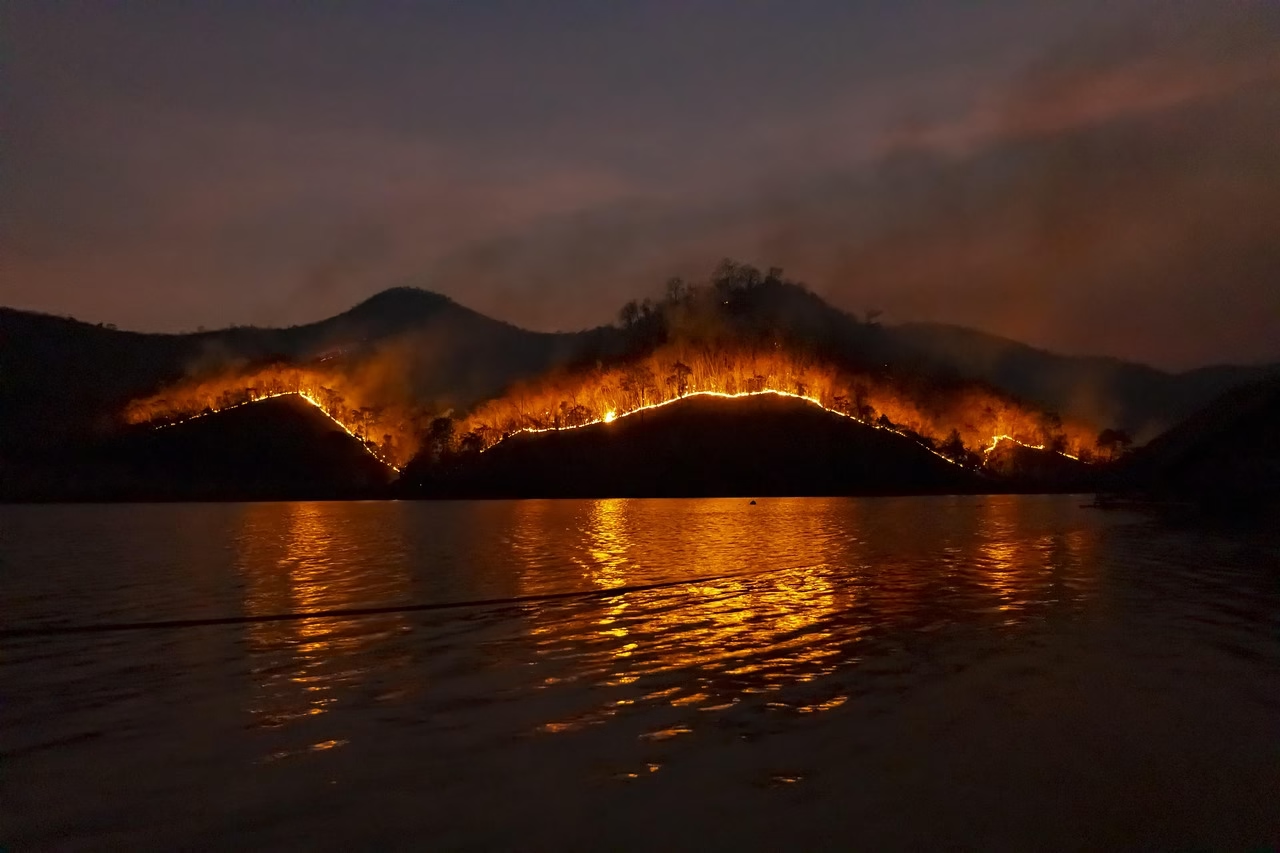
On Wednesday, environmental protection agencies issued air quality alerts for the Twin Tiers region of southern New York and northern Pennsylvania as drifting wildfire smoke pushed fine particulate matter to unhealthy levels. The sudden atmospheric shift prompted local health departments to advise sensitive populations, including children and the elderly, to limit outdoor activities. Officials attribute the degradation in air quality to massive wildfires burning thousands of miles away, combined with a high-pressure weather system channeling the smoke south.
Understanding the Twin Tiers Air Quality Crisis
The Twin Tiers, which encompasses counties such as Chemung, Steuben, and Schuyler in New York, alongside Bradford and Tioga in Pennsylvania, regularly experiences clean mountain air. However, changing global weather patterns have increasingly funneled smoke from distant Canadian and western U.S. wildfires directly into the Northeast. When this smoke arrives, it brings high concentrations of PM2.5, which are fine inhalable particles with diameters generally 2.5 micrometers and smaller.
According to the New York State Department of Environmental Conservation (DEC), PM2.5 particles are small enough to bypass the body’s natural defense systems. They can penetrate deep into the lungs and even enter the bloodstream, presenting immediate risks to respiratory and cardiovascular health. For a region characterized by deep river valleys, this particulate matter can easily become trapped, leading to prolonged periods of dense, hazy smog.
Spiking Air Quality Index and Daily Disruptions
By Wednesday afternoon, Air Quality Index (AQI) monitors in Elmira and Corning registered levels exceeding 150, a threshold classified as “unhealthy” for the general public. At these levels, even healthy individuals may begin to experience symptoms such as throat irritation, coughing, and shortness of breath. Local school districts quickly adjusted their schedules, canceling outdoor recess and moving athletic practices indoors to protect students.
Construction crews and agricultural workers throughout the Susquehanna and Chemung river basins also faced immediate challenges. Many employers distributed N95 masks and modified shift schedules to reduce prolonged exposure during peak heat and haze hours. Local pharmacies reported a sudden surge in demand for inhalers and over-the-counter allergy medications as residents scrambled to manage their symptoms.
Expert Perspectives and Health Data
Medical professionals in the region are urging caution, noting that the effects of wildfire smoke can linger long after the sky clears. Dr. Elizabeth Vance, a pulmonologist at Arnot Health, emphasized that the elderly, infants, and individuals with pre-existing conditions like asthma or chronic obstructive pulmonary disease (COPD) are at extreme risk. Vance stated that hospital emergency departments typically see a 15 to 20 percent spike in respiratory-related admissions during high-PM2.5 events.
Meteorologists explain that the current situation is exacerbated by a meteorological phenomenon known as an atmospheric inversion. Warm air aloft acts as a lid, trapping the cooler, smoke-laden air close to the valley floors of the Twin Tiers. Until a strong cold front passes through to disrupt this pattern, the stagnant, hazardous air is expected to remain firmly in place.
Future Outlook and Climate Implications
Environmental scientists warn that these air quality events are no longer isolated anomalies but are fast becoming a seasonal norm for the Northeast. As wildfire seasons grow longer and more intense due to rising global temperatures, regions far removed from the actual flames must adapt to the downstream consequences. This shift is forcing local governments to rethink public health infrastructure and emergency communication strategies.
Moving forward, residents should watch for updated state-level air quality advisories and monitor shifting wind patterns that could bring temporary relief. Community leaders are already discussing long-term adaptations, such as installing advanced air filtration systems in public schools and municipal buildings. The ability of the Twin Tiers to weather these recurring environmental challenges will depend heavily on proactive public education and regional climate resilience planning.















Leave a Reply