


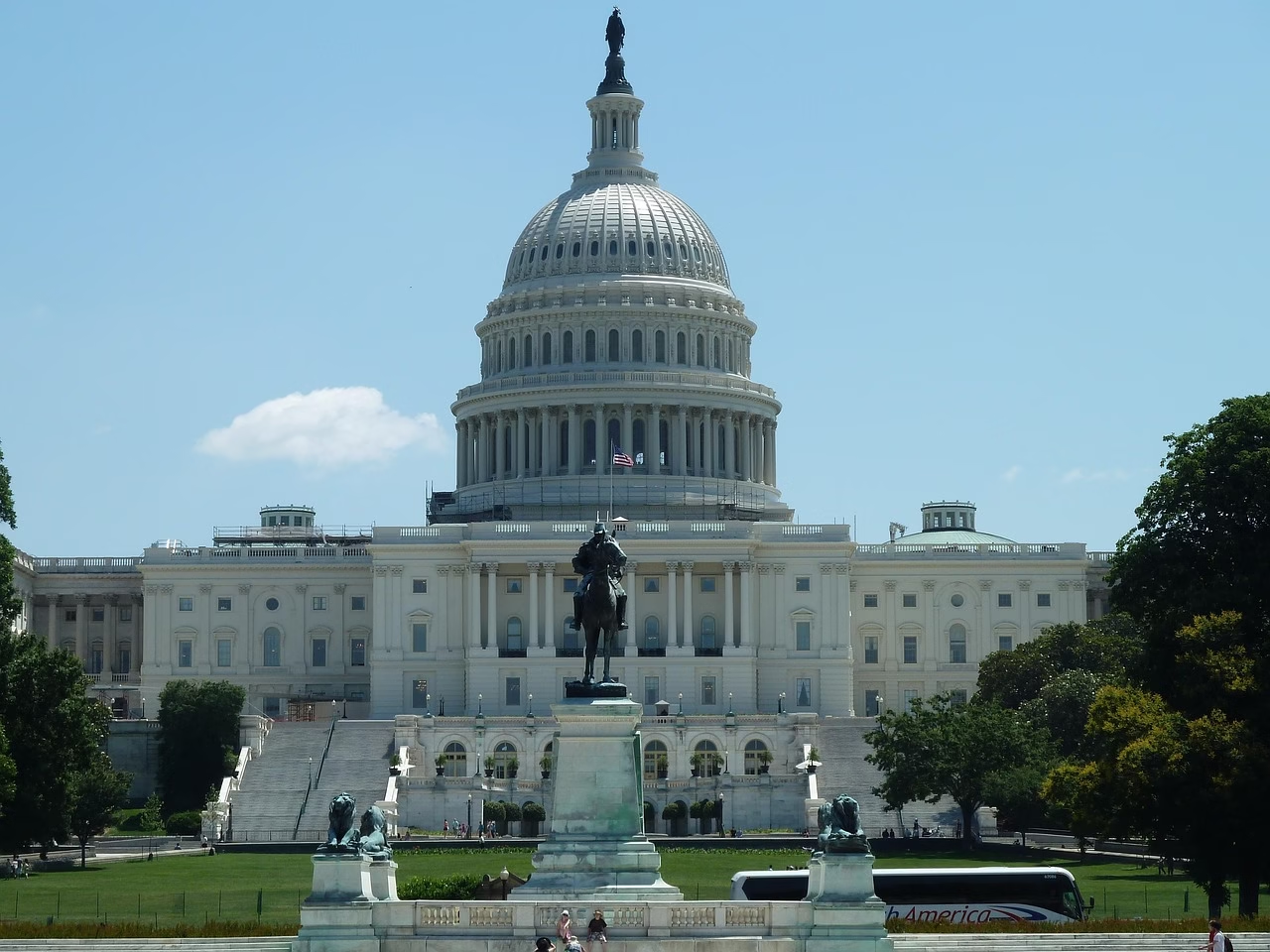
WASHINGTON — Senator Lindsey Graham passed away on Saturday, depriving President Donald Trump of his most influential congressional ally and chief foreign policy confidant at a critical juncture for U.S. international relations. The South Carolina Republican, who died at age 69, served as a vital bridge between the White House and establishment conservatives in Congress, frequently shaping the administration’s global strategy.
A Unique Legislative Partnership
No other lawmaker in Washington held the same level of personal access and influence over President Trump as Senator Graham. While other congressional leaders maintained transactional relationships with the executive branch, Graham established a direct line of communication, often counseling the president during weekend golf outings and private dinners.
This close alliance represented a dramatic political evolution. During the 2016 Republican presidential primaries, Graham was one of Trump’s most vocal critics, famously calling him a “jackass” and predicting that his candidacy would destroy the Republican Party. However, after Trump took office, Graham pivoted to become his most steadfast defender on Capitol Hill.
Political analysts note that Graham’s transition was strategic, designed to maintain influence over American foreign policy. By aligning himself with the president, Graham secured a seat at the decision-making table, successfully steering the administration away from isolationist impulses on multiple occasions.
Guiding the Administration’s Foreign Policy
Graham’s primary influence lay in national security and foreign affairs, where he consistently advocated for a robust U.S. presence abroad. He played a critical role in tempering the president’s desires to rapidly withdraw troops from conflict zones, including Syria and Afghanistan.
In 2019, when President Trump unexpectedly announced a full withdrawal of U.S. forces from northern Syria, Graham publicly and privately lobbied the White House. His intervention ultimately convinced the administration to leave a residual force to protect oil fields and continue counter-terrorism operations against ISIS.
Beyond troop deployments, Graham served as a key intermediary during high-stakes diplomatic negotiations. He frequently traveled to Turkey, Ukraine, and the Middle East, delivering messages on behalf of the administration and reporting back to the Oval Office with strategic assessments.
An Irreplaceable Void in Congress
“Lindsey Graham occupied a unique space in the Trump orbit,” said Sarah Jenkins, a senior fellow at the Brookings Institution. “He was someone who could deliver tough truths to the president without losing his trust. That is a rare commodity in modern Washington, and his absence leaves a significant vacuum.”
Data from legislative tracking organizations highlights Graham’s effectiveness as a bridge builder. According to FiveThirtyEight’s congressional vote tracker, Graham voted in line with President Trump’s positions 86% of the time, while maintaining strong relationships with moderate Republicans and key Democrats on the Senate Foreign Relations Committee.
This dual status allowed Graham to shepherd controversial judicial nominees through the Senate, most notably during the contentious confirmation hearings for Supreme Court Justice Brett Kavanaugh, where Graham’s passionate defense galvanized the Republican base.
A Shift in the Balance of Power
The loss of Graham’s counsel comes at a time when the administration faces mounting global challenges, including escalating tensions in Eastern Europe and the Middle East. Without Graham’s interventionist voice in his ear, President Trump may feel more emboldened to pursue his “America First” foreign policy goals, potentially accelerating troop drawdowns and renegotiating long-standing alliances.
Several senators are already positioning themselves to fill the advisory void left by Graham. Non-interventionist lawmakers like Senator Rand Paul of Kentucky may find greater opportunities to push the administration toward a more restrained foreign policy, while hawks like Senator Tom Cotton of Arkansas will seek to maintain a hardline stance.
In the coming months, observers will closely watch how the White House recalibrates its relationship with Senate leadership. The upcoming debate over the annual defense authorization bill will serve as the first major test of how the administration navigates complex national security legislation without its most trusted legislative lieutenant.





















Leave a Reply