


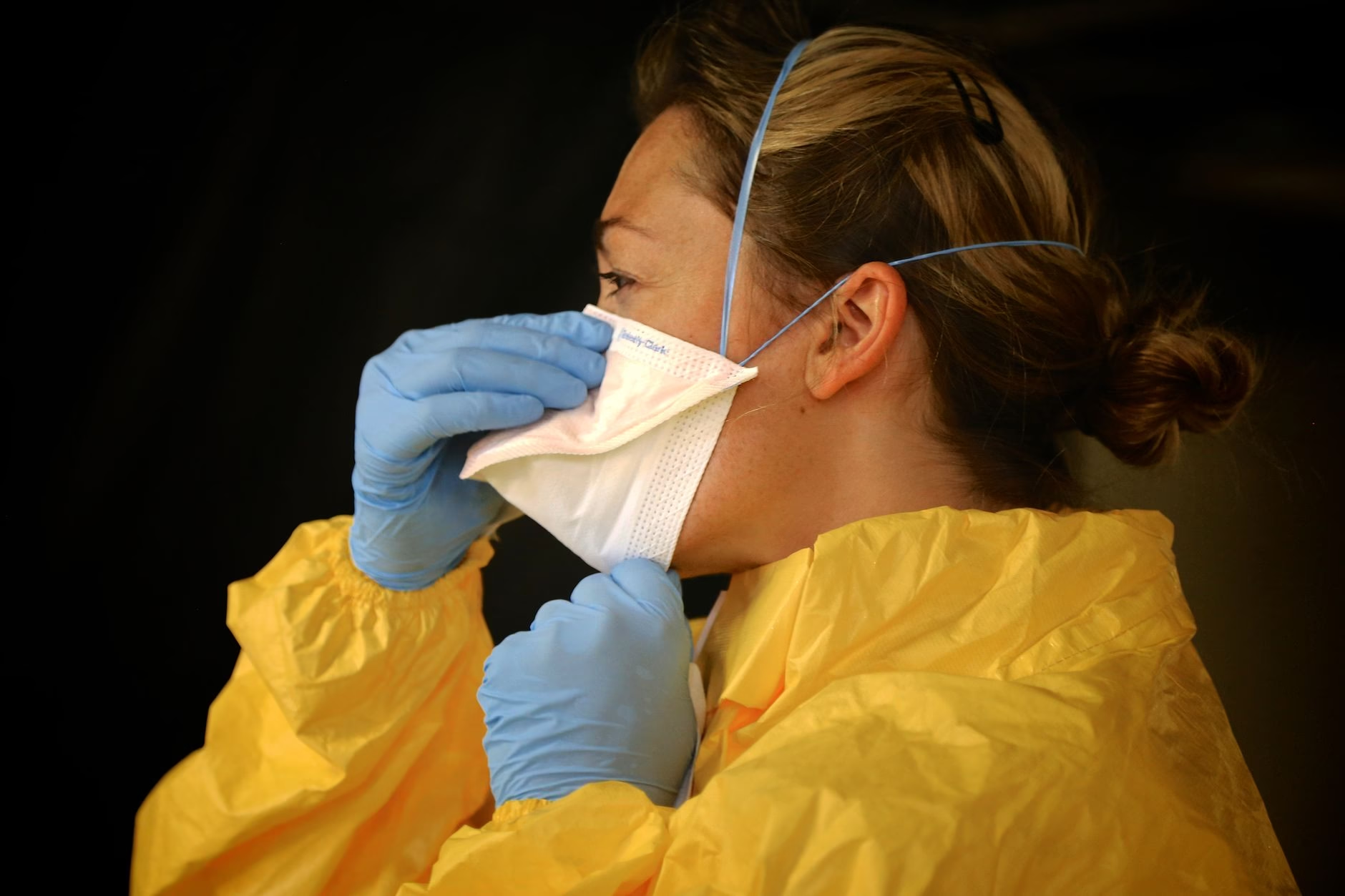
Public health experts are warning that the recent closure of key USAID initiatives has significantly hampered efforts to contain a burgeoning Ebola outbreak in West Africa. The reduction in international aid, which began earlier this year, has created critical gaps in surveillance, contact tracing, and medical supply chains, leaving regional health authorities struggling to manage the spread of the virus.
The Erosion of Global Health Infrastructure
For over a decade, USAID programs have served as the backbone for infectious disease monitoring in high-risk regions. By providing consistent funding for laboratory infrastructure and training local healthcare workers, these programs historically acted as a first line of defense against viral outbreaks.
The recent withdrawal of support has left a vacuum in areas that previously relied on US-funded diagnostic equipment and mobile response teams. According to several international observers, the loss of these resources has demonstrably worsened the current Ebola crisis, making it harder to track transmission chains before they cross into urban centers.
Operational Challenges on the Ground
The impact of the funding cuts is most visible in the field, where medical teams report a shortage of personal protective equipment and rapid diagnostic tests. Without the established logistical support of international agencies, local clinics are often forced to operate with limited oversight and insufficient medical supplies.
Virologists speaking to CNBC have noted that the speed of the current outbreak is outpacing the local capacity for quarantine and containment. When surveillance systems fail, the time between a patient’s initial symptoms and their isolation increases, leading to a higher rate of secondary infections within families and communities.
Expert Perspectives and Data
Data from regional health ministries indicates that communities currently lacking active contact tracing support are seeing infection rates nearly 30 percent higher than those in regions where international aid remains present. Experts argue that this statistical gap proves the direct correlation between sustained foreign investment and the ability to suppress infectious diseases.
“The cost of inaction is exponentially higher than the cost of prevention,” said one infectious disease specialist who requested anonymity due to the sensitivity of ongoing negotiations. “When you pull back the infrastructure that monitors for these pathogens, you essentially allow the virus to move unchecked through unprotected populations.”
Implications for Global Health Policy
The current situation highlights a broader shift in international development policy, where short-term budget constraints are increasingly prioritized over long-term pandemic preparedness. For the global community, this trend suggests that future outbreaks may become more frequent and harder to contain as the specialized systems designed to detect them are dismantled.
Industry analysts suggest that the focus will now shift to whether private philanthropy or alternative international coalitions can bridge the funding gap left by USAID. Observers are also watching for potential policy reversals in Washington, as lawmakers face mounting pressure to restore funding to prevent the outbreak from escalating into a regional epidemic. The coming months will be critical in determining whether the current response can be scaled up rapidly enough to avoid widespread health system collapse in the affected territories.






















Leave a Reply