


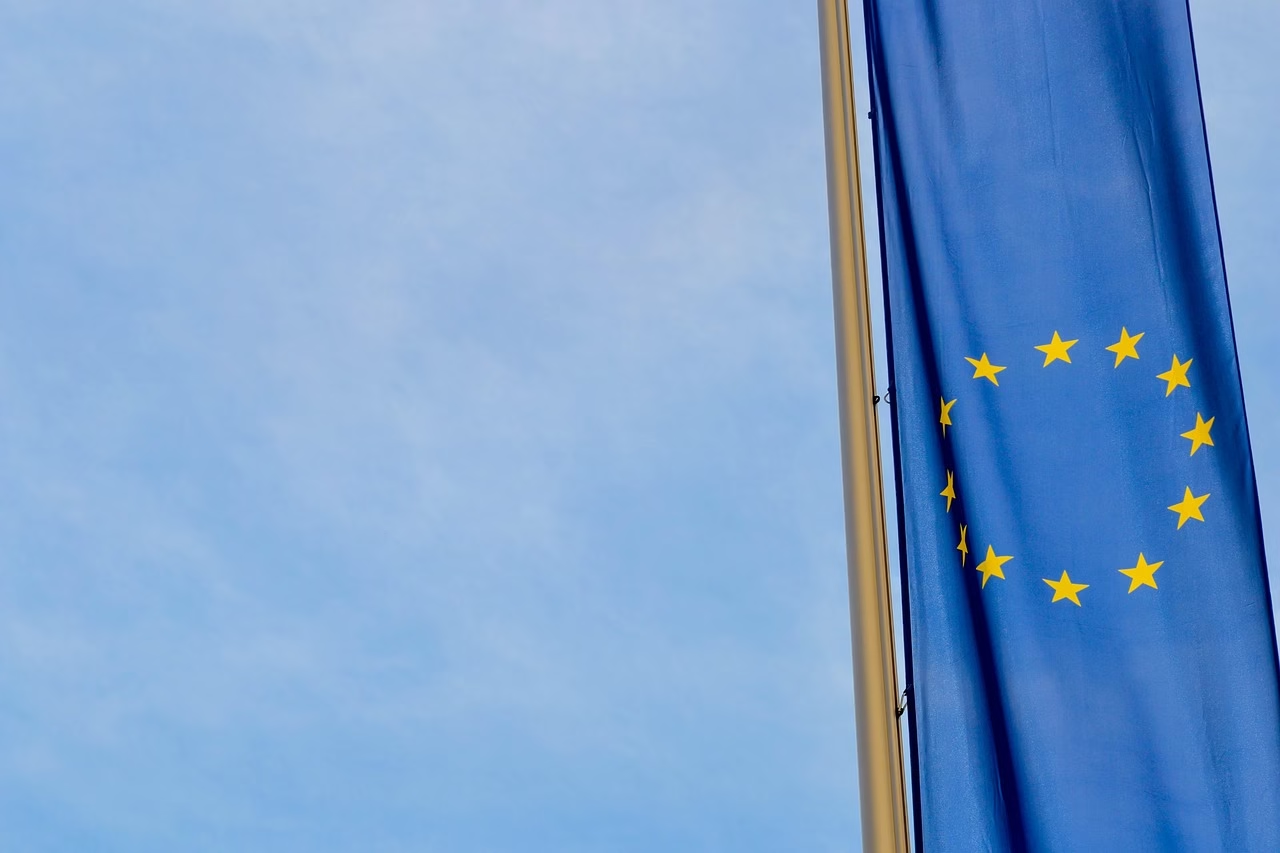
Diplomatic Fracture in Brussels
European Union leaders remain deeply divided over the necessity and timing of renewed diplomatic engagement with Moscow, as internal debates surfaced during this week’s summit in Brussels. While some member states advocate for maintaining channels of communication to influence potential de-escalation, others insist on total isolation until the conflict in Ukraine reaches a definitive resolution.
The Context of European Unity
Since the full-scale invasion of Ukraine in February 2022, the EU has maintained a largely unified front, implementing thirteen rounds of sanctions and providing unprecedented military and financial support to Kyiv. The current discord represents a departure from the bloc’s previously cohesive stance, highlighting the strain of a prolonged war on member states with differing geographic and economic vulnerabilities.
Competing Strategic Visions
Proponents of a more flexible diplomatic approach argue that the EU cannot afford to be absent from future global discussions regarding European security architecture. These leaders suggest that keeping backchannels open with Russian officials could prevent miscalculations and provide a platform to address humanitarian concerns or nuclear safety risks.
Conversely, a bloc of eastern and northern European nations argues that any diplomatic contact at this stage grants legitimacy to the Kremlin. These states contend that the priority must remain the total economic and political containment of the Russian leadership, fearing that premature dialogue could undermine the resolve of the Western coalition.
Expert Analysis and Regional Pressures
Geopolitical analysts suggest that this friction is largely driven by domestic political landscapes and the varying levels of energy dependence still present across the union. According to data from the European Council on Foreign Relations, public sentiment across the bloc remains largely supportive of Ukraine, yet there is growing anxiety regarding long-term economic stability and energy costs.
“The divide is not necessarily about the end goal, but about the tactical utility of diplomacy in a high-stakes environment,” notes Dr. Elena Vance, a senior fellow at the Center for European Policy. “The challenge for Brussels is maintaining a unified foreign policy when the front-line states view survival differently than those further from the conflict zone.”
Implications for Future Policy
This internal split threatens to complicate the EU’s ability to project a singular voice on the global stage, particularly as international partners look to Brussels for a clear signal on future security commitments. The lack of consensus may force the European Commission to delay new legislative packages or compromise on the severity of upcoming sanction measures.
Observers are now watching the upcoming ministerial meetings to see if a compromise framework can be established. The evolution of this debate will likely determine whether the EU adopts a more pragmatic, multi-layered approach to Russia or doubles down on its current policy of total isolation, a decision that will reverberate through the ongoing peace negotiations and regional security strategies for years to come.


















Leave a Reply