


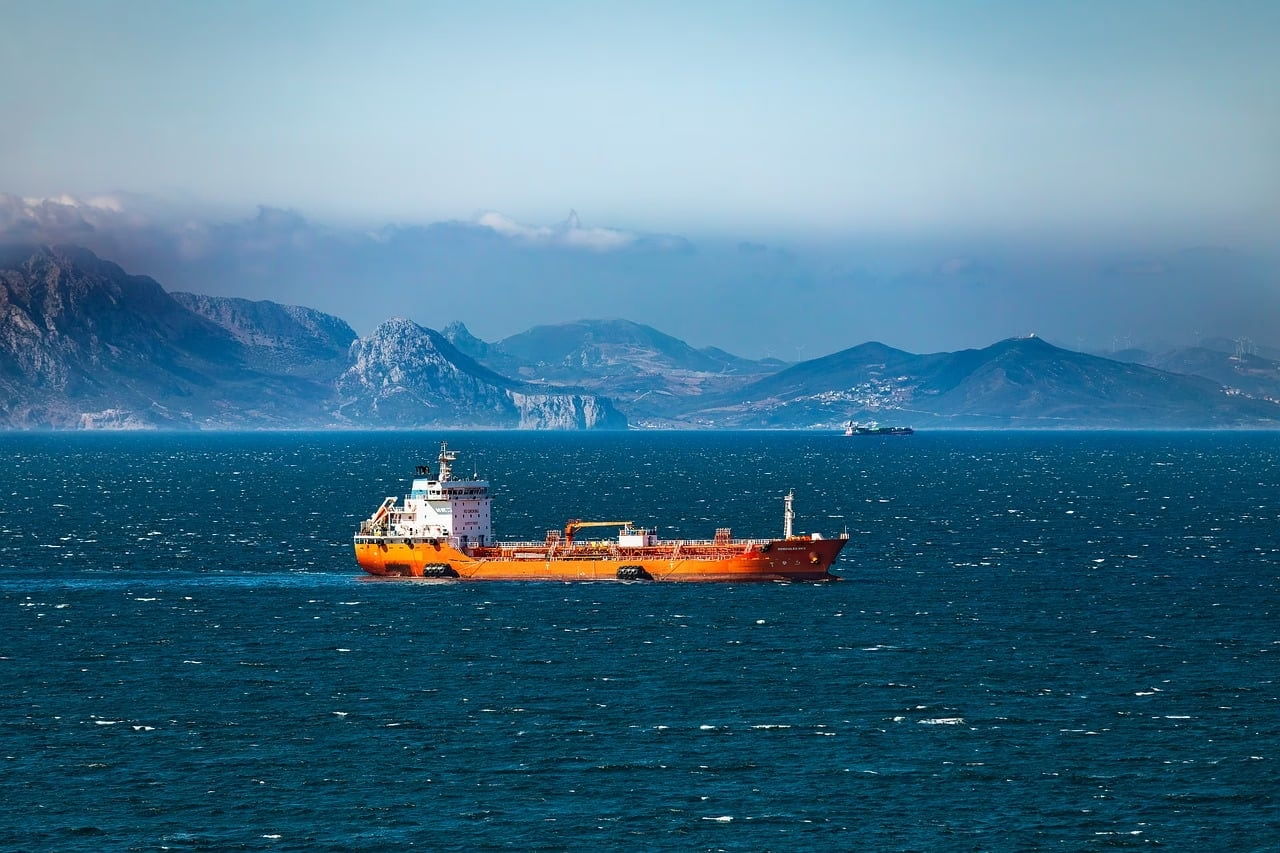
President Donald Trump announced on Truth Social that a landmark agreement aimed at ending hostilities with Iran is scheduled to be signed this Sunday. The deal is expected to initiate an immediate reopening of the Strait of Hormuz, a critical maritime chokepoint that has been the site of escalating geopolitical tension.
The Context of the Conflict
Tensions between the United States and Iran have fluctuated significantly over the past several years, characterized by economic sanctions, regional proxy conflicts, and concerns over nuclear proliferation. The Strait of Hormuz, through which approximately one-fifth of the world’s oil supply passes, has frequently served as a strategic pressure point.
Previous attempts at diplomatic resolution often faltered due to deep-seated mistrust and conflicting security priorities. The recent shift toward a formal agreement marks a notable pivot in regional foreign policy, signaling a potential de-escalation of military posturing in the Persian Gulf.
Strategic Implications of the Deal
The immediate reopening of the Strait of Hormuz carries profound implications for global energy markets. Analysts suggest that the restoration of unhindered passage for oil tankers could lead to increased stability in crude oil prices, which have historically spiked during periods of regional military buildup.
Maritime insurance rates, which surged following reports of vessel seizures and harassment in the area, are also expected to see downward pressure. Shipping companies and energy exporters are currently bracing for the operational shifts required to resume standard transit routes through the waterway.
Expert Perspectives and Market Reactions
Energy economists note that while the signing of a deal is a significant milestone, the long-term impact depends on the enforcement mechanisms embedded in the agreement. Dr. Elena Vance, a geopolitical risk analyst, stated that the stability of the Strait depends on sustained compliance from all regional stakeholders rather than just a signature on a document.
Financial markets reacted with cautious optimism following the announcement. Futures indices reflected a slight cooling in risk premiums, as investors anticipate a reduction in the likelihood of a major kinetic conflict in the Middle East.
Industry Outlook and Future Developments
For the logistics and energy sectors, the coming days will be defined by how quickly maritime authorities can normalize navigation protocols in the Strait. International monitoring agencies are expected to increase their presence to ensure the agreement is upheld in practice.
Observers are now turning their attention to the specific terms of the Sunday signing. The primary metric for success will be the sustained flow of commercial traffic and the subsequent reduction in military patrols from both U.S. and Iranian forces in the vicinity of the waterway.





















Leave a Reply