


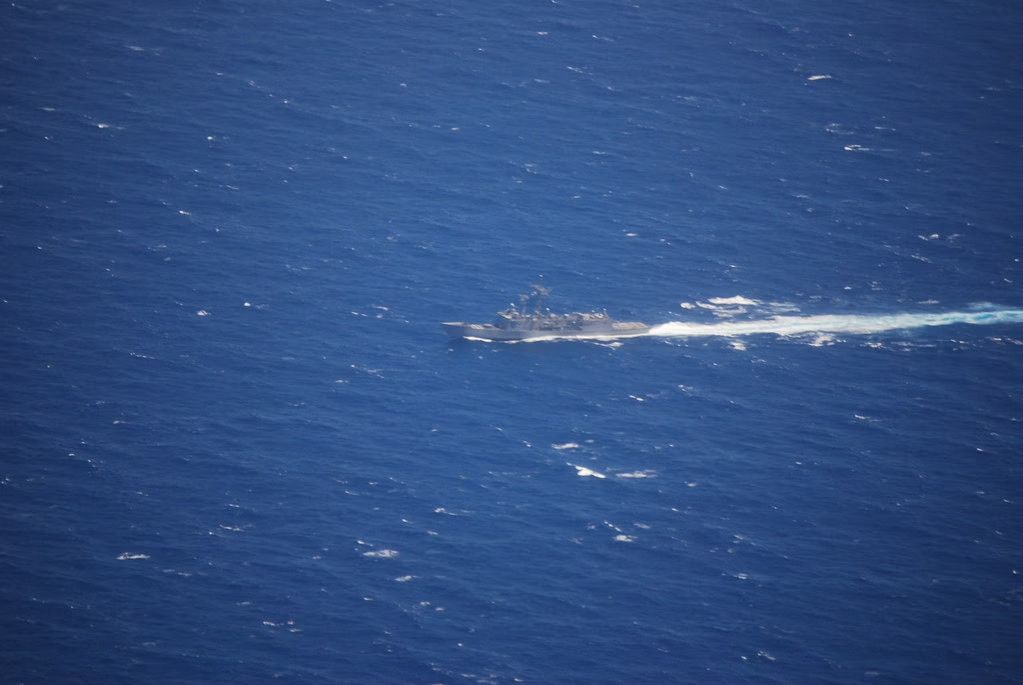
Diplomatic Breakthrough on the Horizon
The United States and Iran are nearing a landmark agreement to reopen the Strait of Hormuz, with officials from both nations and mediators in Pakistan confirming that a memorandum of understanding could be finalized within days. President Donald Trump, alongside Iranian diplomatic representatives, signaled that the deal aims to de-escalate rising maritime tensions that have threatened global energy supplies and international shipping routes for months.
Context of the Maritime Crisis
The Strait of Hormuz, a critical chokepoint connecting the Persian Gulf to the Gulf of Oman, serves as a vital artery for nearly 20% of the world’s petroleum consumption. Tensions in the region reached a boiling point earlier this year following a series of vessel seizures and military posturing, which prompted international concerns regarding the security of global supply chains.
For years, the U.S. has maintained a naval presence in the area to ensure freedom of navigation, while Iran has frequently asserted its sovereignty over the waterway. The push for a diplomatic solution follows increased economic pressure and the intervention of Pakistan, which has acted as a neutral intermediary to facilitate back-channel communications between Washington and Tehran.
The Mechanics of the Proposed Deal
Sources familiar with the negotiations indicate that the proposed memorandum focuses on establishing a ‘safe passage’ framework. This includes the implementation of a deconfliction hotline between naval commanders and a mutual agreement to cease the harassment of commercial tankers traversing the corridor.
While the specific technical details remain under wraps, analysts suggest that the deal may include reciprocal guarantees regarding maritime conduct. By formalizing these protocols, both parties hope to mitigate the risk of accidental military clashes that could spiral into broader regional conflict.
Expert Perspectives and Economic Impact
Energy analysts note that the mere prospect of a deal has already begun to stabilize volatile oil futures. According to data from the Energy Information Administration, the uncertainty surrounding the Strait has historically added a ‘risk premium’ to global crude prices, impacting consumers worldwide.
‘A reduction in geopolitical friction in this region is the single most important factor for maintaining predictable energy markets,’ said a senior maritime security consultant. ‘If this agreement holds, it effectively removes the primary source of supply chain anxiety that has dominated shipping logistics throughout the current fiscal year.’
Future Implications for Global Trade
The successful signing of this memorandum would represent a significant pivot in U.S.-Iran relations, potentially serving as a baseline for future diplomatic engagement. For the global shipping industry, the focus now shifts toward the implementation phase and whether the agreed-upon security protocols will be strictly enforced by local naval assets.
Observers are closely monitoring the next 72 hours for official signatures. Moving forward, stakeholders should watch for the resumption of standard traffic patterns and any potential secondary agreements regarding regional maritime surveillance, which could further cement the stability of the Strait for the long term.























Leave a Reply