



The United Nations Human Rights Monitoring Mission in Ukraine (HRMMU) reported on Friday that civilian casualties in Ukraine reached their highest level in May since the onset of the full-scale Russian invasion in 2022. The surge in fatalities and injuries, occurring primarily in the Kharkiv region, highlights a dramatic intensification of hostilities that continues to exact a heavy toll on non-combatants.
A Pattern of Escalation
The UN report confirms that at least 174 civilians were killed and 690 injured during the month of May alone. This represents the highest monthly casualty figure recorded by the mission since June 2021, marking a grim turning point in the protracted conflict.
The data suggests that the spike is directly linked to the opening of a new front in the northeastern Kharkiv region. Russian forces launched fresh ground incursions and intensified aerial bombardment, leaving residents in border communities with little opportunity to evacuate.
The Mechanics of Rising Casualties
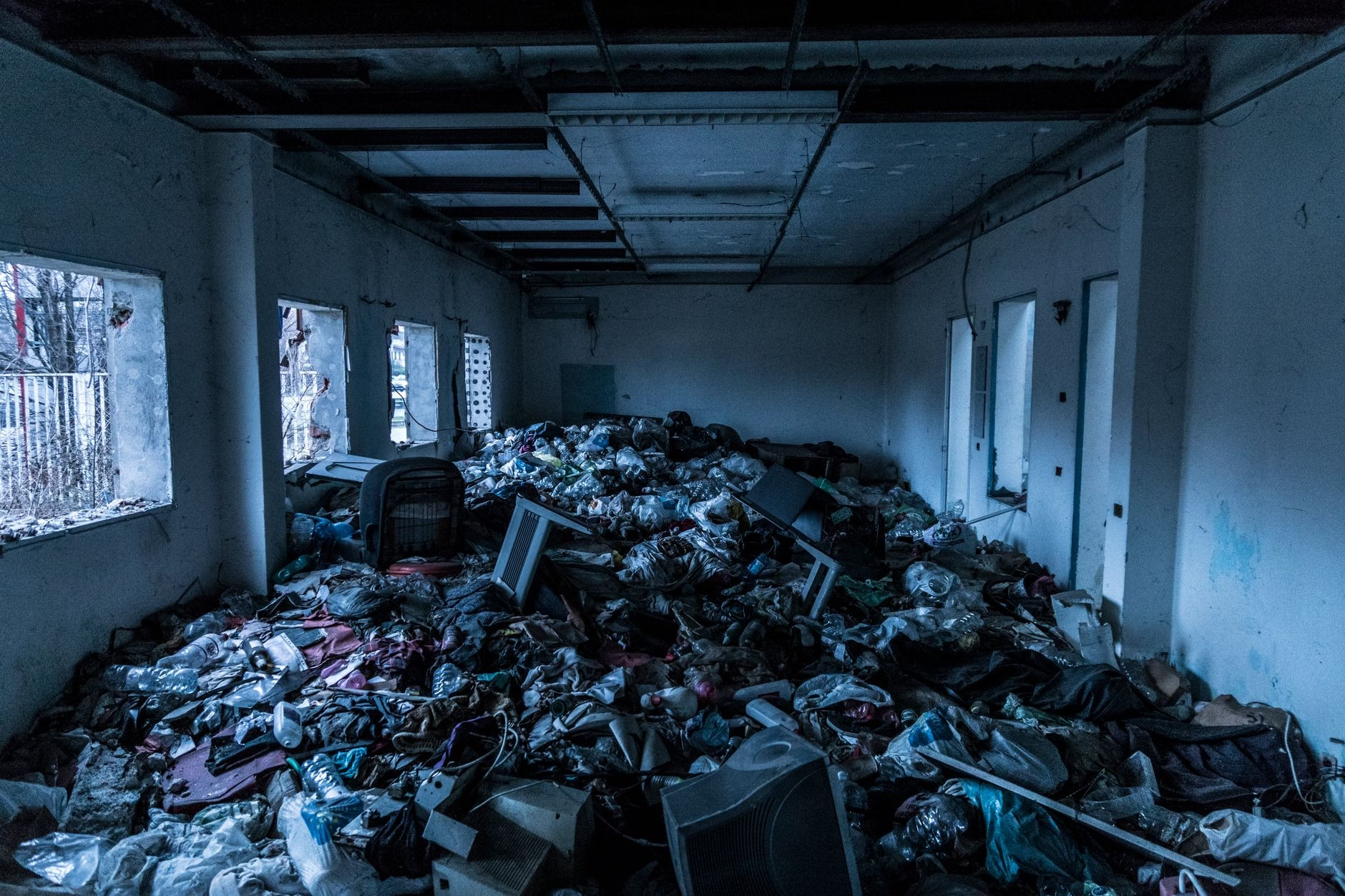
The increase in casualties is attributed largely to the use of wide-area explosive weapons in populated zones. The report details how the deployment of guided aerial bombs and long-range artillery has decimated civilian infrastructure, including residential buildings, medical facilities, and energy grids.
According to the UN, the intensity of the attacks has overwhelmed local emergency services. Aid organizations are struggling to maintain supply chains in areas under constant shelling, further complicating the humanitarian response for those trapped in conflict zones.
Expert Perspectives and Data
Danielle Bell, head of the HRMMU, stated that the figures reflect a broader shift in military strategy. “The deliberate targeting of residential areas and the use of indiscriminate weaponry have turned once-stable regions into high-risk zones,” Bell noted in a press briefing.
Data provided by the UN Office for the Coordination of Humanitarian Affairs (OCHA) indicates that over 11,000 civilians have been killed since the February 2022 invasion. However, the organization warns that the true number is likely significantly higher, as access to occupied territories remains restricted and verification processes are hampered by ongoing combat.
Industry and Humanitarian Implications
For the international community, these figures serve as a stark reminder of the limitations of current diplomatic efforts to achieve a ceasefire. The ongoing escalation forces a re-evaluation of security protocols for humanitarian workers and highlights the urgent need for enhanced air defense systems to protect urban populations.
Observers are now closely monitoring the situation in the Donetsk and Sumy regions, where intelligence reports suggest similar tactical shifts may occur. International aid agencies are preparing for a potential new wave of internally displaced persons as the conflict front expands and the security situation for civilians continues to deteriorate.
Moving forward, the focus remains on the upcoming international peace summits and whether global powers can leverage diplomatic pressure to mitigate the impact on non-combatants. Analysts expect that if the current rate of bombardment persists, the upcoming summer months could see an unprecedented humanitarian crisis, necessitating a significant increase in emergency funding and international oversight of conflict zones.



















Leave a Reply