


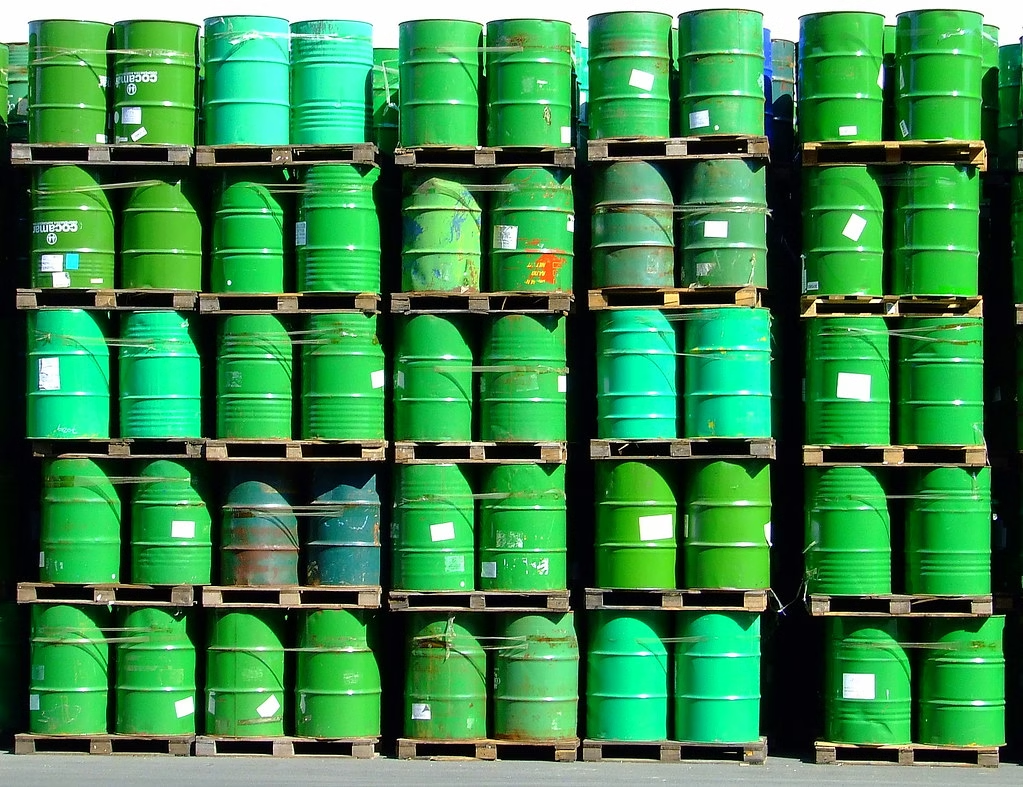
Supply Constraints at Cushing
American crude oil reserves have plummeted to their lowest levels since 2020 as a result of significant production outages in Canada and adverse weather conditions impacting North American infrastructure. The disruption, which centers on major oilsands operations and logistical bottlenecks, has placed immediate pressure on the Cushing, Oklahoma storage hub—a critical delivery point for West Texas Intermediate (WTI) crude.
The Impact of Canadian Production Outages
Cenovus Energy, one of Canada’s largest producers, recently confirmed power-related outages at its oilsands facilities that have hampered crude output. These technical difficulties, coupled with seasonal wet weather patterns across the supply chain, have created a compounding effect on North American energy logistics.
Data from the U.S. Energy Information Administration (EIA) indicates that inventories at Cushing have been trending downward throughout the current quarter. Analysts suggest that the facility is currently operating near the lower end of its historical range, leaving the market with little buffer against further supply shocks.
Market Dynamics and Price Volatility
The tightening of inventories has introduced heightened volatility into the energy markets. When storage levels at Cushing drop significantly, traders often react to the potential for a supply squeeze, which can drive crude futures prices higher even if global demand remains stable.
Energy market experts note that the interconnected nature of Canadian production and U.S. refineries makes the North American market particularly sensitive to regional disruptions. “The reliance on consistent flows from the north to feed the mid-continent refining system means that any hiccup in Alberta is felt almost immediately in Oklahoma,” said a senior analyst at a leading energy consultancy.
Broader Industry Implications
For the energy industry, these developments underscore the fragility of supply chains in an era of extreme weather events and aging infrastructure. Refineries that rely on heavy crude blends from the Canadian oilsands are currently forced to navigate higher input costs as supply availability wanes.
Consumers may begin to see the downstream effects through increased gasoline and diesel prices if the inventory deficit persists. While the U.S. maintains strategic reserves, the commercial storage levels at Cushing serve as the primary barometer for immediate market health and price discovery.
Looking Ahead
Industry observers are now closely monitoring the duration of the power restoration efforts at Canadian facilities and the persistence of regional weather patterns. Markets will look to upcoming EIA weekly storage reports to determine if the inventory draw is decelerating or if the structural deficit is deepening, a factor that will likely dictate energy pricing trends for the remainder of the quarter.
























Leave a Reply