


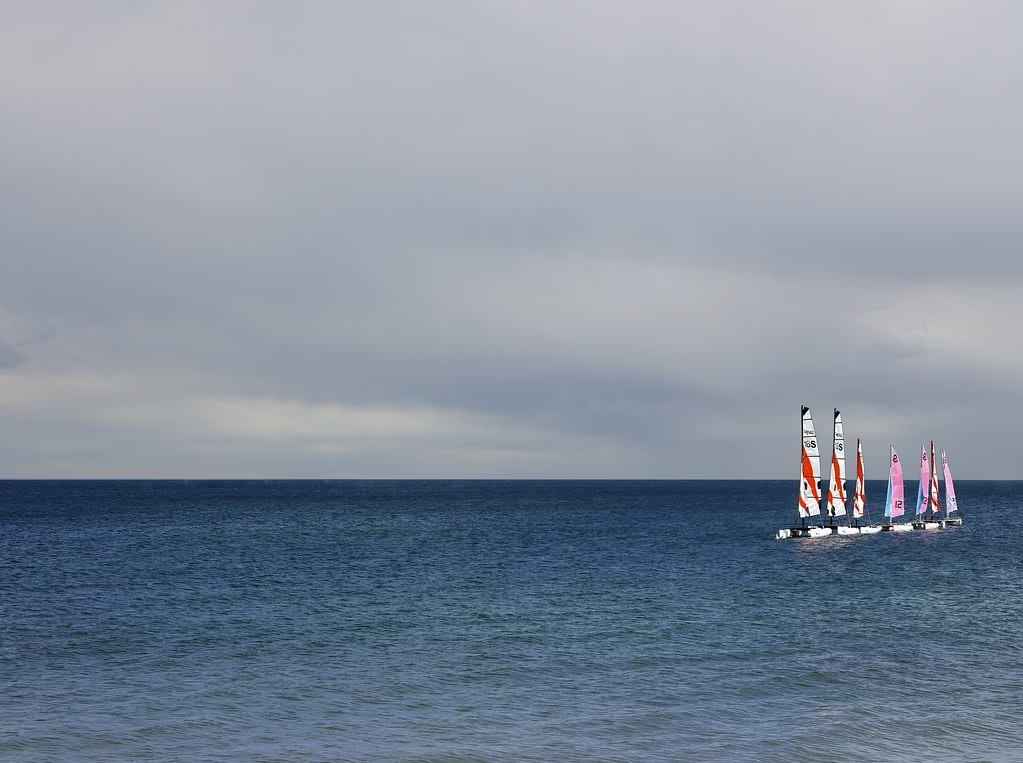
A father and daughter duo is currently navigating a daring circumnavigation of the globe, overcoming severe oceanic storms and a sudden health crisis that threatened to derail their ambitious expedition. The pair, who departed on their long-term maritime journey earlier this year, have reached a critical waypoint while documenting their progress through remote waters, highlighting the immense physical and mental strain inherent in long-distance solo sailing.
The Context of Global Circumnavigation
Circumnavigating the globe by sail is considered one of the most grueling endurance challenges in the maritime world. According to the World Cruising Club, only a small fraction of sailors who attempt such voyages complete them without significant mechanical or medical intervention. Participants must contend with unpredictable weather patterns, equipment failure, and the psychological weight of isolation for months at a time.
Navigating Through Crisis
The expedition faced its most significant challenge when a sudden medical emergency struck the father mid-voyage, forcing the pair to rely on satellite-linked medical consultations and their own emergency training. Following the incident, the duo had to navigate through a series of intense gale-force storms that tested the structural integrity of their vessel. Despite the volatility of the weather, they maintained their heading, utilizing advanced weather-routing software to avoid the most hazardous wind fields.
Expert Perspectives on Maritime Safety
Maritime safety experts emphasize that modern technology has transformed long-distance sailing, yet human resilience remains the primary factor in survival. “While satellite communication and GPS have minimized the risk of getting lost, they cannot replace the necessity of experience when faced with equipment failure or illness in the middle of the Pacific,” said Dr. Marcus Thorne, a maritime risk analyst. Data from the International Maritime Rescue Federation suggests that emergency response times in deep-ocean zones can exceed 48 hours, placing the onus of initial crisis management entirely on the crew.
Industry and Personal Implications
For the sailing industry, this journey serves as a case study in the efficacy of onboard medical telemetry and satellite connectivity. The ability to receive real-time diagnostic advice while thousands of miles from the nearest port is increasingly becoming a standard requirement for private long-range vessels. For the broader public, the story underscores the rising trend of ‘adventure endurance’ reporting, where individuals document extreme personal challenges in real-time, blurring the lines between private travel and public performance.
What to Watch Next
As the pair continues their journey toward the final leg of their route, observers are closely monitoring their vessel’s maintenance logs and the father’s continued recovery. The upcoming transit through the Southern Ocean will serve as the ultimate litmus test for both the boat’s repairs and the crew’s sustained health. Future updates will focus on how they manage the logistics of re-provisioning in remote island territories and whether they adjust their original timeline to account for their recent setbacks.




















Leave a Reply