


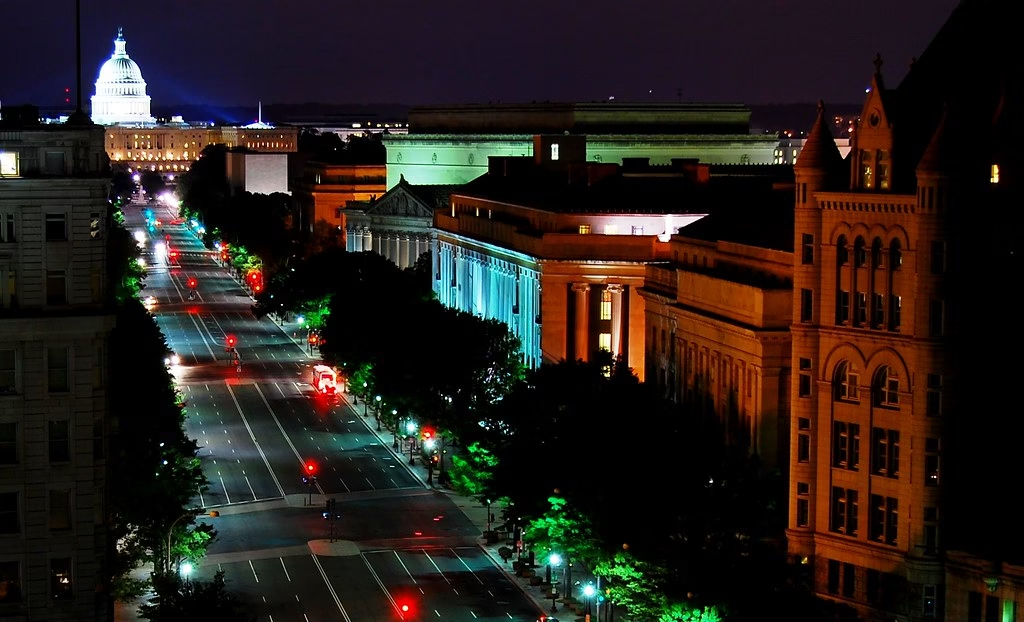
Legal Challenge Gains Momentum
Senator Bill Cassidy (R-LA) has officially joined a bipartisan coalition of lawmakers in filing an amicus brief this week, formally challenging the legality of the Department of Justice’s (DOJ) “anti-weaponization” fund. The filing, submitted to a federal court, characterizes the current allocation and utilization of these federal resources as a “dire threat” to the constitutional separation of powers and the integrity of the judicial process.
Context of the Dispute
The controversy centers on a specific pool of funding that critics argue allows the executive branch to bypass traditional congressional oversight. The DOJ established the fund under the premise of addressing internal procedural weaponization, but opponents contend that the agency has utilized the capital to consolidate power rather than ensure accountability.
For years, tension has simmered between the legislative and executive branches regarding the discretionary use of federal agency funds. This latest legal action marks a significant escalation, as members of the Senate are now seeking direct judicial intervention to halt what they perceive as an unauthorized expansion of executive authority.
Arguments from the Plaintiffs
In the legal filing, Senator Cassidy and his colleagues argue that the fund creates a “shadow budget” that evades the standard appropriations process. They contend that by controlling these assets, the DOJ can incentivize internal policies that are not explicitly authorized by law, effectively shielding the agency from the checks and balances mandated by the U.S. Constitution.
Legal analysts note that the brief emphasizes the potential for political bias within the department. By framing the fund as a threat to institutional fairness, the plaintiffs aim to convince the court that the current structure of the fund violates the spirit of the Anti-Deficiency Act, which prohibits agencies from spending money in excess of their actual appropriations.
Expert Perspectives and Data
Constitutional scholars are divided on the implications of the brief. Some experts suggest that the court is unlikely to intervene in what is traditionally viewed as a political dispute between branches of government. However, others point to the increasing frequency of “non-delegation doctrine” cases as a sign that the judiciary may be more willing to scrutinize agency spending than in previous decades.
Data from the Congressional Research Service suggests that discretionary “slush funds” have become a point of contention in recent fiscal cycles. While the DOJ has maintained that its internal funding mechanisms are necessary for administrative agility, critics point to the lack of transparent reporting requirements as evidence of potential mismanagement.
Broader Industry Implications
The outcome of this challenge could set a significant precedent for how federal agencies manage internal accounts moving forward. If the court rules in favor of the senators, the DOJ may be forced to restructure its financial operations and submit to more rigorous congressional auditing.
Industry observers and government watchdogs are monitoring the case for signs of broader regulatory shifts. A ruling against the DOJ could trigger a wave of similar challenges against other federal agencies that utilize comparable funding structures, potentially leading to a major overhaul of federal budgetary transparency.
Looking Ahead
As the legal proceedings continue, observers should watch for the Department of Justice’s formal response to the brief. The court’s decision on whether to grant an injunction could serve as a bellwether for future battles over agency independence. Further developments are expected in the coming months as both sides prepare for oral arguments, which will likely focus on the scope of executive discretion versus the legislative power of the purse.




















Leave a Reply