



Legislative Pivot
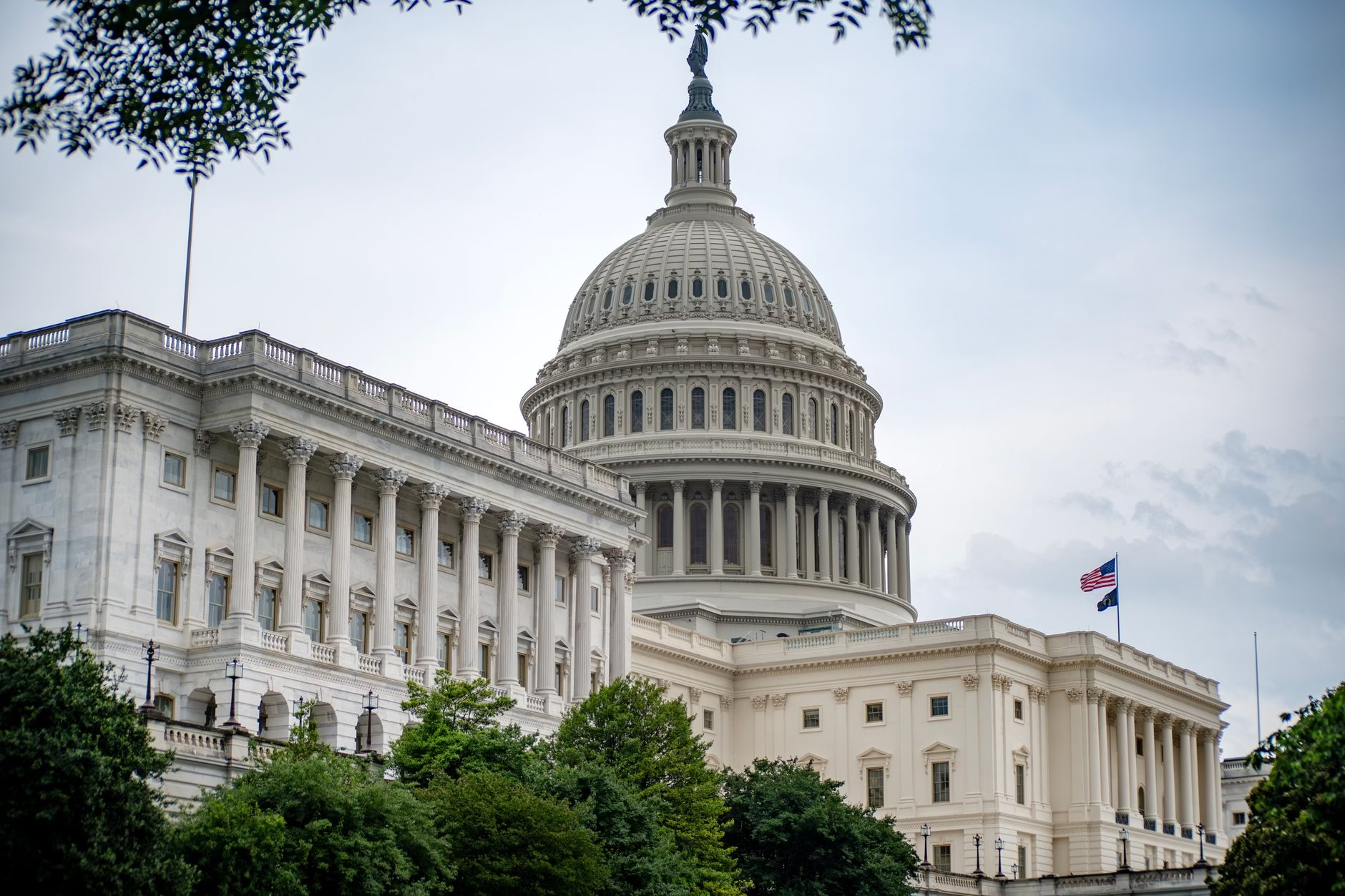
Senate Republican leaders have officially stripped up to $1 billion in proposed funding designated for security upgrades at Donald Trump’s Mar-a-Lago estate from a pending immigration enforcement bill. The decision, finalized this week in Washington, D.C., follows intense internal deliberation among GOP strategists regarding the political viability of the measure. By removing the provision, leadership aims to insulate the broader immigration reform package from procedural hurdles and public backlash during a high-stakes legislative session.
Contextualizing the Funding Request
The funding proposal was initially introduced as a localized security measure, intended to address the logistical and protective requirements of the former president’s residence. However, the inclusion of such a substantial appropriation within an immigration-focused bill drew immediate scrutiny from both sides of the aisle. Legislative observers noted that tying personal security infrastructure to federal border policy created an unusual intersection of private property interests and national legislative priorities.
Strategic Calculations and Political Risk
GOP leadership concluded that the inclusion of the funding risked derailing the entire immigration bill, which remains a cornerstone of the party’s current policy agenda. Internal discussions suggested that the $1 billion price tag would serve as a lightning rod for Democratic opposition and potentially alienate moderate voters. By excising the clause, party strategists hope to present a more streamlined bill that focuses exclusively on border security and asylum reform.
“The optics of prioritizing a private residence’s security budget within a national border crisis bill were simply unsustainable,” said one senior aide familiar with the negotiations. Procedurally, the amendment threatened to trigger a budget point of order, which could have necessitated a 60-vote threshold that the party struggled to guarantee. Removing the funding allows the bill to proceed under a simpler path, potentially bypassing the need for extensive committee re-evaluation.
Expert Analysis of the Legislative Landscape
Political analysts suggest that this move highlights the delicate balance between party loyalty and legislative pragmatism. Data from the Congressional Budget Office indicates that federal security expenditures for former presidents are typically handled through separate, standardized Department of Homeland Security appropriations. Attempting to bundle these costs into immigration legislation represented a departure from traditional budgetary norms.
“When you mix highly contentious border policy with specific, localized infrastructure spending, you invite gridlock,” noted a policy researcher at a non-partisan think tank. The decision to strip the funding signals that party leadership is prioritizing the successful passage of the immigration package over secondary spending requests. This shift reflects a broader strategy to maintain focus on the primary narrative of border enforcement as the November elections approach.
Future Implications for Security Policy
The removal of this funding does not necessarily signal the end of the debate regarding protective details for high-profile political figures. Observers are now watching to see if the funding request will be reintroduced through the standard appropriations process or if it will be abandoned entirely. The upcoming legislative cycle will likely clarify whether this pivot is a permanent strategy or a temporary tactical retreat aimed at ensuring the passage of the core immigration enforcement bill.




















Leave a Reply