


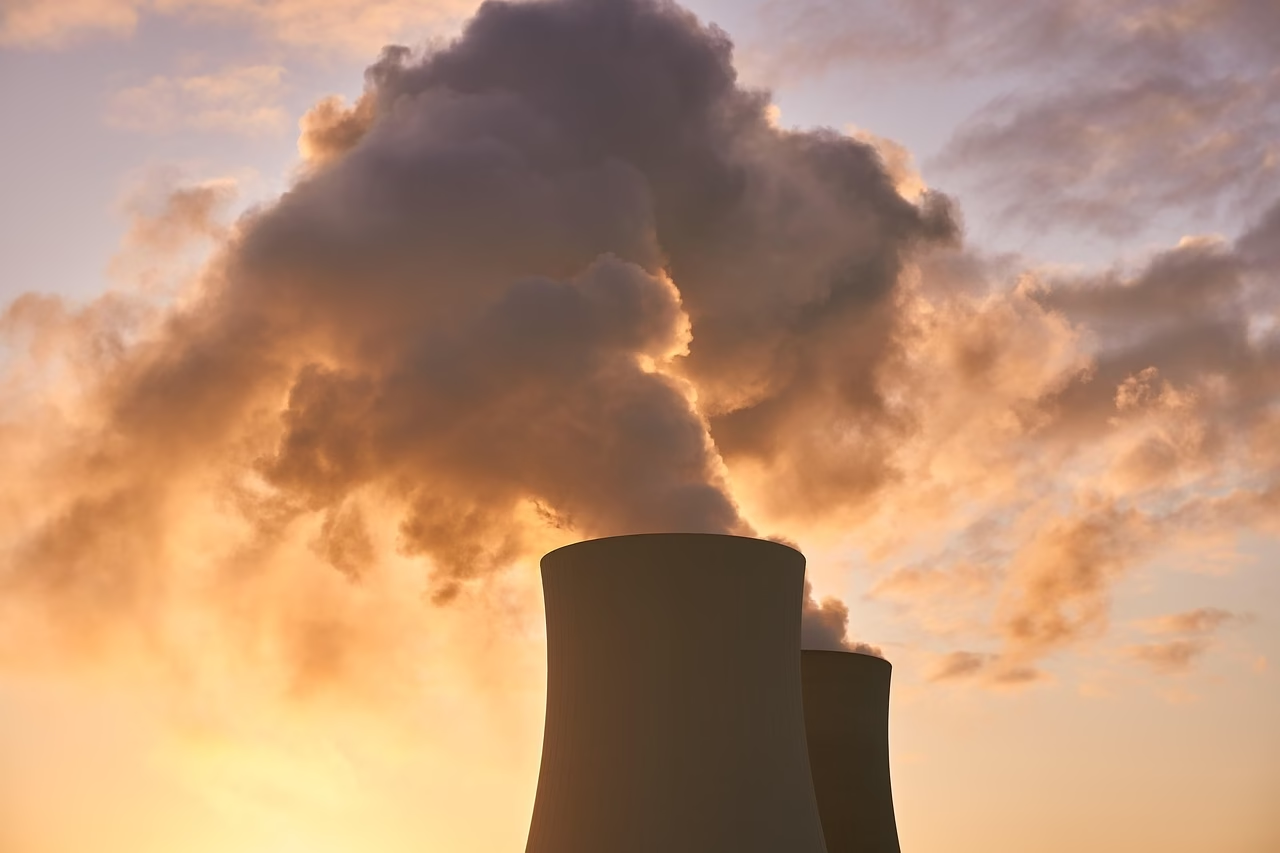
The International Atomic Energy Agency (IAEA) is urgently seeking immediate access to the Zaporizhzhia Nuclear Power Plant (ZNPP) in southern Ukraine after reports of a direct drone strike hit the facility this weekend. IAEA Director General Rafael Grossi confirmed that inspectors currently stationed at the site were dispatched to assess the damage following the incident, which marks the first time the plant has been directly targeted since November 2022.
Context of the Conflict
The Zaporizhzhia facility, the largest nuclear power plant in Europe, has been under Russian military control since the early stages of the full-scale invasion in March 2022. Despite being occupied, the plant has continued to be operated by its Ukrainian technical staff, albeit under immense pressure and amid constant security concerns.
The site has faced repeated shelling throughout the conflict, leading the IAEA to maintain a permanent presence there to monitor safety protocols. However, the agency’s ability to conduct thorough inspections has been frequently hampered by access restrictions imposed by occupying forces, leaving the international community largely reliant on reports from the site’s operators.
Details of the Recent Strike
The reported strike targeted the containment structure of the plant’s sixth reactor. According to officials, the impact did not breach the primary containment or result in a radiological release, but the proximity of the detonation to critical nuclear safety systems has heightened global alarm.
Both Russia and Ukraine have traded accusations regarding the origin of the drone. Russian officials claimed that Ukrainian forces were responsible for the attack, while Ukrainian authorities have denied involvement, suggesting the incident was a staged provocation. Independent verification of the strike’s origin remains difficult due to the ongoing hostilities in the region.
Expert Perspectives on Nuclear Security
Nuclear safety experts emphasize that even a non-catastrophic strike on a nuclear facility carries significant risks. The disruption of external power lines, which have been severed multiple times during the war, remains the primary concern for maintaining the cooling systems necessary to prevent a meltdown.
“Targeting a nuclear power plant creates an unprecedented risk of a radiological accident,” stated an independent nuclear security analyst. “The containment vessels are designed to withstand specific impacts, but they are not designed to endure sustained military engagement or direct drone strikes on critical infrastructure.”
Data from the IAEA suggests that the plant’s safety margins have been consistently eroded over the past two years. The agency has repeatedly warned that the combination of military activity, staff shortages, and limited maintenance cycles creates a volatile environment that is fundamentally incompatible with international nuclear safety standards.
Industry Implications
For the global energy sector and international security watchdogs, the situation at Zaporizhzhia represents a dangerous precedent in modern warfare. The weaponization of nuclear infrastructure complicates future frameworks for nuclear non-proliferation and international oversight.
Industry leaders are watching these developments closely, as any radiological incident would have catastrophic consequences for the regional environment and the global perception of nuclear energy. Furthermore, the incident underscores the urgent need for a demilitarized zone around such facilities, a proposal that has yet to gain traction among warring parties.
Looking ahead, the international community will focus on whether the IAEA can secure unfettered access to the site to conduct a comprehensive damage assessment. Observers are also monitoring the stability of the plant’s remaining power connections, as any further disruption could force the facility into an emergency shutdown, further destabilizing Ukraine’s energy grid.






















Leave a Reply