


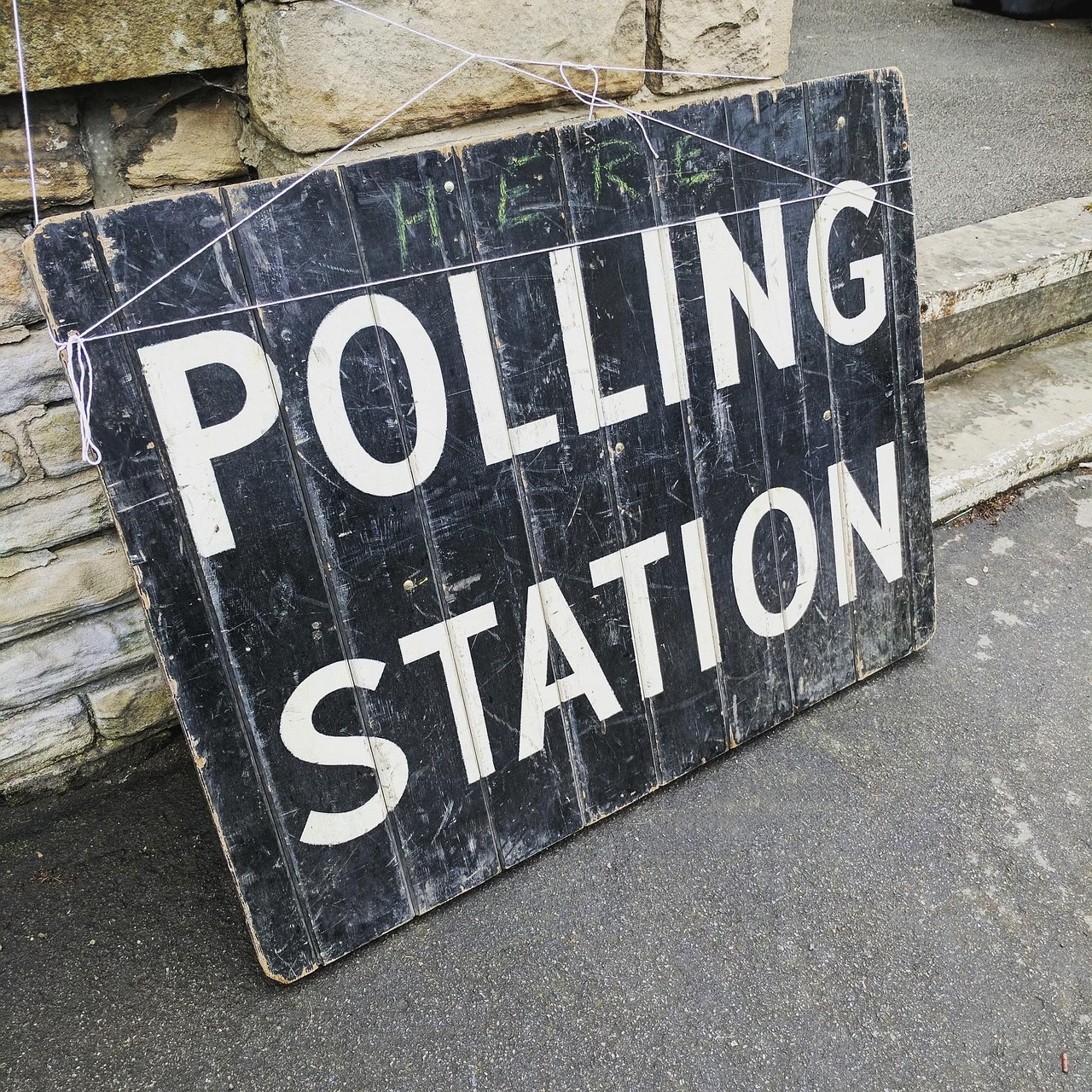
Iowa Democratic voters head to the polls this Tuesday to choose between Josh Turek and Zach Wahls, marking a pivotal moment in the party’s effort to flip a U.S. Senate seat. The primary contest reflects a broader internal debate within the state party regarding which candidate possesses the most viable path to victory in a historically competitive political landscape.
The Context of Iowa’s Political Shift
Once considered a bellwether state, Iowa has trended significantly toward the Republican Party over the last decade. Democrats are currently searching for a candidate who can bridge the gap between urban centers and the state’s vast rural districts, which have increasingly drifted away from the party’s platform.
The current race is defined by the distinct backgrounds of the two candidates. Zach Wahls, a state senator, has leaned into his experience within the Iowa legislature to appeal to traditional Democratic voters. Josh Turek, a Paralympic athlete and activist, has sought to build support through a focus on accessibility and grassroots advocacy.
Evaluating Candidate Viability
Political analysts note that the primary is not merely a contest of personality but a test of strategic direction for the Iowa Democratic Party. Party officials are closely monitoring voter turnout metrics, which historically remain lower in non-presidential primary cycles.
Data from recent polling suggests that voters are weighing the risks of nominating a candidate with deep institutional ties versus one who offers a fresh, outsider perspective. Supporters of Wahls argue that his legislative record provides a necessary foundation for navigating the complexities of federal policy. Conversely, Turek’s base argues that his unique life experience and focus on civil rights offer a compelling narrative that could mobilize disillusioned voters.
Expert Perspectives and Industry Data
Political science experts suggest that the winner of Tuesday’s primary will face a significant financial and organizational hurdle in the general election. According to campaign finance reports filed with the Federal Election Commission, both candidates have been working to build the war chests required to compete against well-funded incumbents.
Independent analysts emphasize that the nominee must address the state’s economic anxieties to gain traction among swing voters. The focus on rural healthcare, agricultural policy, and infrastructure remains the standard litmus test for any candidate hoping to gain a foothold in Iowa’s general election.
Looking Toward the General Election
The implications of this primary extend beyond the ballot box, as the outcome will signal the ideological trajectory of the Iowa Democratic Party for the next cycle. Observers are watching to see if the nominee can successfully pivot from the primary discourse to a broader message that resonates with the state’s independent voter base.
As the primary results are tallied, the immediate focus will shift to party unity. The ability of the two campaigns to reconcile their differences and integrate their donor networks will be the first indicator of the party’s strength heading into the fall. Analysts suggest watching the post-primary endorsement process, as it will reveal whether the party apparatus can coalesce behind the nominee to mount a credible challenge to Republican control.

















Leave a Reply