


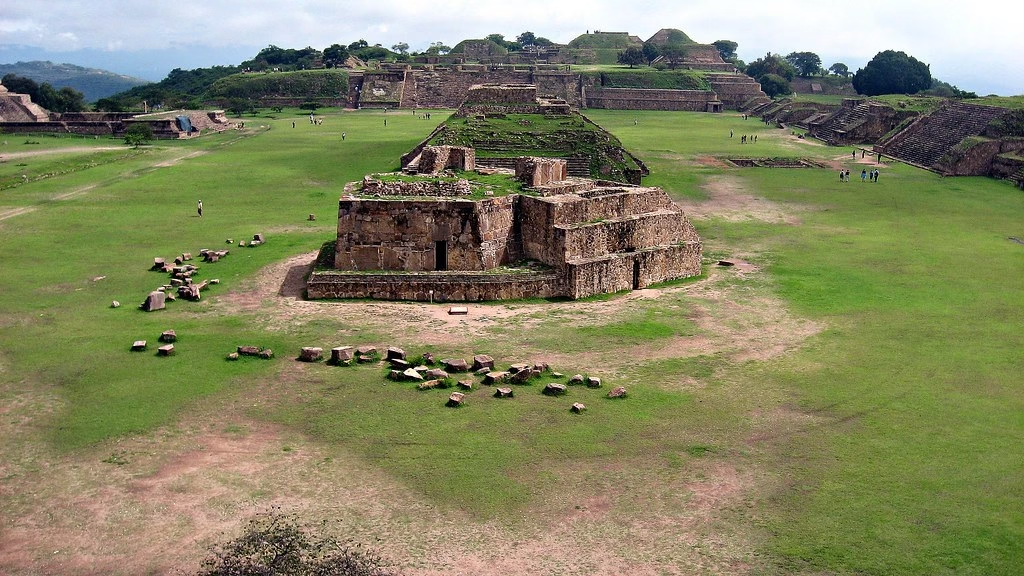
Rewriting the Timeline of Human Innovation
Archaeologists working at the Motza site near Jerusalem have uncovered evidence of advanced plaster-making techniques dating back approximately 10,000 years, pushing the origins of this sophisticated construction method nearly 8,000 years earlier than previously attributed to the Roman Empire. The discovery, detailed in recent excavations, reveals that Neolithic settlers utilized complex chemical processes to heat limestone to extreme temperatures, creating a durable material used for flooring and structural surfaces long before the rise of classical civilizations.
Contextualizing the Neolithic Revolution
For decades, historical consensus credited the Romans with the mastery of lime plaster, viewing it as a hallmark of their engineering prowess during the first millennium BCE. However, the Motza findings suggest that prehistoric societies were far more technologically adept than traditional models assumed. This site, located in the Judean Hills, offers a rare window into the Pre-Pottery Neolithic period, a time when humans were transitioning from nomadic hunter-gatherer lifestyles to settled, agricultural communities.
The Chemistry of Prehistoric Construction
Researchers identified the plaster through microscopic analysis of floor fragments found within the ancient dwellings. The process required not only the identification of specific limestone deposits but also the ability to maintain a constant kiln temperature of roughly 800 degrees Celsius for sustained periods. This level of thermal control indicates a sophisticated understanding of pyrotechnology that had to be passed down through generations.
Expert Perspectives on Material Science
Dr. Anna Goldberg, a lead researcher on the project, notes that the composition of the Motza plaster matches the chemical signature of high-quality lime mortar. The material served both functional and aesthetic purposes, providing a smooth, waterproof seal for living spaces while allowing for the application of decorative pigments. Data from the site confirms that these floors were meticulously maintained, suggesting that the inhabitants placed a high premium on domestic architecture and sanitation.
Implications for Future Archaeological Research
The discovery at Motza forces a re-evaluation of the ‘technological gap’ often presumed to exist between the Stone Age and the Bronze Age. By proving that early humans could manipulate raw materials through chemistry, historians must now look for similar evidence in other Neolithic sites across the Levant and beyond. The existence of this industry implies that specialized labor roles may have existed much earlier than previously documented, as the production of lime plaster likely required the collaboration of miners, fuel collectors, and kiln masters.
Looking Ahead
As excavations continue at Motza, the focus will shift toward mapping the distribution of these plaster-making sites to determine if the technology was a localized innovation or part of a broader, regional network of knowledge exchange. Future studies will likely utilize isotopic analysis to trace the provenance of the limestone, potentially revealing ancient trade routes that connected these early settlements. Observers should monitor upcoming reports on the thermal efficiency of these ancient structures, as researchers look to understand how this early engineering influenced the long-term sustainability of Neolithic urban planning.






















Leave a Reply