


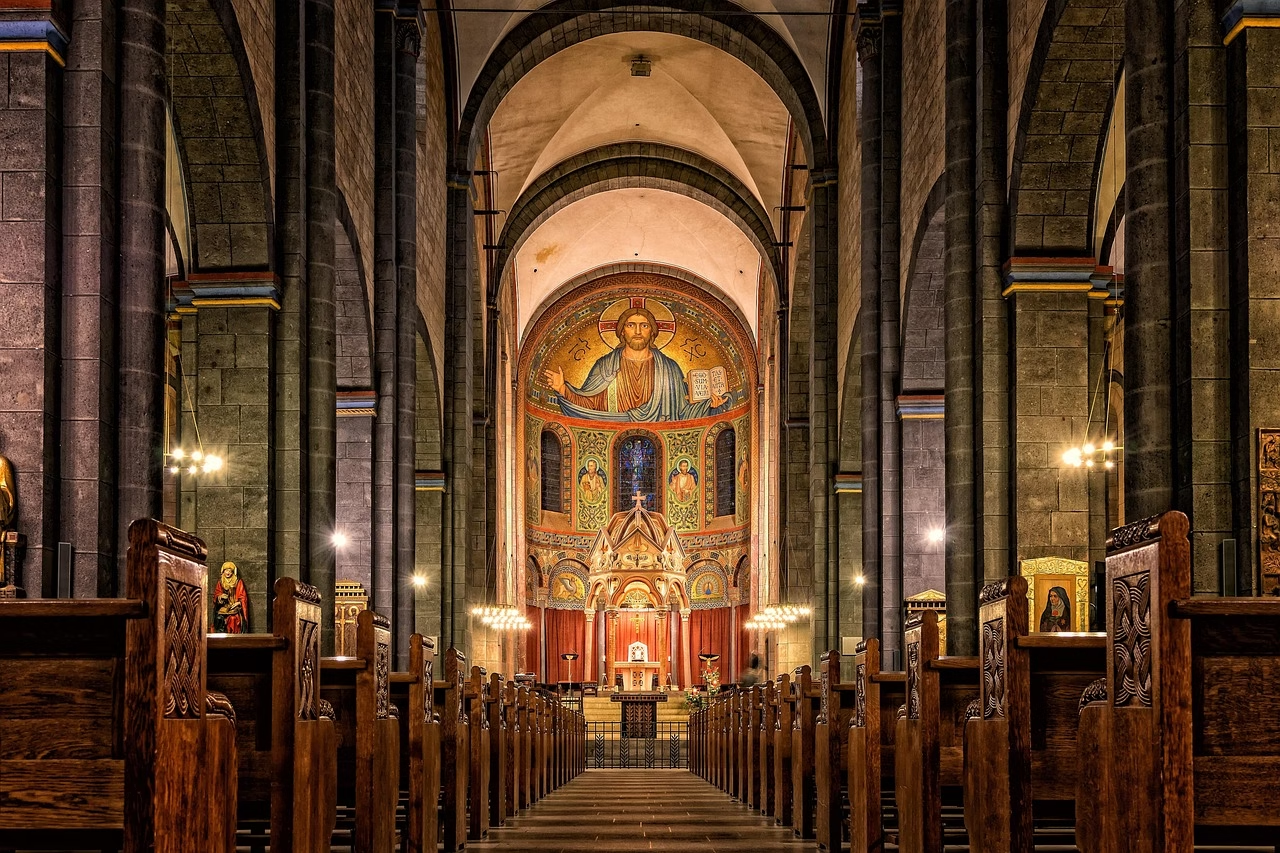
In response to a wave of disruptions at houses of worship, at least four U.S. state legislatures have enacted strict new laws this year making it a crime to disrupt religious services. The legislative push, gaining momentum across the country this fall, follows a highly publicized protest inside a Minnesota church that ignited national outrage among faith leaders and lawmakers over the sanctity of religious spaces.
The Catalyst: A Shift in Sacred Spaces
The legislative momentum stems from an incident in Minnesota where protesters interrupted a Sunday service, shouting slogans and causing distress among the congregation. Historically, disruptions at houses of worship were handled under general disorderly conduct or trespassing statutes. However, faith leaders argued these existing laws failed to address the specific psychological and communal harm caused by targeting religious gatherings.
Following the Minnesota incident, lawmakers in states like Florida, Idaho, and Mississippi began drafting targeted legislation to carve out specific protections for religious assemblies. Proponents argue that houses of worship require unique legal safeguards to ensure congregants can practice their faith without fear of harassment or intimidation.
The rapid passage of these bills reflects a growing concern among lawmakers that political polarization is increasingly spilling over into previously off-limits spaces. “Houses of worship have historically been viewed as sanctuaries,” said State Representative Sarah Jenkins, who sponsored a similar bill. “When that sanctuary is violated, it shakes the core of a community.”
A Multi-State Legislative Crackdown
The newly adopted laws vary by state but share a common objective: elevating the penalties for intentionally interrupting a religious service. In some jurisdictions, these offenses have been elevated from simple misdemeanors to high-court misdemeanors or even felonies, carrying steep fines and potential jail time.
For instance, newly enacted statutes define disruption broadly to include shouting, blocking entrances, or displaying offensive banners inside or immediately outside a house of worship. Supporters of these measures emphasize that the laws are neutral regarding the content of the protest, applying equally to any disruptive group regardless of their ideological affiliation.
In Florida, the new law makes it a first-degree misdemeanor to willfully interrupt or disturb any assembly of people met for religious worship. Violators face up to a year in jail and a $1,000 fine. Other states have introduced provisions that allow churches to sue disruptors for civil damages, covering the cost of security upgrades or emotional distress.
Balancing First Amendment Rights and Public Safety
While religious organizations have widely welcomed the tougher penalties, civil liberties advocates have raised concerns about the potential chilling effect on free speech. Opponents argue that overly broad language in some of the bills could criminalize peaceful protests or spontaneous expressions of dissent on public sidewalks adjacent to religious properties.
Legal experts note that courts will likely face challenges regarding where a church’s private property ends and public forums begin. “The challenge lies in drafting laws that protect the solemnity of worship without infringing upon the constitutional right to protest in public spaces,” says constitutional scholar Dr. Aris Thorne.
Organizations like the American Civil Liberties Union (ACLU) have signaled that they are monitoring the implementation of these laws closely. They warn that vague definitions of “disruption” could lead to selective enforcement, particularly against minority groups or political dissidents expressing peaceful opposition outside church gates.
Rising Security Concerns in Houses of Worship
The push for stronger legislation coincides with a documented rise in threats against religious institutions. According to data from the Federal Bureau of Investigation (FBI), hate crimes targeting churches, synagogues, and mosques have increased steadily over the past three years, reaching record highs in several metropolitan areas.
“Congregants deserve to feel secure when they gather to pray,” said Marcus Vance, a security consultant specializing in houses of worship. Vance notes that many religious institutions have had to allocate significant portions of their budgets to private security and surveillance systems in recent years.
Faith leaders argue that the new laws serve as a vital deterrent. By establishing clear, severe legal consequences, lawmakers hope to discourage activist groups from using religious services as backdrops for political theater, thereby restoring a sense of safety to congregations.
The Evolving Legal Landscape for Faith Communities
As these laws take effect, local law enforcement agencies are beginning to train officers on how to enforce the new statutes without violating civil rights. The coming months will likely see the first legal tests of these laws as prosecutors attempt to apply them to real-world incidents.
Legal observers are watching closely to see if other states will follow suit during the upcoming legislative sessions. With religious freedom remaining a highly charged political topic, the tension between protecting worshipers and preserving free speech is poised to remain a central debate in state capitols nationwide.
Furthermore, the success of these laws will depend on how courts interpret the boundary between protected speech and criminal disruption. As congregations adapt to this heightened legal environment, the relationship between faith, protest, and public policy will continue to evolve in the public square.















Leave a Reply