



The 2026 Bab el-Mandeb Blockade: Navigating the ‘New Normal’ in Maritime Logistics
As of May 2026, the maritime security environment in the Bab el-Mandeb strait has transitioned from a temporary disruption to a structural geopolitical blockade. For business owners and logistics managers, the ‘wait and see’ approach is no longer viable. The divergence of global trade around the Cape of Good Hope is now a permanent fixture in supply chain modeling.
The Current Risk Landscape
Recent escalations have seen a 40% increase in kinetic activity targeting commercial vessels, moving beyond traditional drone strikes to sophisticated subterranean and semi-submersible threats. This has effectively rendered the Suez Canal a secondary route for high-value cargo, favoring only those with state-backed naval escorts.
Key Intelligence Tool: ACLED & Xeneta
To monitor this risk in real-time, strategic planners must integrate two primary sources:
- ACLED (Armed Conflict Location & Event Data Project): Use the ‘Regional Dashboard’ to track the frequency and sophistication of attacks in the Southern Red Sea. A shift from missile launches to boarding attempts signals a change in localized territorial control.
- Xeneta Shipping Index: Monitor the ‘Short-term vs. Long-term’ rate spread. When the spread exceeds 25%, it indicates market panic; currently, rates for Asia-Europe transit are holding at 3.5x their 2023 baseline.
Impact on Business Operations
For international freelancers and small business owners, the impact is felt through ‘Landed Cost’ inflation. If you are importing components or products, the 12-to-14 day delay added by the Cape route is no longer your biggest problem—it is the War Risk Surcharge and the volatility of the Euro and GBP against the USD as energy costs spike in Europe.
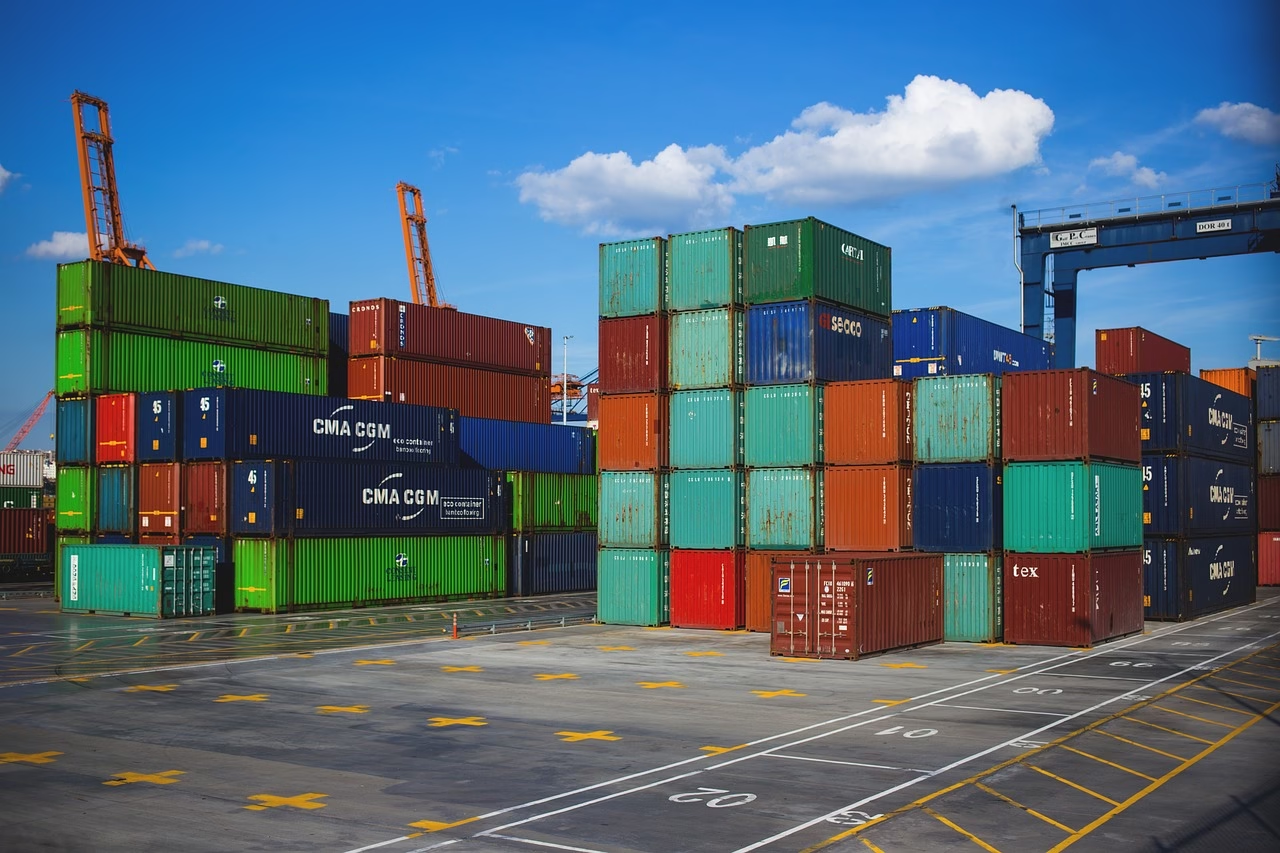
Logistics Managers are facing a ‘container mismatch.’ Empty boxes are trapped in the wrong ports because the circularity of global shipping has been broken. This necessitates a shift from ‘Just-in-Time’ to ‘Just-in-Case’ inventory management, requiring higher working capital reserves.
Actionable Strategies
- The Middle Corridor Pivot: Evaluate the Trans-Caspian International Transport Route (TITR). While more expensive than sea freight, it is now 20% faster than the Cape of Good Hope route for goods moving from Central Asia to Europe.
- Dynamic Pricing Models: Investors should look toward companies with ‘Freight Pass-Through’ clauses. Businesses must update their contracts to include ‘Geopolitical Force Majeure’ triggers that allow for immediate price adjustments based on Xeneta index spikes.
- Currency Hedging: Given the pressure on the Euro due to increased transit costs for LNG and oil, global freelancers should hedge their exposure by holding a larger percentage of their reserves in USD or commodity-backed assets.
The Bottom Line
The 2026 Red Sea crisis is not a temporary hurdle; it is a geographic reordering of trade. Success in this environment requires moving away from legacy logistics maps and utilizing real-time data feeds like ACLED to stay ahead of the next kinetic escalation.
























Leave a Reply