


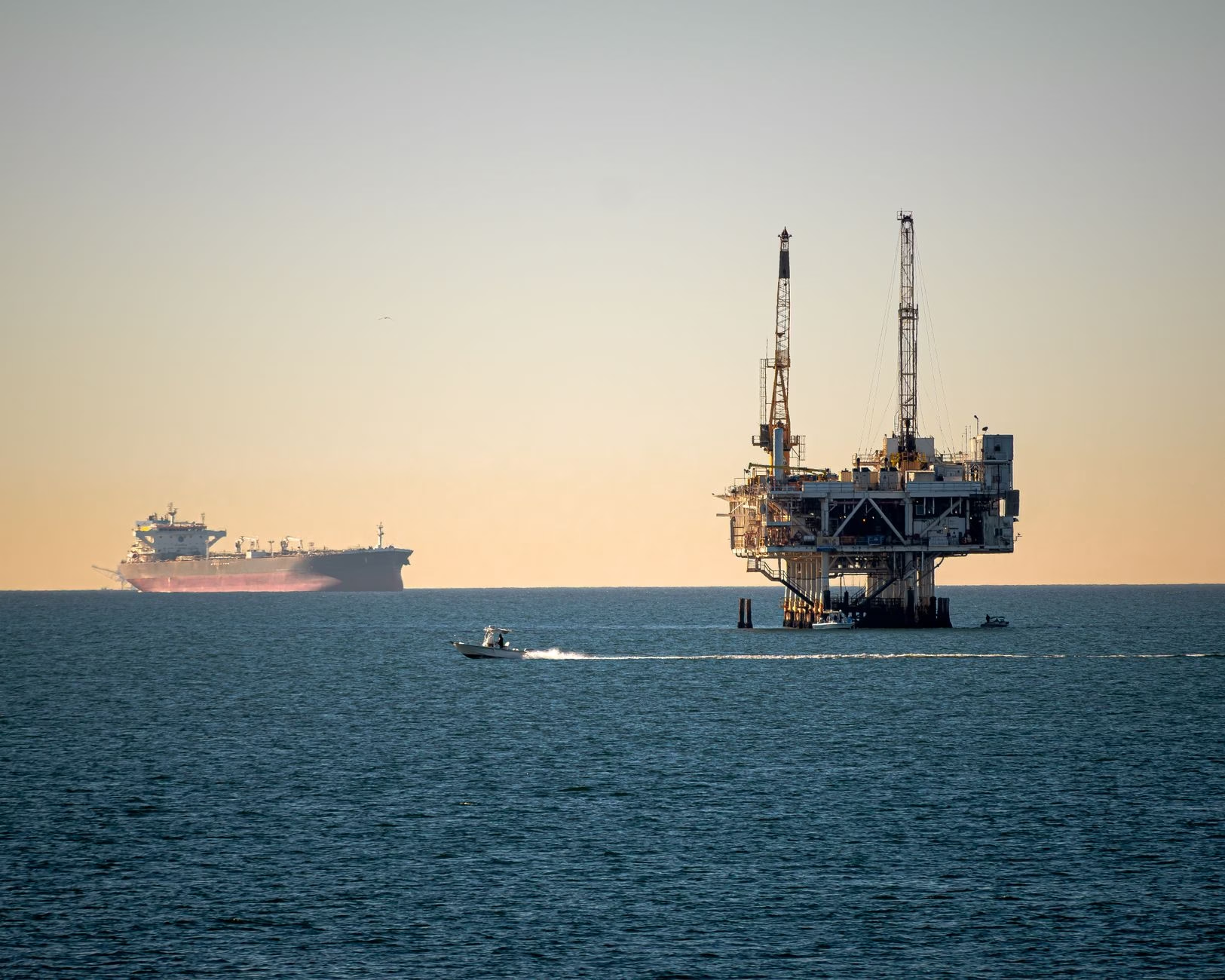
Financial markets have fundamentally shifted their outlook regarding the energy sector. Analysts across major financial institutions have officially abandoned expectations for a rapid resolution to the current worldwide energy disruption. Instead of anticipating a short-lived spike, experts now prepare for extended volatility across global energy markets.
Shifting Market Perspectives
For months, financial institutions held onto the belief that energy supply constraints would ease quickly. Traders expected production adjustments and geopolitical cooling to restore equilibrium. However, persistent disruptions have forced a major reassessment. Market strategists now recognize that structural challenges run far deeper than previously anticipated.
Global Supply Pressures
At the heart of this prolonged disruption are ongoing constraints in crude production and distribution. Key petroleum-producing nations continue to navigate complex logistical hurdles and political tensions. These factors severely limit their capacity to ramp up output quickly enough to meet steady international demand.
Economic Implications for Consumers
Extended high energy costs carry significant weight for the broader economy. Consumers continue to face elevated prices at the fuel pump, which trickles down into transportation and manufacturing expenses. Central banks monitor these developments closely, as sustained petroleum inflation complicates broader monetary policy decisions.
Navigating the New Normal
Corporations and investors are actively adjusting strategies to cope with this prolonged market reality. Hedging against extreme price swings has become standard practice for transport and industrial sectors. As financial institutions adapt to the reality of a lasting shock, market participants must remain agile in an unpredictable economic landscape.

















Leave a Reply