


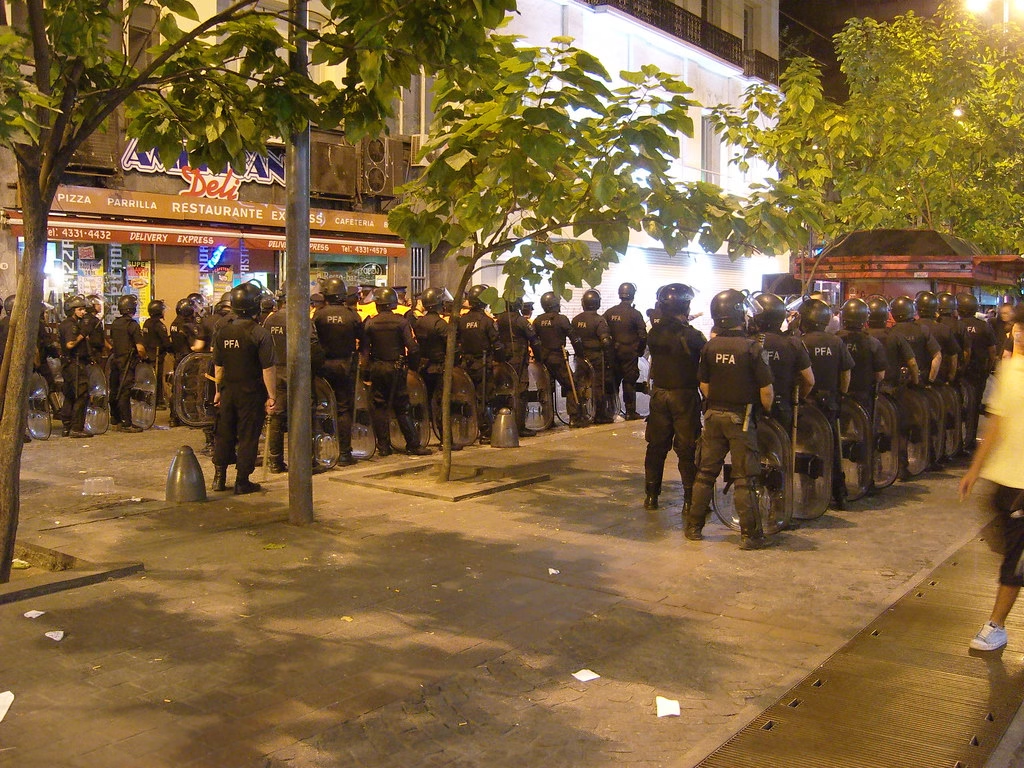
Authorities in Buenos Aires arrested 19 individuals following chaotic celebrations in the Argentine capital late Tuesday, as thousands of fans took to the streets to commemorate the national team’s recent tournament victory. The unrest, which centered around the iconic Obelisco landmark, resulted in multiple injuries and significant property damage as celebratory gatherings escalated into confrontations with law enforcement.
The Context of National Euphoria
The celebrations followed a major victory for the Argentina national football team, an event that triggered widespread public gatherings across the country. In Buenos Aires, millions of citizens flooded the city center, creating a dense, high-energy environment that strained local infrastructure and municipal security resources.
Large-scale public celebrations in Argentina often carry the risk of overcrowding, particularly in urban hubs like the Plaza de la República. While the vast majority of fans gathered peacefully, police reports indicate that small pockets of agitators began dismantling public infrastructure and targeting officers stationed at the perimeter of the festivities.
Escalation and Law Enforcement Response
As the night progressed, the atmosphere shifted from jubilant to volatile. According to local security officials, groups of individuals began throwing glass bottles and stones at police cordons, prompting a response involving the deployment of water cannons and tear gas to disperse the crowds.
The 19 detainees face charges ranging from theft and vandalism to public disorder. Medical personnel reported treating dozens of fans for injuries related to falls from light poles and transit shelters, as well as respiratory issues caused by the use of chemical irritants during the police dispersal efforts.
Data and Expert Perspectives
Urban security experts note that managing crowds of this magnitude presents a significant logistical hurdle for local governments. Data from the Buenos Aires Ministry of Justice and Security suggests that the sheer density of the crowd—estimated at over a million people—made traditional crowd control tactics difficult to implement without triggering panic.
Sociologists point to the “emotional contagion” effect often seen in massive sporting celebrations. When collective euphoria is combined with alcohol consumption and a lack of organized exit strategies, the threshold for shifting from celebratory behavior to destructive conduct decreases significantly.
Implications for Future Public Events
The events in Buenos Aires raise critical questions regarding the planning of future large-scale national celebrations. Municipal authorities are now under pressure to review security protocols for victory parades and public viewing events, with calls for better coordination between transit authorities and private security firms.
For the residents of Buenos Aires, the immediate aftermath involves significant cleanup efforts and assessments of damage to public monuments and transit stations. Observers should monitor upcoming government announcements regarding potential restrictions on future public gatherings and the implementation of stricter crowd management legislation as the city attempts to balance the public’s right to celebrate with the necessity of maintaining civil order.


















Leave a Reply