


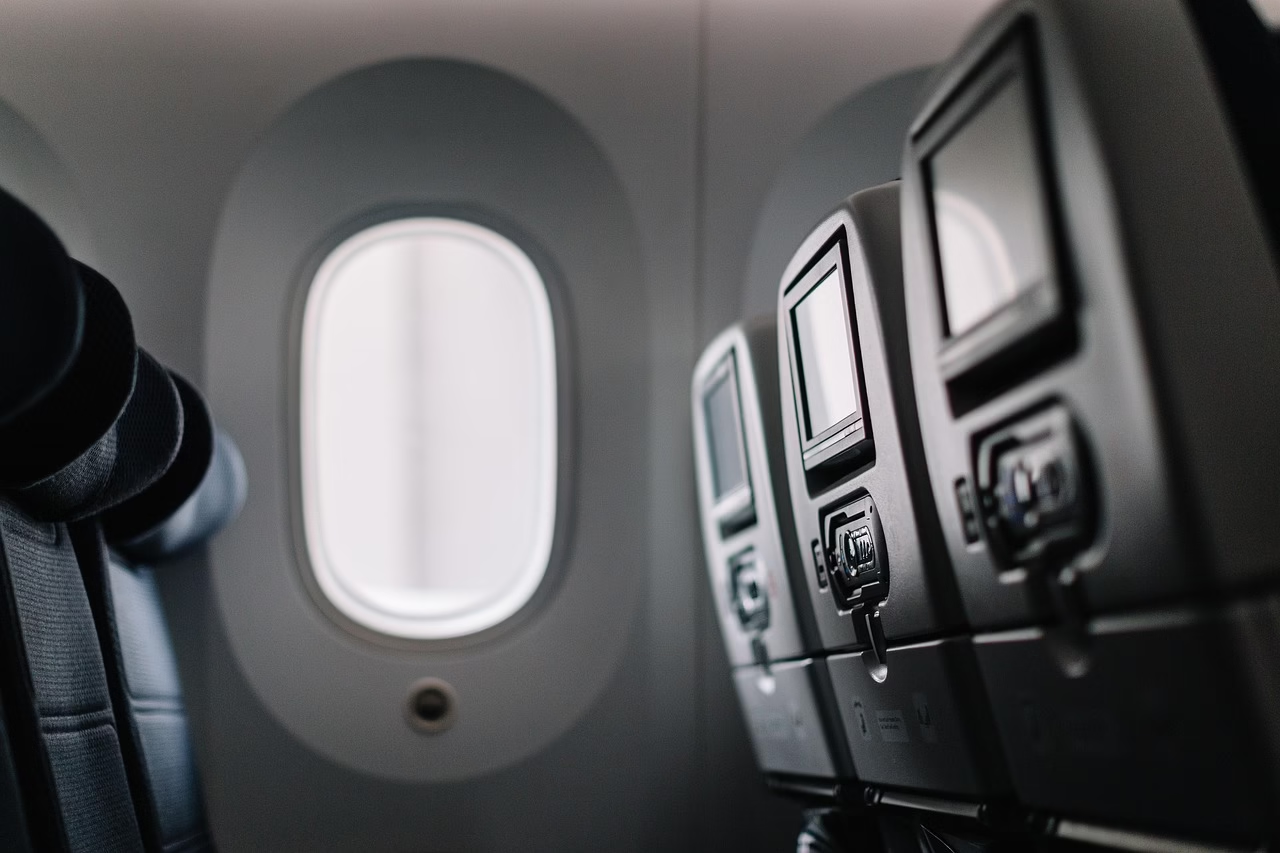
A class-action lawsuit filed in federal court this week accuses United Airlines of deceptive business practices for selling seats marketed as “window seats” that are positioned against solid cabin walls. The litigation, initiated by passengers who discovered their premium-priced views were nonexistent, claims the airline knowingly misrepresents seat configurations to boost revenue across its fleet.
The Anatomy of a Misleading Sale
The core of the dispute centers on the cabin layout of certain aircraft where structural elements, such as emergency exit mechanisms or air ducts, necessitate the removal of a window. Passengers booking these flights through the United Airlines website or mobile app are often presented with seat selection maps that do not clearly indicate the lack of a view.
Plaintiffs argue that the airline’s booking interface creates a false expectation of a window. By labeling these positions as standard window seats, the company allegedly induces customers to pay for an experience that the airline is fully aware cannot be delivered.
Industry Standards and Cabin Design
Aircraft manufacturers like Boeing and Airbus design cabins with specific spacing requirements that sometimes conflict with the placement of structural ribs. While airlines have historically relied on seat maps to guide consumer choice, the increasing digitisation of the booking process has heightened expectations for accuracy.
According to aviation analysts, the issue is not unique to United Airlines, as many global carriers operate aircraft with “misaligned” or “missing” windows. However, the legal challenge suggests that the failure to provide explicit warnings constitutes a breach of consumer trust and potential violation of truth-in-advertising laws.
Expert Perspectives on Consumer Rights
Legal experts note that class-action suits regarding airline amenities often hinge on whether the company’s marketing materials constitute a binding contract of service. If a passenger selects a seat based on a specific visual representation, the absence of that feature could be viewed as a failure to provide the promised service.
Data from consumer advocacy groups indicate that “seat quality” remains a top pain point for air travelers, particularly as airlines continue to densify cabin configurations to maximize profit margins. This lawsuit highlights the tension between operational efficiency and the transparency required in modern digital commerce.
Implications for Future Air Travel
The outcome of this litigation could force major carriers to overhaul their digital seat maps to include clear, visual warnings regarding seat obstructions. If the court rules in favor of the passengers, it may set a precedent requiring airlines to provide a higher level of transparency regarding cabin physical constraints before a purchase is finalized.
Industry observers are now watching to see if the Department of Transportation will intervene or issue new guidelines regarding seat map accuracy. In the coming months, travelers should expect more detailed disclaimers during the checkout process as airlines move to mitigate legal risks associated with seat marketing.


























Leave a Reply