


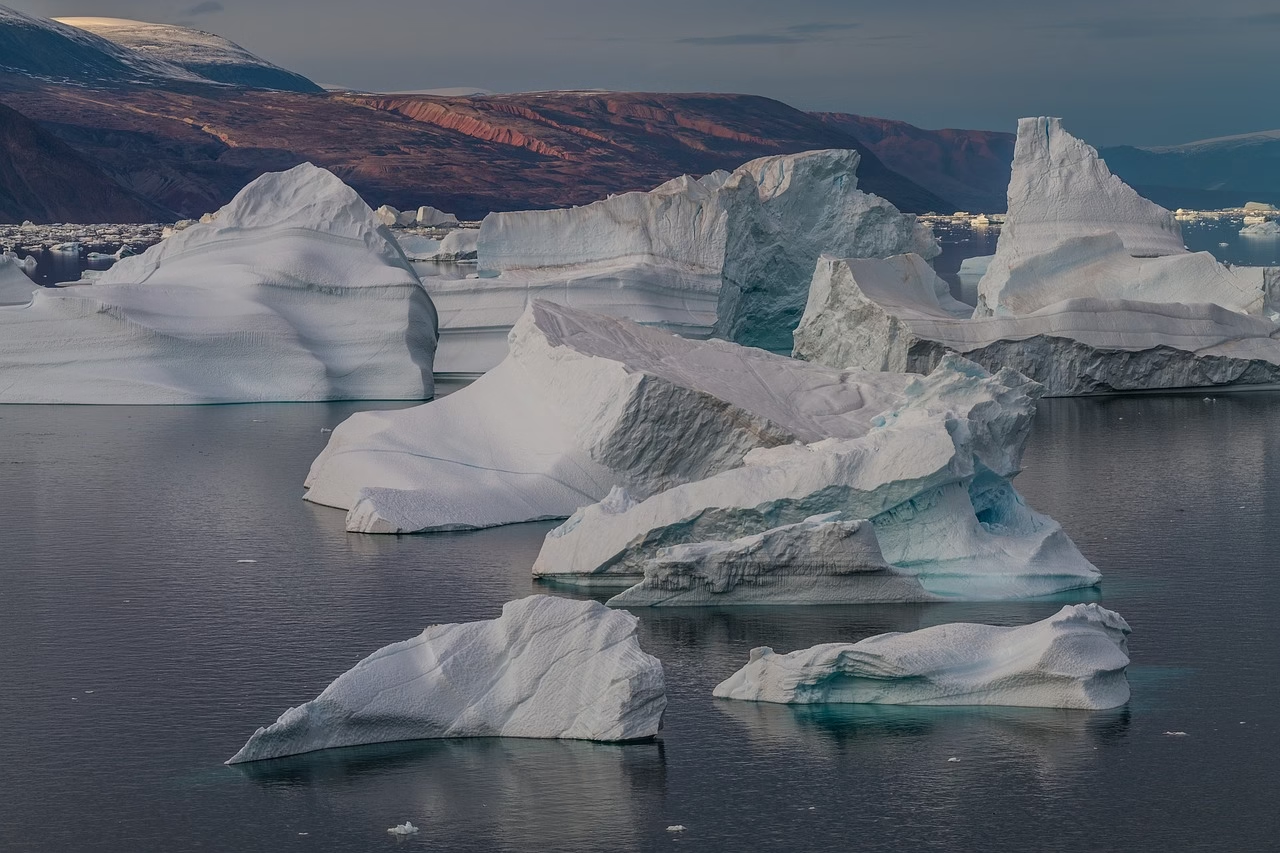
Former President Donald Trump has reignited international debate regarding U.S. foreign policy and territorial interests, recently asserting that Greenland should be under American control while simultaneously threatening the withdrawal of U.S. troops from Europe. Speaking in a wide-ranging interview, Trump justified his stance on Greenland by citing the alleged presence of Chinese and Russian naval vessels near the island, suggesting that the territory is strategically vital to national security.
Context of the Greenland Proposal
The concept of the United States purchasing or exerting greater control over Greenland is not a new development in American political discourse. In 2019, during his presidency, Trump famously proposed buying the world’s largest island from Denmark, a suggestion that was swiftly rejected by both Danish and Greenlandic officials as absurd and non-negotiable.
Greenland remains an autonomous territory within the Kingdom of Denmark. While it maintains significant independence regarding internal affairs, Copenhagen retains control over its foreign policy and defense, making any American acquisition legally and diplomatically complex under current international frameworks.
Strategic Concerns and Geopolitical Tension
Trump’s rhetoric centers on the increasing geopolitical importance of the Arctic region. As climate change leads to receding sea ice, previously inaccessible shipping lanes and untapped natural resources are becoming focal points for global superpowers, including China and Russia, which have both increased their activity in the High North.
Data from the Arctic Council indicates that Russia has significantly modernized its military infrastructure across its northern coastline, while China has declared itself a ‘near-Arctic state’ in its official policy white papers. Trump argues that these movements necessitate a more aggressive U.S. posture to prevent the region from becoming a strategic vulnerability.
The Future of Transatlantic Alliances
Beyond the Arctic, Trump’s commentary on U.S. troop deployments in Europe marks a continuation of his ‘America First’ platform. By threatening to ‘remove’ troops, he is challenging the traditional structure of NATO and the long-standing security guarantees that have defined the post-World War II order.
Foreign policy analysts suggest that these threats are designed to pressure European allies to increase their domestic defense spending. According to recent NATO reports, several member states have struggled to meet the target of spending 2% of their GDP on defense, a metric that served as a recurring point of contention throughout Trump’s tenure.
Implications for Global Security
The intersection of territorial expansionism in the Arctic and a potential reduction in European troop commitments suggests a significant shift in how the U.S. might approach global engagement if these policies were to be implemented. For the diplomatic community, this signals a potential move toward transactional security arrangements rather than long-term multilateral alliances.
Observers are now looking toward the upcoming election cycle to determine how these stances will influence future foreign policy platforms. Market analysts and defense contractors are closely monitoring these statements, as any shift in U.S. military presence or regional policy would likely necessitate a massive reallocation of resources and a restructuring of global trade and security agreements.





















Leave a Reply