


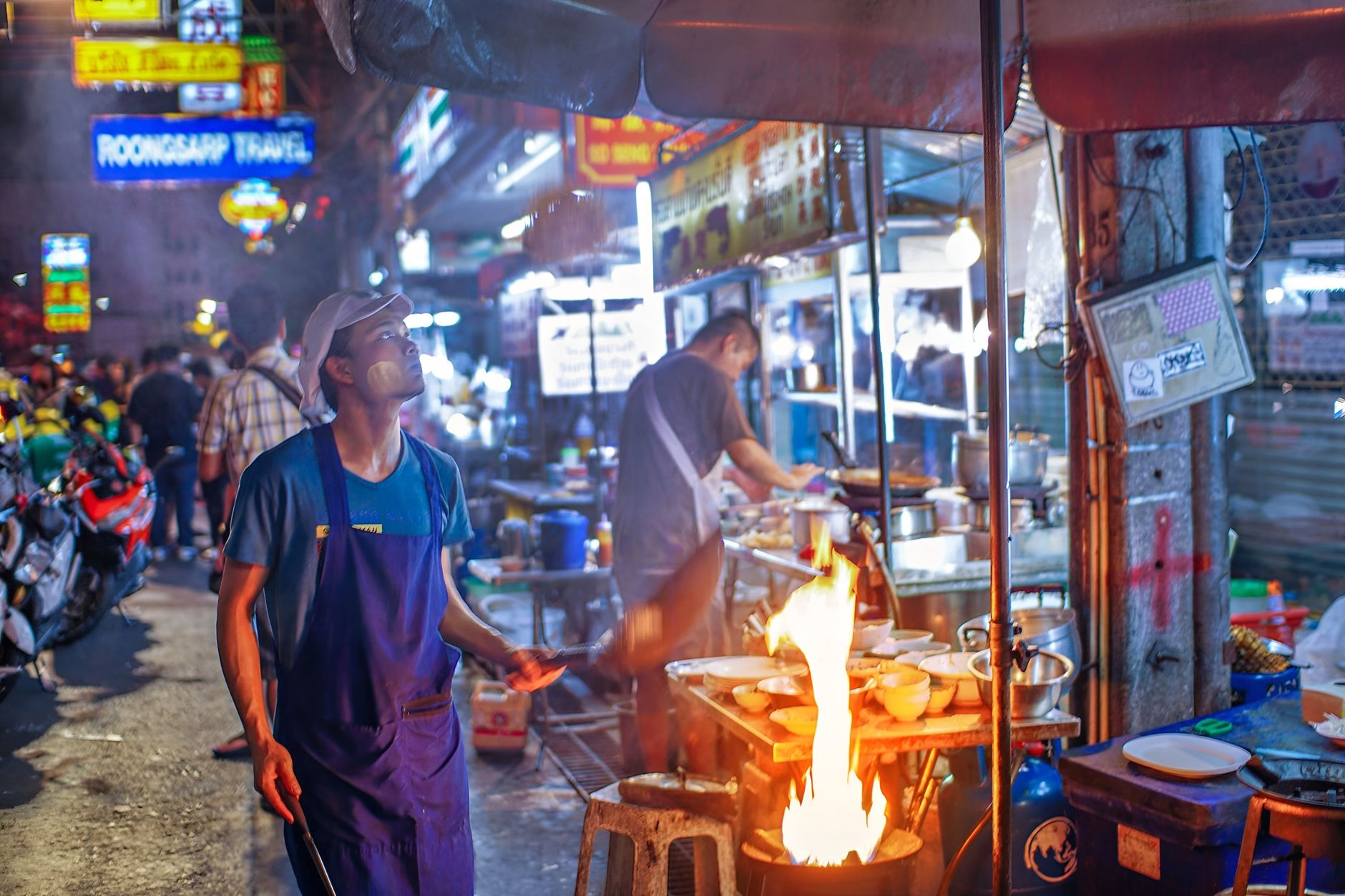
The digital landscape frequently sees the rapid dissemination of information, sometimes leading to the widespread circulation of misleading content. A recent instance in Thailand exemplifies this challenge, where a video depicting a significant market fire gained considerable traction online. This footage was erroneously presented as evidence of recent violent incidents in the nation’s southern provinces, a region long affected by a complex insurgency. However, official investigations and factual verification have unequivocally demonstrated that the video’s origins are entirely separate from the events it was purported to represent. This situation underscores the critical need for accurate reporting and careful scrutiny of online content, particularly when sensitive regional conflicts are involved.
The True Origin of the Viral Footage
The video that circulated widely across various social media platforms, including prominent sites like Facebook and TikTok, indeed showed a devastating fire. However, its actual location and timing were far removed from the claims made by those sharing it. The footage captures the aftermath of a severe blaze that engulfed a section of the renowned Chatuchak Weekend Market in Bangkok. This incident occurred in June 2024, specifically affecting the market’s pet zone. The fire resulted in tragic consequences, leading to the unfortunate demise of over a thousand animals housed within the affected stalls. This event, while significant and deeply regrettable, bore no connection to any security incidents in Thailand’s southern territories.
Recent Incidents in Southern Thailand
In stark contrast to the Bangkok market fire, Thailand’s southern provinces experienced a series of coordinated attacks on July 26, 2024. These incidents unfolded across multiple locations within the provinces of Yala, Narathiwat, and Pattani, areas historically impacted by a protracted insurgency. The attacks were multifaceted, involving various forms of aggression, including bombings, acts of arson, and a shooting incident. Targets included convenience stores, gas stations, and even a mosque, indicating a broad and disruptive intent. These violent acts resulted in one fatality and several injuries, causing significant concern and disruption within the affected communities. The nature and scale of these attacks highlight the ongoing security challenges faced by the region.
The Disconnect Between Events
Despite the clear distinction in location, timing, and nature, the video of the Chatuchak Market fire was actively linked to the southern attacks by numerous online posts. These misleading narratives often suggested the footage depicted a “market in the south” or showcased the “aftermath of bombings” in the conflict-ridden region. Such claims were swiftly debunked by authorities. A local police chief, responding to inquiries, explicitly confirmed that the market fire video had no relationship whatsoever to the security incidents that transpired in the southern provinces. This official clarification served to correct the false narrative and prevent further confusion among the public. The rapid spread of such misinformation, even in the face of readily available facts, illustrates the challenges of controlling information flow in the digital age.
Understanding the Southern Insurgency
To fully grasp the sensitivity surrounding the false linking of the market fire video, it is crucial to understand the historical context of Thailand’s southern region. For decades, the provinces of Yala, Narathiwat, and Pattani have been the epicenter of a complex and often violent insurgency. This conflict has deep roots, stemming from historical, cultural, and political grievances. Since 2004, the ongoing violence has tragically claimed over 7,300 lives, a stark reminder of the human cost of the protracted unrest. The region’s unique demographic, predominantly Malay Muslim, distinguishes it from the majority Buddhist population of Thailand, adding layers of complexity to the conflict. Any incident, real or perceived, that touches upon security in this area can quickly become a focal point for public attention and, unfortunately, for the spread of unverified information.
The Pervasiveness of Online Misinformation
The incident involving the misattributed market fire video serves as a potent example of the broader issue of online misinformation. In an era where content can be shared globally within seconds, the veracity of information often struggles to keep pace with its virality. False narratives, whether intentionally malicious or inadvertently erroneous, can quickly take root and shape public perception. This is particularly dangerous when such misinformation pertains to sensitive topics like regional conflicts, where it can exacerbate tensions, fuel fear, and undermine trust in official sources. The ease with which old or unrelated footage can be repurposed and presented as current events poses a significant challenge for individuals and institutions alike.
Combating False Narratives
Addressing the proliferation of false narratives requires a multi-pronged approach. For individuals, critical thinking and a healthy skepticism towards unverified online content are paramount. Before sharing any information, especially that which evokes strong emotions or appears sensational, it is essential to pause and verify its authenticity. Cross-referencing information with credible news sources and official statements is a fundamental step in this process. For social media platforms, implementing robust fact-checking mechanisms and clearly labeling or removing misleading content is crucial. Furthermore, public education initiatives aimed at enhancing media literacy can empower citizens to better navigate the complex digital information landscape.
Conclusion
The erroneous linking of a Bangkok market fire video to recent attacks in Thailand’s southern provinces highlights a concerning trend in the digital age: the rapid spread of misinformation. While the Chatuchak Weekend Market fire was a genuine and tragic event, its occurrence in June 2024 in Bangkok’s pet zone was entirely separate from the coordinated acts of violence that occurred in Yala, Narathiwat, and Pattani in July 2024. Official confirmations have unequivocally clarified this distinction. This episode serves as a vital reminder of the imperative to verify information before accepting or sharing it, particularly when dealing with sensitive geopolitical contexts. Upholding factual accuracy is not merely an academic exercise; it is fundamental to fostering informed public discourse and preventing undue alarm or misunderstanding in society.

















Leave a Reply