


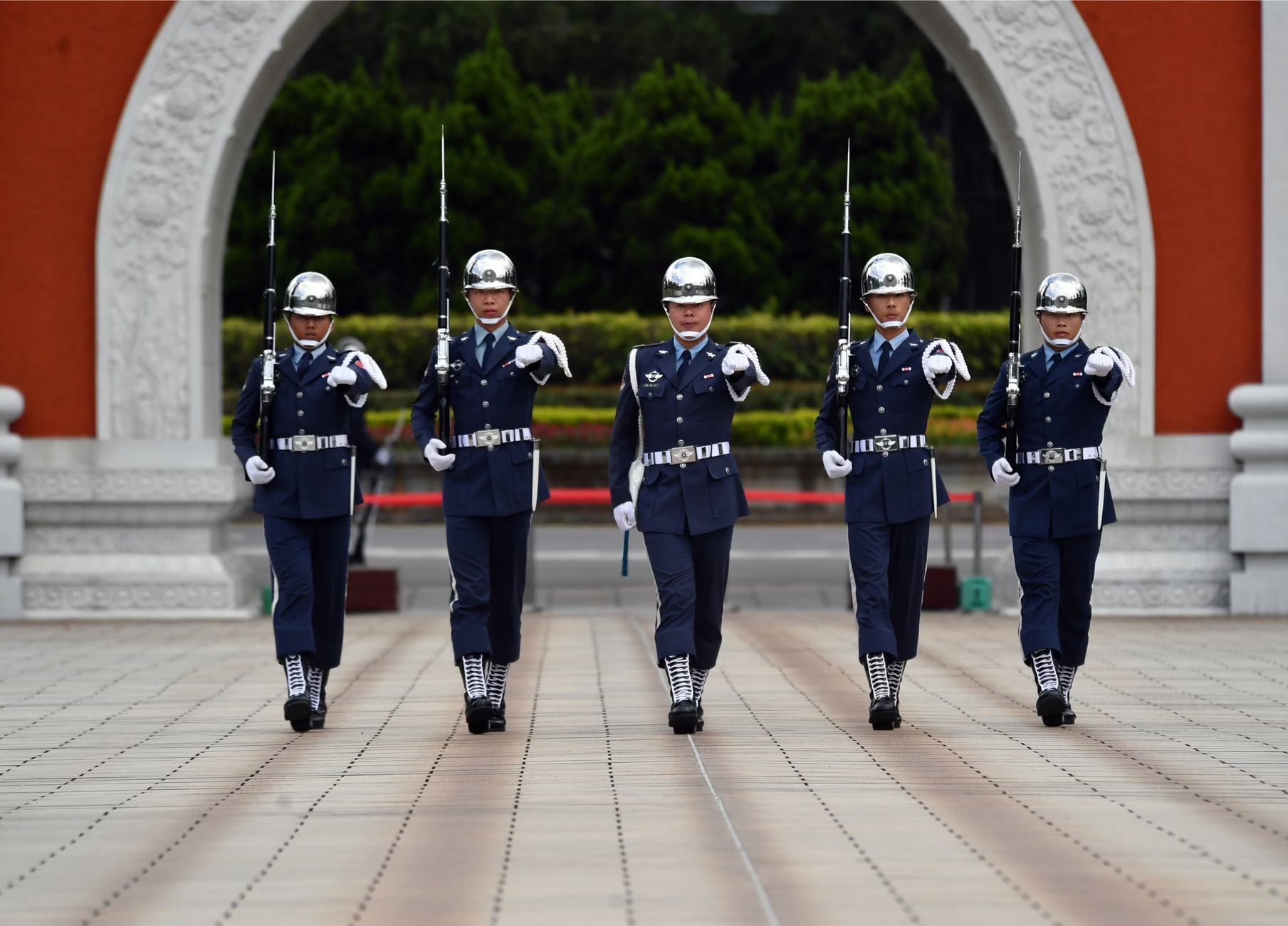
Strategic Security and Regional Stability
Supplying military hardware to Taiwan continues to serve as a critical priority for the United States, according to a senior official based in Taipei. This perspective was recently highlighted following discussions between top global leaders, bringing renewed attention to cross-strait relations and the geopolitical landscape of the Indo-Pacific.
The commentary from Taipei underscores the ongoing importance of defense partnerships in maintaining regional stability. As international diplomacy shifts and major powers engage in high-level summits, the security framework surrounding the island remains a focal point for foreign policy analysts and government officials alike.
Defense Partnerships and International Commitments
For decades, the United States has maintained a policy governed by specific legislative acts that require Washington to provide Taiwan with the means to defend itself. Taipei officials emphasize that this ongoing relationship is not merely a bilateral arrangement, but a cornerstone of broader security in the region.
Maintaining a credible deterrence strategy relies heavily on the steady acquisition of modern defensive capabilities. Observers note that any high-level diplomatic engagement between global superpowers inevitably prompts regional allies to reiterate their strategic value and advocate for sustained defense cooperation.
Geopolitical Dynamics in the Indo-Pacific
The recent summit between prominent leaders placed a spotlight on various global friction points, including trade, territorial sovereignty, and regional security. Amid these extensive discussions, the status of the island democracy frequently emerges as a central topic of strategic calculation.
Taipei remains vigilant regarding diplomatic developments between major capitals. Officials have consistently communicated that strong defensive postures contribute directly to deterrence, thereby reducing the likelihood of conflict and preserving the status quo in the Taiwan Strait.
Economic and Strategic Implications
Beyond military hardware, the partnership between Washington and Taipei encompasses significant economic ties, particularly in advanced technology sectors such as semiconductor manufacturing. Security in the region directly correlates with the stability of global supply chains.
Financial markets and multinational corporations closely monitor geopolitical tensions in the area. Ensuring that the island maintains robust defensive capabilities is viewed by many strategic thinkers as essential for safeguarding international commerce and technological infrastructure against potential disruptions.
Looking Ahead at Future Policy
As foreign policy strategies continue to evolve, the approach toward cross-strait relations will likely remain a bipartisan priority within the United States. Policymakers in Washington frequently stress the necessity of upholding commitments to regional partners.
Ultimately, the messaging from Taipei following the major summit serves as a reminder of the complex web of alliances that dictate modern geopolitics. Sustained dialogue combined with practical defense support will continue to shape the future security environment of East Asia.




















Leave a Reply