


Rebuilding a life after a lengthy prison sentence is a monumental challenge. For many formerly incarcerated individuals, the journey involves securing stable employment, reconnecting with family, and reintegrating into society. However, recent legal developments can shatter this hard-earned stability in an instant. A notable case involves individuals who were released under specific federal legislation, only to face the daunting prospect of returning behind bars due to shifting judicial interpretations.
Understanding the First Step Act
Passed with bipartisan support, the First Step Act aimed to reform the federal prison system and reduce mandatory minimum sentences for certain nonviolent offenses. The legislation provided a pathway for thousands of individuals to secure early release or have their sentences reduced. Proponents hailed the law as a crucial step toward addressing mass incarceration and promoting rehabilitation over purely punitive measures. Many participants seized this opportunity to transform their futures, establishing new routines and proving their capability to live law-abiding lives.
The Impact of the Supreme Court Decision
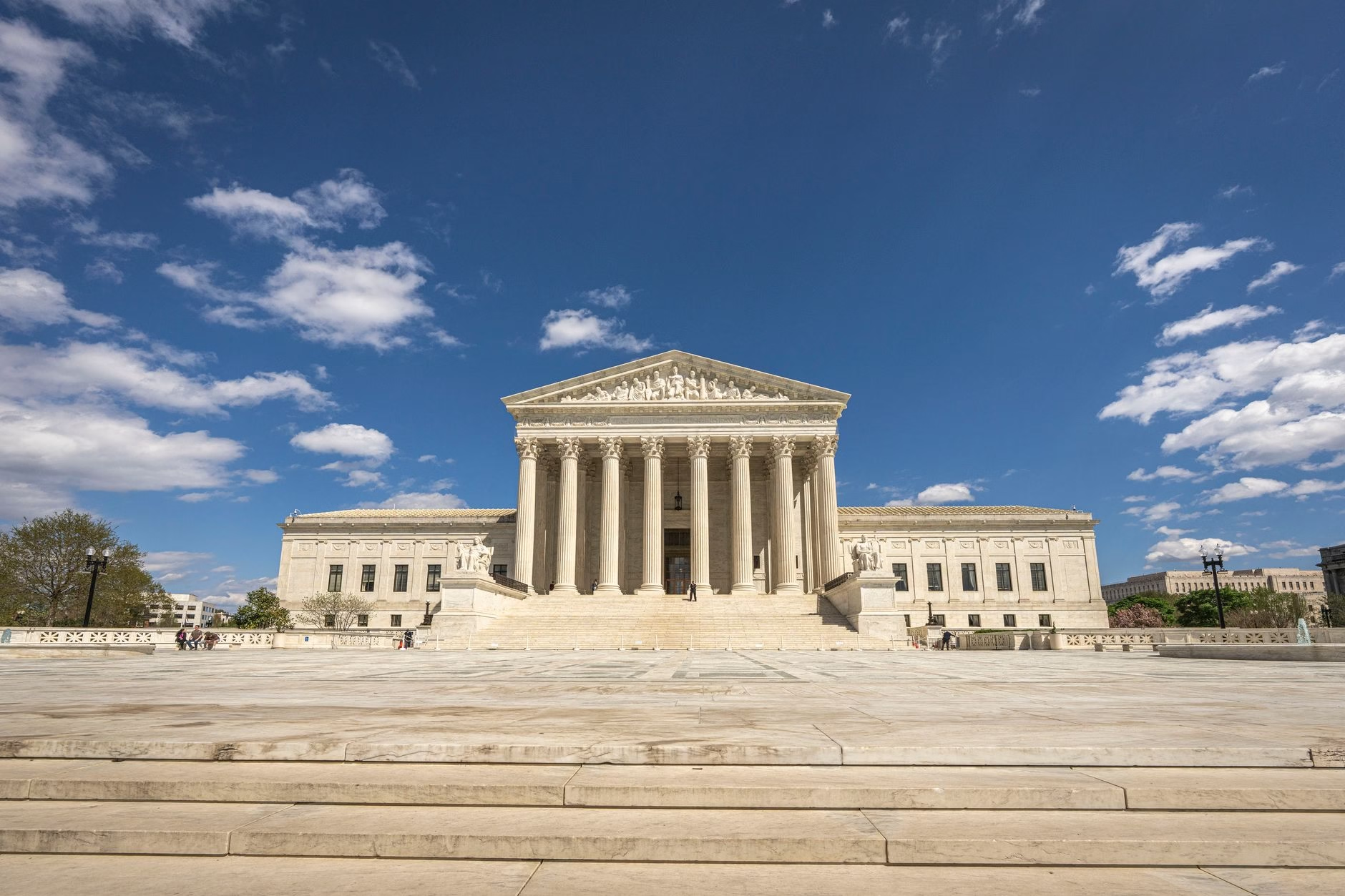
Despite the initial optimism surrounding the reform law, subsequent judicial reviews have introduced significant uncertainty. The Supreme Court recently issued a ruling that alters the legal landscape for those who benefited from early release provisions. This decision has profound implications for individuals who have already spent years rebuilding their personal and professional lives outside of prison walls. Legal experts are closely monitoring how lower courts will apply this ruling to existing cases, fearing it could uproot countless individuals who pose no threat to public safety.
Faces of Legal Uncertainty
Among those navigating this precarious situation is Patrick Dewayne Smith, who previously spent 13 years incarcerated on drug charges. Following his release, Smith dedicated his time to constructing a stable and productive life outside of institutional walls. Stories like his highlight the human cost of retroactive legal changes. When the rules governing a sentence are modified long after a person has returned to society, the psychological and emotional toll is immense. The threat of re-incarceration undermines the foundational purpose of rehabilitation programs.
Looking Ahead at Criminal Justice Reform
The ongoing debate surrounding federal sentencing laws underscores the complex nature of criminal justice reform in the United States. As courts continue to interpret complex statutory language, lawmakers and advocates face renewed pressure to protect individuals who have successfully transitioned back into their communities. The tension between strict statutory interpretation and the practical realities of rehabilitation remains a central challenge for the American legal system. For now, individuals navigating this uncertain terrain must wait as the courts determine the ultimate reach of the recent Supreme Court decision.























Leave a Reply