


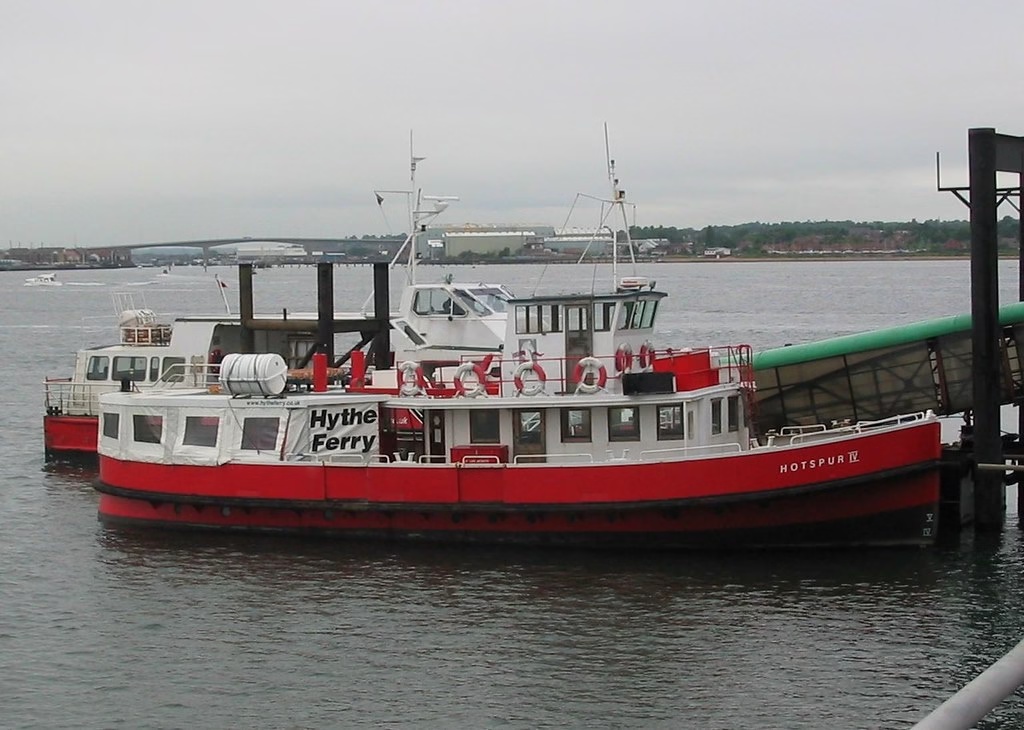
A high-speed passenger ferry connecting the German mainland to the North Sea island of Heligoland was forced to undergo an emergency tow to the port of Cuxhaven on Tuesday after suffering a critical technical defect. The vessel, which was carrying dozens of passengers, lost propulsion in open waters, prompting an immediate maritime rescue operation coordinated by the German Central Command for Maritime Emergencies.
Context of the Incident
Heligoland, a remote archipelago located approximately 45 kilometers off the German coast, relies heavily on high-speed catamaran ferry services as the primary lifeline for tourism and logistics. These vessels operate on tight schedules to navigate the challenging North Sea conditions, frequently battling strong currents and unpredictable weather patterns.
The route is a vital artery for the island, which has a limited population and a heavy dependency on ferry traffic to transport visitors and essential supplies. Mechanical failures in this region are treated with high priority due to the harsh environmental conditions and the potential for rapid escalation of safety risks.
Details of the Rescue Operation
The ferry reported the failure mid-journey, leaving the vessel adrift in a shipping lane. Authorities dispatched a tugboat to secure the craft, ensuring that the ship remained stable until it could be safely maneuvered back to the mainland.
No injuries were reported among the passengers or crew, and authorities confirmed that the vessel remained watertight throughout the ordeal. While such incidents are rare, they highlight the inherent risks of operating high-speed passenger craft in the North Sea, where technical reliability is paramount to safety.
Expert Perspective and Industry Standards
Maritime safety experts emphasize that while modern vessels are equipped with redundant systems, deep-sea mechanical failures necessitate robust contingency plans. The rapid response by the German maritime authorities reflects standard safety protocols for busy shipping lanes.
Data from the European Maritime Safety Agency indicates that while passenger ferry safety has improved significantly over the last decade, mechanical propulsion failures remain the leading cause of non-collision maritime incidents. Operators are increasingly investing in preventive maintenance programs to detect potential engine fatigue before vessels leave the harbor.
Implications for the Region
For the residents and business owners on Heligoland, the disruption serves as a stark reminder of the island’s geographic isolation. Frequent or prolonged service interruptions have economic consequences, particularly during the peak summer tourist season when visitor numbers are at their highest.
Industry observers suggest that operators may now face increased scrutiny regarding their maintenance logs and fleet aging. Future developments will likely involve a transition toward hybrid-electric propulsion systems, which promise higher reliability and lower environmental impact, though such upgrades require significant capital investment.
Looking ahead, stakeholders will be monitoring the results of the official investigation into the specific cause of the defect. Observers should watch for new regulatory requirements regarding emergency response capabilities for passenger ferries operating in the German Bight, as maritime authorities continue to prioritize safety in one of the world’s busiest shipping corridors.























Leave a Reply