


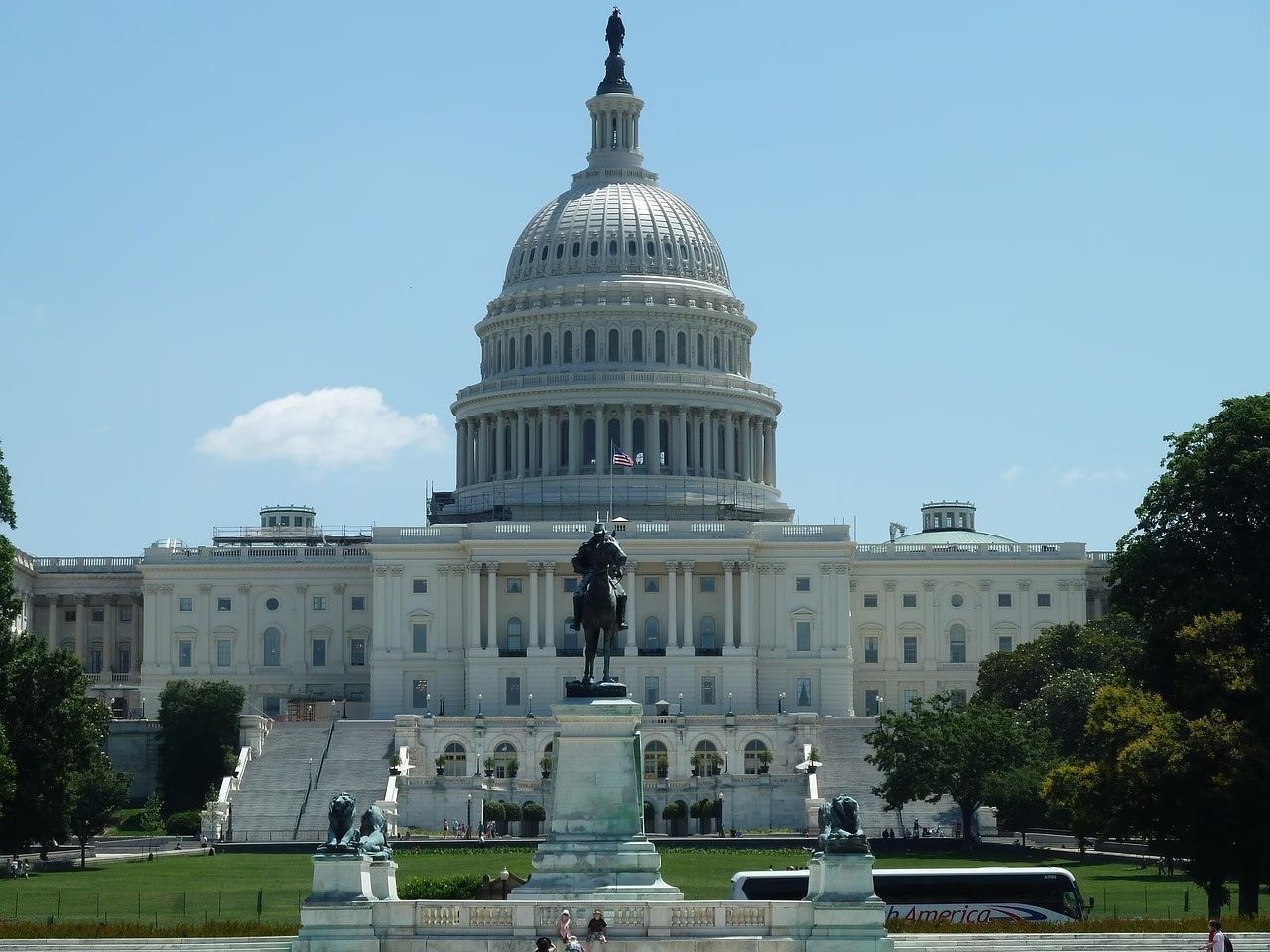
Senate Republican leaders in Washington, D.C., are poised to abandon a controversial $1 billion security funding proposal for the White House complex and President Donald Trump’s Mar-a-Lago ballroom, following intense pushback from within their own party. The decision to drop the funding comes as lawmakers struggle to build consensus on a broader federal spending package amid mounting fiscal concerns. The proposal failed to secure the necessary legislative support to survive upcoming budget negotiations.
Context of the Controversial Funding Bill
The proposed $1 billion allocation was initially introduced as part of a sweeping national security and infrastructure upgrade initiative. A significant portion of the funds was designated for upgrading security protocols, communication networks, and physical barriers around the White House. However, the inclusion of funding to secure private properties frequented by the President, specifically the ballroom at his Mar-a-Lago resort in Florida, quickly drew sharp criticism.
Historically, the federal government has funded security measures for presidents at their private residences. However, the scale and commercial nature of the Mar-a-Lago property presented unique political and ethical challenges. These challenges ultimately fractured the Republican caucus and united opposition lawmakers against the measure.
Internal GOP Divisions and Democratic Opposition
Internal divisions within the Republican party ultimately doomed the measure. Fiscal hawks argued that allocating substantial taxpayer funds to secure private commercial properties set a dangerous precedent. Meanwhile, moderate Republicans expressed concern over the public optics of funding a venue closely tied to the President’s private business empire during an economically sensitive period.
Congressional aides familiar with the negotiations, speaking on the condition of anonymity, revealed that leadership realized they lacked the necessary votes to clear the procedural hurdles in the Senate. “The support simply isn’t there,” one senior GOP aide stated, noting that party leadership decided to prioritize other defense and domestic spending measures instead.
Democrats capitalized on the internal GOP rift, framing the proposal as an inappropriate use of public funds. Congressional watchdogs also raised alarms, pointing out that federal spending on private presidential residences has historically been kept to minimal, essential Secret Service upgrades rather than large-scale infrastructure overhauls.
Expert Perspectives and Historic Spending Data
Security analysts note that while protecting the President is paramount, the scale of this proposal was unprecedented. According to data from the Government Accountability Office (GAO), previous expenditures for securing private presidential residences, such as George W. Bush’s ranch in Crawford, Texas, or Barack Obama’s home in Chicago, totaled a fraction of the proposed $1 billion.
“There is a clear line between securing a public institution like the White House and subsidizing permanent security infrastructure at a commercial resort,” said Thomas Vance, a public policy analyst specializing in federal appropriations. “The backlash reflects a growing demand for transparency and restraint in executive security spending.”
Furthermore, security experts point out that securing a commercial venue like Mar-a-Lago, which regularly hosts paying guests and public events, presents far greater logistical challenges than securing a private, isolated residence. This complexity significantly inflates the projected costs, contributing to the massive price tag of the failed proposal.
Future Implications and What to Watch Next
The abandonment of the security package signals a shifting dynamic within the Senate, where fiscal discipline is increasingly competing with executive branch requests. Observers expect that future security funding requests for the first family will face much stricter oversight and line-item scrutiny from both sides of the aisle.
As Congress moves forward with the fiscal budget negotiations, lawmakers will now have to reallocate the $1 billion to other pressing areas, such as cybersecurity infrastructure or border security. Observers will be watching how the White House adjusts its travel and event hosting schedules in light of the rejected security enhancements.
In the coming weeks, attention will turn to whether alternative, scaled-down security measures will be introduced in subsequent legislative sessions. The outcome of this dispute could redefine the boundaries of taxpayer-funded security for future presidents who maintain active commercial portfolios.






















Leave a Reply