


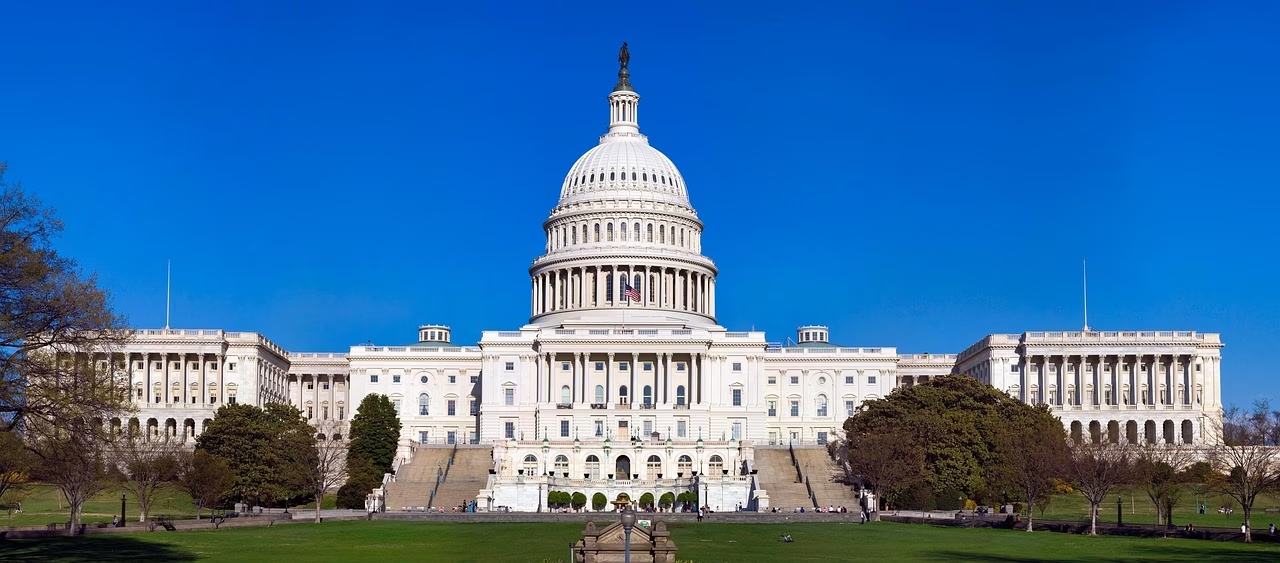
The United States House of Representatives rejected a short-term extension of Section 702 of the Foreign Intelligence Surveillance Act (FISA) on Wednesday, leaving a critical national security surveillance authority just days away from expiration. With the deadline set for this coming Friday, the legislative stalemate has created a high-stakes standoff between intelligence agencies and lawmakers concerned about civil liberties.
The Legislative Impasse
The failed vote highlights deep-seated divisions within the House regarding the balance between national security and the privacy rights of American citizens. While the Biden administration and intelligence community leaders argue that Section 702 is essential for tracking foreign terrorists and cyber threats, a bipartisan coalition of privacy hawks blocked the procedural vote.
Former President Donald Trump has publicly urged Republicans to kill the current iteration of the bill, signaling his continued influence over the legislative agenda. His opposition to the extension complicates the path forward for leadership, as the House struggles to find a consensus that can clear both chambers before the Friday cutoff.
Understanding Section 702
Section 702 allows the U.S. government to collect communications of non-U.S. persons located outside the country without a warrant. While the law is intended to target foreign threats, critics have long argued that it leads to the incidental collection of data belonging to American citizens.
This “incidental collection” has become a focal point of recent reform efforts. Lawmakers from both sides of the aisle are pushing for a warrant requirement before federal agencies can search the database for information linked to U.S. persons, a move the FBI warns would severely hinder their investigative speed.
National Security vs. Civil Liberties
Intelligence officials maintain that Section 702 provides the backbone for much of the nation’s counterterrorism and counter-intelligence operations. According to recent reports from the Office of the Director of National Intelligence, the program has been instrumental in identifying foreign actors attempting to compromise U.S. infrastructure.
Conversely, civil liberty advocates, including groups like the ACLU, argue that the current scope of the program is ripe for abuse. They point to documented instances where the FBI misused the database to conduct unauthorized searches on domestic political protesters and other U.S. individuals, fueling the demand for stricter oversight.
Industry and Security Implications
The expiration of this authority would force intelligence agencies to revert to more cumbersome legal processes to monitor foreign threats. Industry analysts suggest that a lapse could cause significant operational friction, potentially creating gaps in intelligence gathering that adversarial nations could exploit.
For the technology sector, the uncertainty surrounding FISA reform creates a difficult regulatory environment. Providers who comply with these surveillance requests are currently waiting to see if Congress will codify new protections or maintain the status quo, which directly affects how they manage user data and legal compliance.
What to Watch Next
As the Friday deadline looms, the House is expected to scramble for an alternative legislative vehicle or a last-minute compromise to prevent the program from going dark. Observers are watching to see if Speaker Mike Johnson can rally his fractured caucus or if the surveillance authority will be allowed to lapse, setting the stage for a major shift in how the U.S. conducts intelligence gathering abroad.




















Leave a Reply