


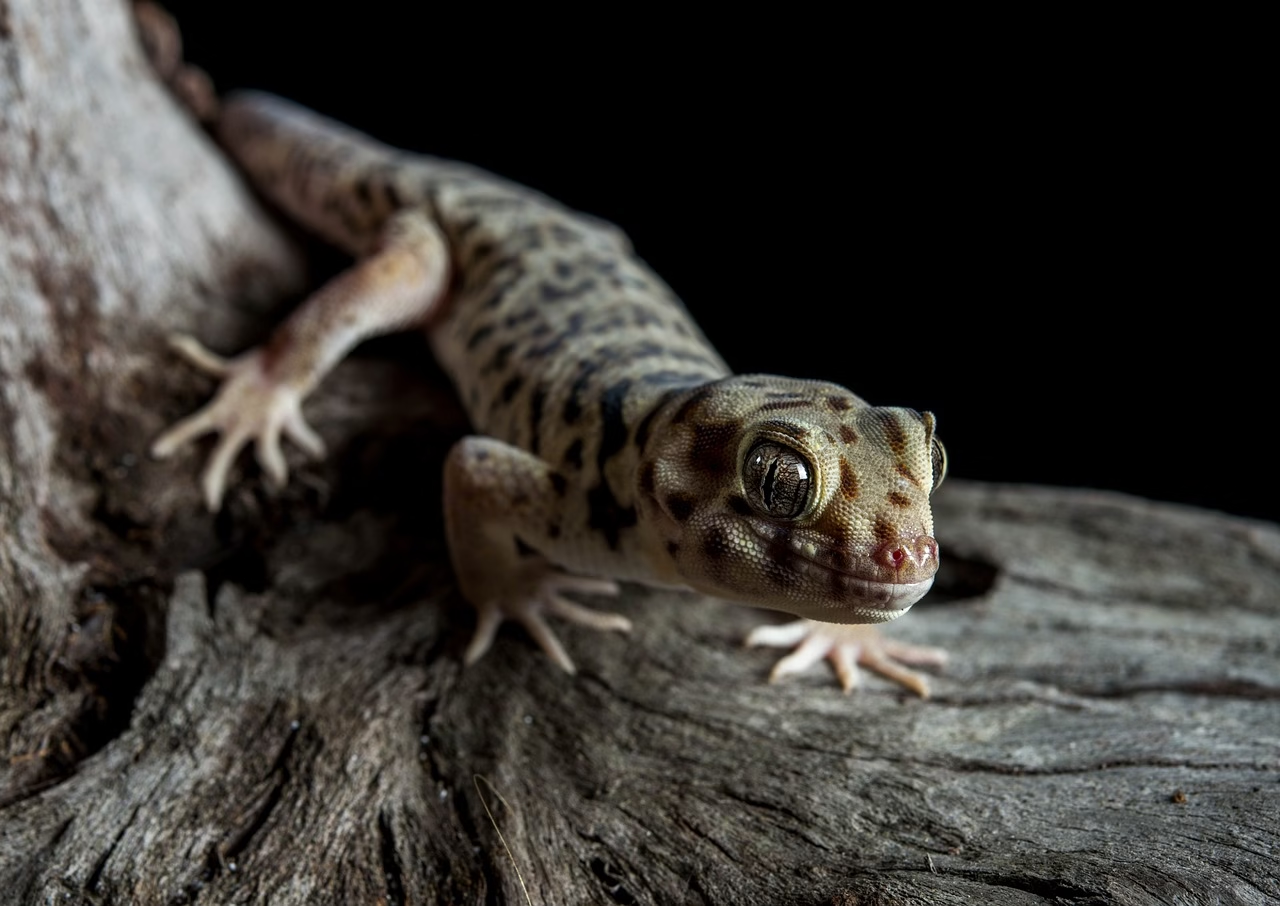
Herpetologists from international and Philippine research institutions have identified a new species of canopy-dwelling gecko found exclusively on Sibuyan Island in the central Philippines. The discovery, published this month following extensive field surveys and laboratory genetic testing, highlights the extraordinary biological wealth of this geographically isolated landmass while emphasizing the extreme vulnerability of its hyper-local fauna.
The ‘Galapagos of Asia’ Yields Another Unique Species
Located in the Romblon province, Sibuyan Island is frequently dubbed by biologists as the “Galapagos of Asia” due to its long-standing isolation from neighboring landmasses. Unlike many surrounding islands in the Philippine archipelago, Sibuyan was never connected to mainland Asia or nearby major island groups during past ice ages.
This prolonged geographical isolation allowed evolutionary processes to unfold uninterrupted over millions of years. At the center of the island sits Mount Guiting-Guiting, a steep, forested peak whose undisturbed elevation gradient creates distinct micro-climates that foster exceptional levels of species diversification.
Distinct Morphological and Genetic Characteristics
The newly cataloged reptile belongs to a specialized lineage of forest-dwelling geckos adapted to life high in the tropical canopy. Field researchers first encountered the creature during nocturnal surveys along the primary rainforest slopes of Mount Guiting-Guiting Natural Park.
Taxonomic analysis revealed that the species exhibits unique physical features, including distinct scale arrangements, specialized adhesive toe-pads optimized for vertical tree climbing, and a cryptic color pattern that flawlessly mimics moss-covered tree bark. Genetic sequencing subsequently confirmed that the gecko diverged from its closest evolutionary relatives millions of years ago, establishing it as a completely distinct species.
Because the creature relies on intact primary forest canopy and specific temperature ranges, researchers categorize it as a micro-endemic species—one whose natural range is restricted to a very small, defined geographical area.
Expert Perspectives and Data Points
The biological survey was carried out through a joint initiative involving the National Museum of the Philippines and academic field researchers. Their findings reinforce existing data regarding the astonishing concentration of unique life on the island.
“Discovering a new vertebrate species restricted entirely to a single island’s forested slopes underscores how much biodiversity remains hidden in plain sight,” said Dr. Aris Mateo, a senior herpetologist involved in the regional biodiversity mapping project. “Every micro-endemic organism we discover provides crucial data on how island ecosystems form and how species adapt over evolutionary time.”
According to conservation dataset records, over 70 percent of the non-flying mammals, along with a vast proportion of the amphibians and reptiles inhabiting Sibuyan, are found nowhere else on Earth. However, field data gathered during this study suggests that the population size of the new gecko species is naturally constrained by the limited acreage of suitable high-elevation forest left on the island.
Implications for Biodiversity and Regional Conservation
The formal identification of this endemic gecko carries direct consequences for environmental policy and habitat management in the central Philippines. Micro-endemic species face disproportionate risks from localized ecological disruptions, as they lack backup populations elsewhere in the wild.
Although Mount Guiting-Guiting Natural Park provides legal protections, surrounding buffer zones face continuous pressure from human encroaching activities, potential mining operations, and deforestation. Conservation biologists stress that protecting the specific forest strata where this gecko resides provides an umbrella safeguard for hundreds of lesser-known plant, insect, and avian species sharing the same habitat.
Moving forward, researchers and local environmental authorities plan to submit the species for official assessment on the International Union for Conservation of Nature (IUCN) Red List, where it is expected to be classified as threatened due to its restricted geographic range. Field teams are now preparing secondary ecological studies to map the exact population density, reproductive cycles, and micro-habitat preferences of the gecko, while community leaders advocate for expanded territorial protection around the island’s remaining old-growth forest boundaries.






















Leave a Reply