


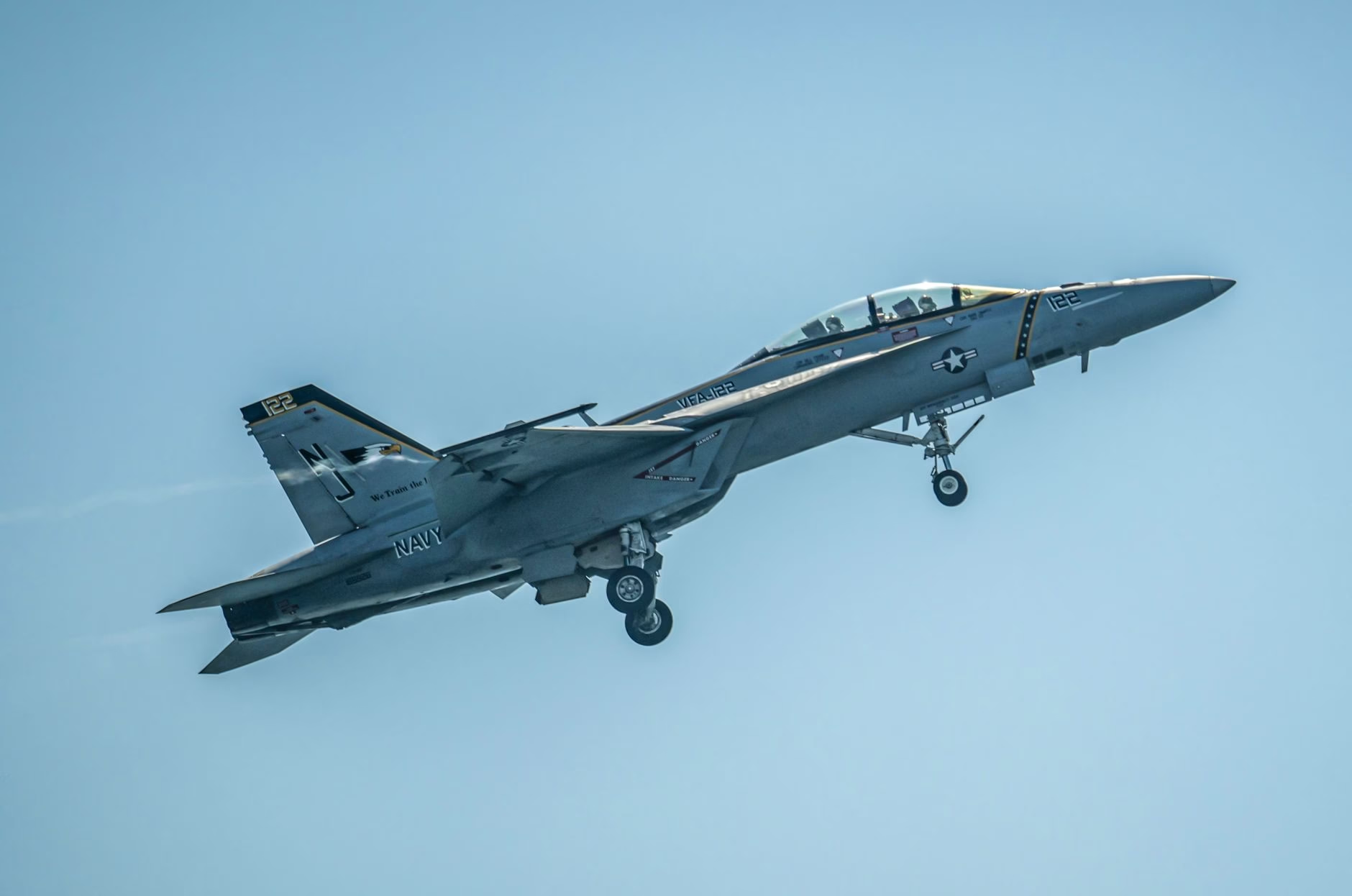
A significant directive from President Donald Trump has ordered the United States Navy to modify its approach to launching fighter jets from its newest class of aircraft carriers. The mandate calls for the removal of the advanced electromagnetic system currently in use, with a return to the older, more traditional steam catapult technology. This decision reflects a long-standing preference expressed by the President for the established steam-powered method.
The Evolution of Naval Aviation Launch Systems
Naval aviation has continuously evolved, with aircraft launch systems being a critical component of carrier operations. For decades, steam catapults have been the backbone of aircraft launching from carriers, a testament to their robust and proven design. These systems were a revolutionary advancement over earlier methods, which often relied on the aircraft’s own power or rudimentary hydraulic assistance.
Understanding Steam Catapults
Steam catapults, specifically the C-13 and C-7 models, operate by harnessing immense amounts of steam generated by the carrier’s propulsion system. This high-pressure steam is directed into cylinders, where it drives a piston connected to a shuttle on the flight deck. Aircraft are attached to this shuttle, which rapidly accelerates them to takeoff speed over a short distance. The system is known for its raw power and reliability, having successfully launched countless aircraft over many decades of service.
Advantages of steam catapults include their extensive operational history and a well-understood maintenance regimen. However, they also present certain challenges. The sudden, powerful jolt of a steam launch can place considerable stress on aircraft airframes. Furthermore, the generation and management of high-pressure steam require significant space, weight, and a dedicated crew for maintenance, often involving complex plumbing and water purification systems.
Introducing the Electromagnetic Aircraft Launch System (EMALS)
In contrast, the Electromagnetic Aircraft Launch System, or EMALS, represents a leap forward in launch technology. Developed for the Navy’s newest Ford-class aircraft carriers, EMALS utilizes linear induction motors to accelerate aircraft. Instead of steam, it employs powerful electromagnetic forces, offering a more controlled and smoother acceleration profile. This system was designed to address many of the limitations inherent in steam catapults.
EMALS offers several potential advantages. Its precise control allows for a wider range of aircraft to be launched, from lighter drones to heavier fighter jets, with tailored acceleration profiles that reduce stress on the airframes. The system is also designed to be more energy-efficient and potentially less maintenance-intensive in certain aspects compared to steam systems, as it eliminates the need for steam generation, storage, and associated piping. Its digital controls also offer greater diagnostic capabilities.
The Rationale for Modernization
The adoption of EMALS for the Ford-class carriers was part of a broader strategy to modernize the Navy’s fleet and enhance its capabilities for the 21st century. The system was envisioned to provide greater operational flexibility, improve sortie generation rates, and reduce the long-term wear and tear on naval aircraft. It was seen as a critical component in ensuring the technological superiority of future carrier strike groups.
The Presidential Mandate
President Trump’s directive to revert to steam catapults signifies a departure from this modernization path. While the specific reasons for his long-standing preference for steam catapults have not been extensively detailed in this context, such preferences often stem from concerns regarding the complexity, cost, or perceived reliability of newer, unproven technologies compared to established systems. The order suggests a prioritization of proven, traditional methods over advanced, yet still maturing, innovations.
Operational and Technical Implications
The implementation of this order carries significant operational and technical implications. For the newest carriers, which were designed with EMALS in mind, a retrofit to accommodate steam catapults would be a monumental undertaking. It would require substantial modifications to the ship’s internal structure, power distribution, and engineering spaces to integrate the steam generation and delivery systems. Such a change could lead to considerable delays in carrier deployment schedules and potentially impact the overall readiness of the fleet.
Furthermore, the transition would affect crew training, maintenance protocols, and potentially the lifespan of aircraft, which were designed to benefit from the smoother launch of EMALS. Reverting to steam would mean a continuation of the higher stress loads on airframes, which could necessitate more frequent inspections and maintenance over the life of an aircraft.
Financial Considerations
The financial ramifications of this directive are also substantial. The cost of developing and integrating EMALS into the Ford-class carriers has already been significant. Removing this system and installing steam catapults would incur additional, potentially massive, expenses for design changes, procurement of new equipment, installation, and testing. These costs would add to the overall defense budget and could divert funds from other critical naval programs. The economic impact could extend to defense contractors involved in both systems, affecting jobs and supply chains.
Strategic and Policy Ramifications
From a strategic perspective, this decision sends a clear signal about the direction of naval technology and procurement. It could be interpreted as a cautious approach to new technology, favoring reliability over innovation. This might influence future defense acquisition programs and potentially affect the perception of the U.S. Navy’s technological edge among allies and adversaries alike. The role of presidential influence in highly technical defense procurement decisions also becomes a prominent point of discussion.
Conclusion
President Trump’s order to return to steam catapults for the U.S. Navy’s newest aircraft carriers marks a pivotal moment in naval aviation history. It represents a significant policy reversal, shifting away from advanced electromagnetic launch technology back to a proven, traditional system. This directive will undoubtedly trigger extensive technical, operational, and financial challenges for the Navy, reshaping its modernization efforts and influencing the future trajectory of its formidable carrier fleet for many years to come.





















Leave a Reply