


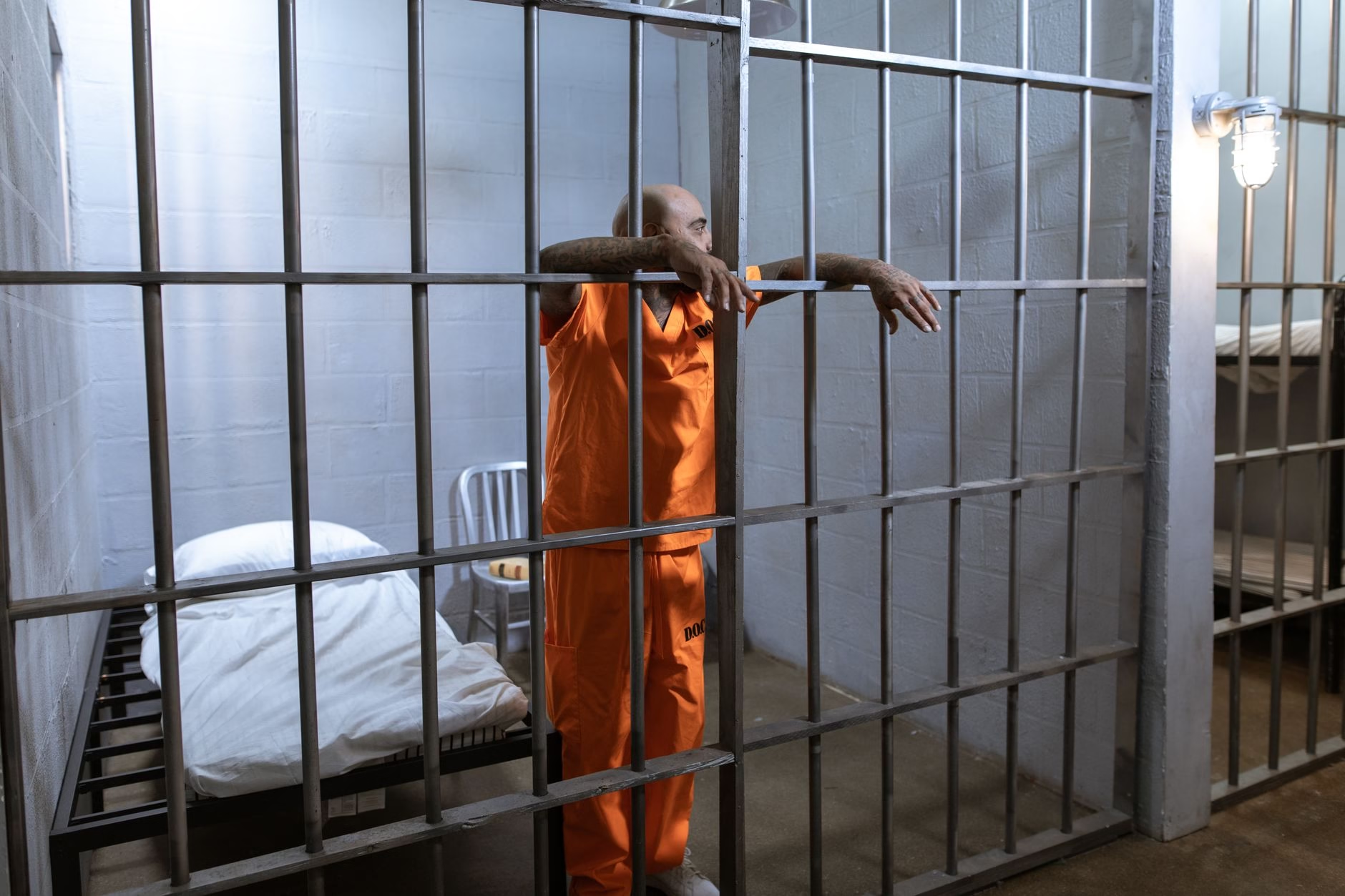
The Global Debate Over Capital Punishment
The ongoing debate surrounding capital punishment has once again drawn international attention following a firm public statement from the head of the Catholic Church. The spiritual leader took to digital communication platforms to address the practice directly, emphasizing a strong moral stance against state-sanctioned executions.
This declaration coincides with a controversial upcoming event in the United States, where authorities have scheduled a high-profile execution. Plans to broadcast the procedure via live stream have heightened the visibility of the case, sparking intense ethical discussions across various advocacy groups, legal circles, and religious communities worldwide.
Revising Religious Teachings on the Death Penalty
In his recent public message, the American pontiff referenced official and updated religious doctrine regarding the execution of criminals. The revised stance clearly asserts that capital punishment is entirely unacceptable because it fundamentally violates the inherent dignity and value possessed by every human being, regardless of their past actions.
This updated theological perspective marks a significant evolution in how major religious institutions view state-administered punishment. For centuries, traditional doctrines allowed for exceptions in extreme cases, but the modern interpretation completely rejects the necessity and morality of ending a human life as a form of justice.
Implications for the United States
The timing of the pontiff’s pronouncement carries particular weight within his native country, which remains one of the developed nations that continues to utilize the death penalty. As state officials move forward with preparations to livestream the upcoming execution, critics and human rights advocates argue that publicizing such events desensitizes society and devalues human life.
Legal experts and activists are closely monitoring how this convergence of religious opposition and state action will influence public opinion. While proponents of capital punishment argue that it serves as a necessary deterrent and provides closure for victims’ families, opponents maintain that the practice is deeply flawed, irreversible, and morally indefensible.
Looking Ahead at the Future of Sentencing
The global conversation regarding penal reform continues to shift as more nations abolish capital punishment in favor of life imprisonment without parole. The firm position articulated by the Vatican adds considerable moral pressure on governments that still enforce the death penalty.
As the scheduled execution date approaches in the United States, the debate shows no signs of slowing down. The stark contrast between modern religious teaching and state execution practices highlights a profound philosophical divide that will likely shape criminal justice discussions for years to come.























Leave a Reply