



Diplomatic Breakthrough on the Horizon
Pakistan’s Prime Minister Shehbaz Sharif announced this week that a significant diplomatic agreement has been reached between the United States and Iran, with the formal signing expected to take place this Friday in Switzerland. The announcement, which follows months of back-channel negotiations, marks a potential turning point in one of the world’s most volatile geopolitical relationships.
While officials in Washington and Tehran have yet to release the full text of the agreement, the development suggests a major cooling of tensions that have dominated Middle Eastern policy for decades. The selection of Switzerland as a venue remains consistent with the nation’s historical role as a neutral intermediary for U.S.-Iran diplomatic communications.
Context of Long-Standing Tensions
Relations between the United States and Iran have remained severely strained since the 2018 U.S. withdrawal from the Joint Comprehensive Plan of Action (JCPOA), commonly known as the Iran nuclear deal. Since that time, the imposition of extensive economic sanctions and regional proxy conflicts have pushed the two nations to the brink of direct military confrontation on several occasions.
Pakistan, sharing a border with Iran and maintaining long-standing security ties with the United States, has frequently positioned itself as a regional mediator. Prime Minister Sharif’s involvement underscores the strategic importance of regional actors in facilitating dialogue when direct communication channels remain closed or heavily restricted.
Analyzing the Potential Framework
Industry analysts suggest that any agreement between the two powers likely centers on a phased de-escalation strategy. Such a framework would theoretically address nuclear enrichment limits in exchange for specific economic relief or the unfreezing of Iranian assets held in international accounts.
Dr. Arsalan Khan, a senior fellow at the Institute for Strategic Studies, noted that the timing of this announcement aligns with broader shifts in regional alliances. “The involvement of regional partners like Pakistan indicates a move toward ‘de-risking’ the Middle East, a priority for both Washington’s focus on Asia and Tehran’s need for economic stabilization,” Khan stated.
Data from the International Atomic Energy Agency (IAEA) has previously highlighted the increasing complexity of Iran’s nuclear program, which has accelerated its enrichment capabilities over the past two years. Observers are now looking to see if the proposed deal includes more robust monitoring protocols to replace those lost during the collapse of the original nuclear accord.
Industry and Global Implications
For the global energy sector, the potential reintegration of Iranian oil into the international market could exert downward pressure on crude prices. Markets have historically reacted with volatility to news regarding Iranian sanctions, and energy traders are currently bracing for potential shifts in supply chains.
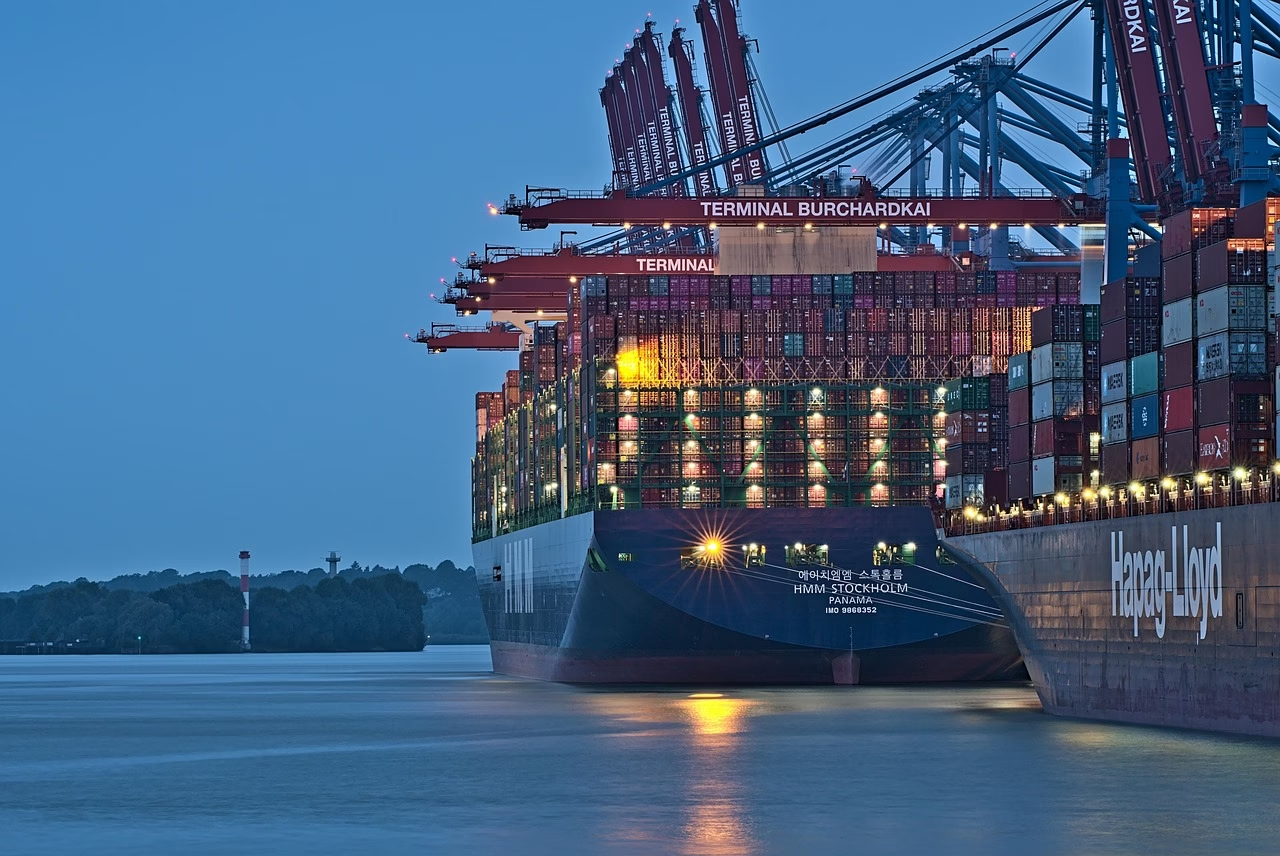
Beyond energy, the agreement holds profound security implications for the Gulf region. A successful deal could lead to a reduction in regional maritime tensions and a decrease in the frequency of drone and missile threats that have disrupted shipping lanes in the Strait of Hormuz. For multinational corporations operating in the Middle East, the stabilization of the political environment represents a critical prerequisite for long-term infrastructure investment.
Looking ahead, observers should monitor the reactions of key regional stakeholders, particularly Israel and Saudi Arabia, whose security architectures are deeply intertwined with U.S.-Iran dynamics. The success of the Friday signing will depend largely on the domestic political appetite in both Washington and Tehran for sustaining the agreement through upcoming election cycles. If the deal holds, the next phase will likely involve the creation of a multilateral oversight committee to ensure transparency and verify that both sides adhere to the stipulated terms of the agreement.
















Leave a Reply