


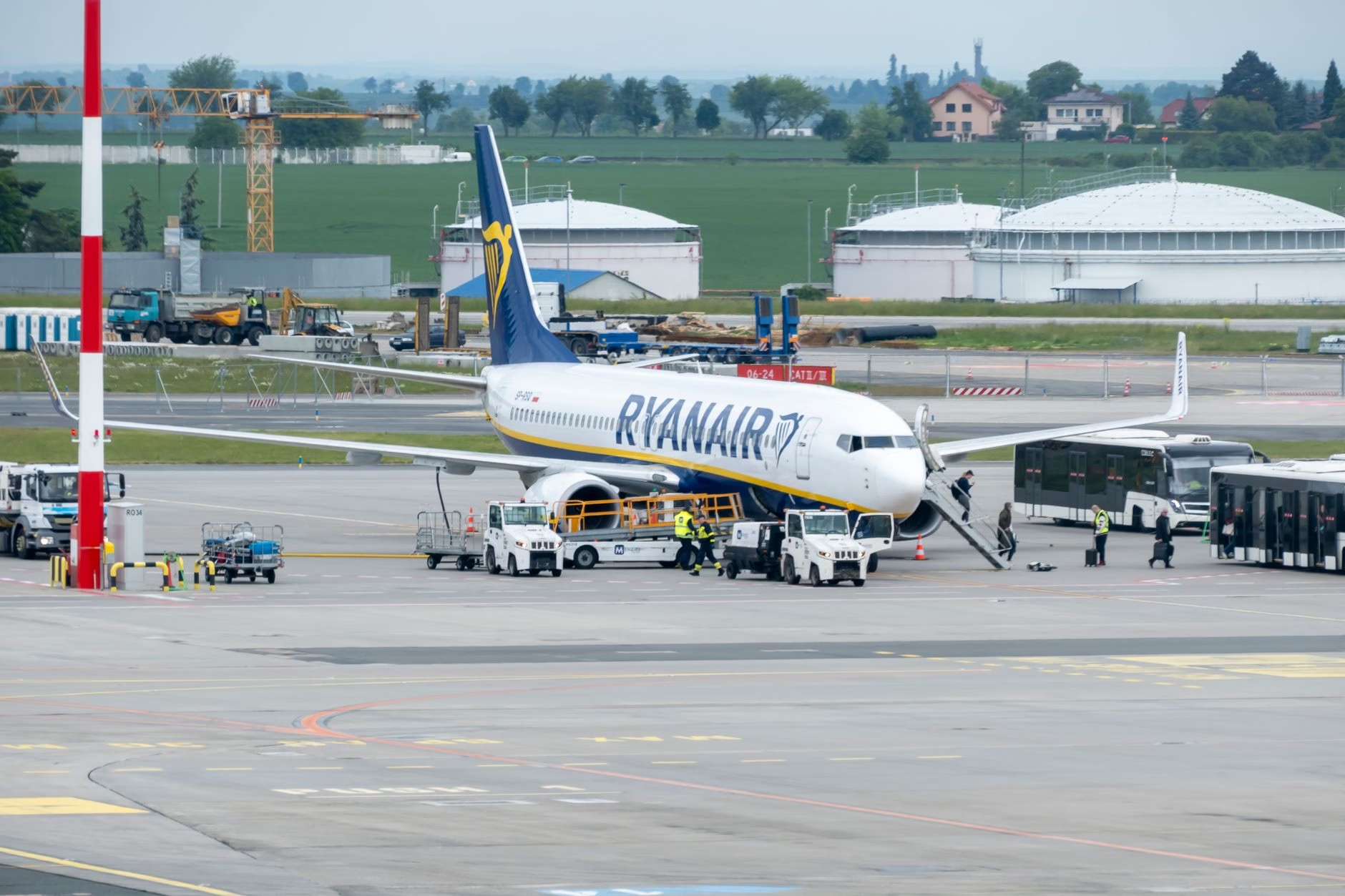
A Shift in European Aviation Dominance
London Heathrow Airport, for many years a symbol of global connectivity and a consistent leader in passenger traffic, has recently seen a significant shift in its long-held status. The airport, renowned as a major international hub, no longer holds the title of Europe’s busiest airport. This development marks a pivotal moment in the continent’s aviation landscape, reflecting broader changes in global travel patterns, operational dynamics, and competitive pressures that have reshaped the industry in recent times. The reordering of top-tier airports signals a new era for European air travel, prompting a closer examination of the forces at play and the potential implications for future connectivity and economic activity across the region.
Heathrow’s Legacy of Leadership
For decades, Heathrow stood as a titan among European airports, consistently handling the highest volume of passengers and serving as a critical gateway to the United Kingdom and beyond. Its strategic location, extensive network of routes, and status as a primary hub for major airlines cemented its position at the apex of European aviation. This dominance was built on a foundation of robust infrastructure, continuous investment, and a reputation for facilitating seamless international transfers. The airport became synonymous with global travel, a bustling nexus where millions of journeys began, ended, or transited each year. The sheer scale of its operations and its vital role in global trade and tourism underscored its importance, making any change to its leading position a noteworthy event.
Factors Behind the Transformation
The transition in Heathrow’s ranking can be attributed to a confluence of factors, many of which have profoundly impacted the global aviation industry over the past few years. Foremost among these was the unprecedented global health crisis, which led to severe travel restrictions, border closures, and a dramatic reduction in passenger demand worldwide. While all airports faced challenges, the specific nature of the United Kingdom’s travel policies and the prolonged impact on international routes particularly affected Heathrow, given its heavy reliance on long-haul and intercontinental traffic.
Beyond the immediate crisis, operational constraints have also played a role. Heathrow, already operating near its full capacity, faced difficulties in rapidly scaling up operations as demand began to recover. Issues such as staffing shortages, baggage handling challenges, and air traffic control limitations created bottlenecks that impacted passenger experience and airline schedules. These operational hurdles, combined with the lingering effects of reduced flight frequencies and capacity cuts by airlines, contributed to a slower recovery pace compared to some of its European counterparts.
Furthermore, the competitive landscape within Europe has intensified. Other major European hubs, some with greater expansion capacity or different operational models, have demonstrated resilience and strategic agility in attracting airlines and passengers. These airports, often benefiting from more flexible regulatory environments or less stringent travel restrictions during critical periods, were able to capitalize on returning demand more effectively. The strategic decisions made by various national governments and airport authorities regarding investment, capacity expansion, and airline incentives have also influenced the shifting balance of power.
The Evolving European Aviation Map
The change in leadership signifies a broader evolution in the European aviation map. While specific names are not always highlighted, it is clear that other prominent European airports have seen significant growth or a faster recovery trajectory. These hubs, often located in countries with less restrictive travel policies or those that prioritized aviation recovery, have managed to attract a larger share of the returning passenger traffic. This has led to a more distributed network of major hubs across the continent, challenging the long-standing concentration of power in a few key locations. The increased competition among airports is likely to drive further innovation in services, infrastructure development, and operational efficiency as each hub strives to enhance its appeal to airlines and travelers. This dynamic environment fosters a continuous race for improved connectivity and passenger experience.
Implications for Heathrow’s Future Strategy
For London Heathrow, this shift necessitates a re-evaluation of its future strategy. While its status as a vital global hub remains undisputed, regaining or maintaining a competitive edge will require significant strategic adjustments. This may involve further investment in infrastructure to enhance capacity and efficiency, a renewed focus on passenger experience through technological advancements, and collaborative efforts with airlines to optimize route networks. Addressing operational resilience and ensuring adequate staffing levels will be crucial for handling future surges in demand without compromising service quality. The airport’s leadership will likely explore innovative solutions to maximize existing capacity, advocate for supportive policy frameworks, and adapt to evolving airline strategies and passenger preferences. The emphasis will be on demonstrating agility and foresight in a rapidly changing industry.
Broader Impact on European Air Travel
The reordering of Europe’s busiest airports has wider implications for the entire continent’s air travel ecosystem. It could lead to a more diversified network of routes and connections, potentially benefiting regional airports and offering travelers more direct options. Increased competition among hubs may also result in more competitive pricing and improved service standards across the board. Economically, this shift could redistribute the benefits of aviation-related tourism and business travel, fostering growth in different regions. However, it also presents challenges, such as the need for coordinated European aviation policies and infrastructure development to ensure seamless connectivity and sustainable growth. The industry will need to adapt to these new dynamics, focusing on environmental sustainability, technological integration, and robust operational planning to meet future demands. The resilience and adaptability of the European aviation sector will be tested as it navigates this evolving landscape.
Conclusion: A New Chapter for European Aviation
The transformation of London Heathrow’s position as Europe’s busiest airport marks more than just a change in rankings; it symbolizes a new chapter for European aviation. It underscores the profound impact of global events and the relentless pace of competition within the industry. While Heathrow’s legacy and importance remain undeniable, the future of European air travel appears to be one of greater dynamism, diversification, and strategic adaptation. Airports across the continent will continue to vie for prominence, driving innovation and shaping the way people connect across borders. This evolving landscape promises both challenges and opportunities, requiring continuous foresight and strategic investment to ensure robust, efficient, and sustainable air travel for years to come. The industry’s ability to learn from recent experiences and proactively plan for future trends will define the next generation of European aviation leadership.























Leave a Reply