


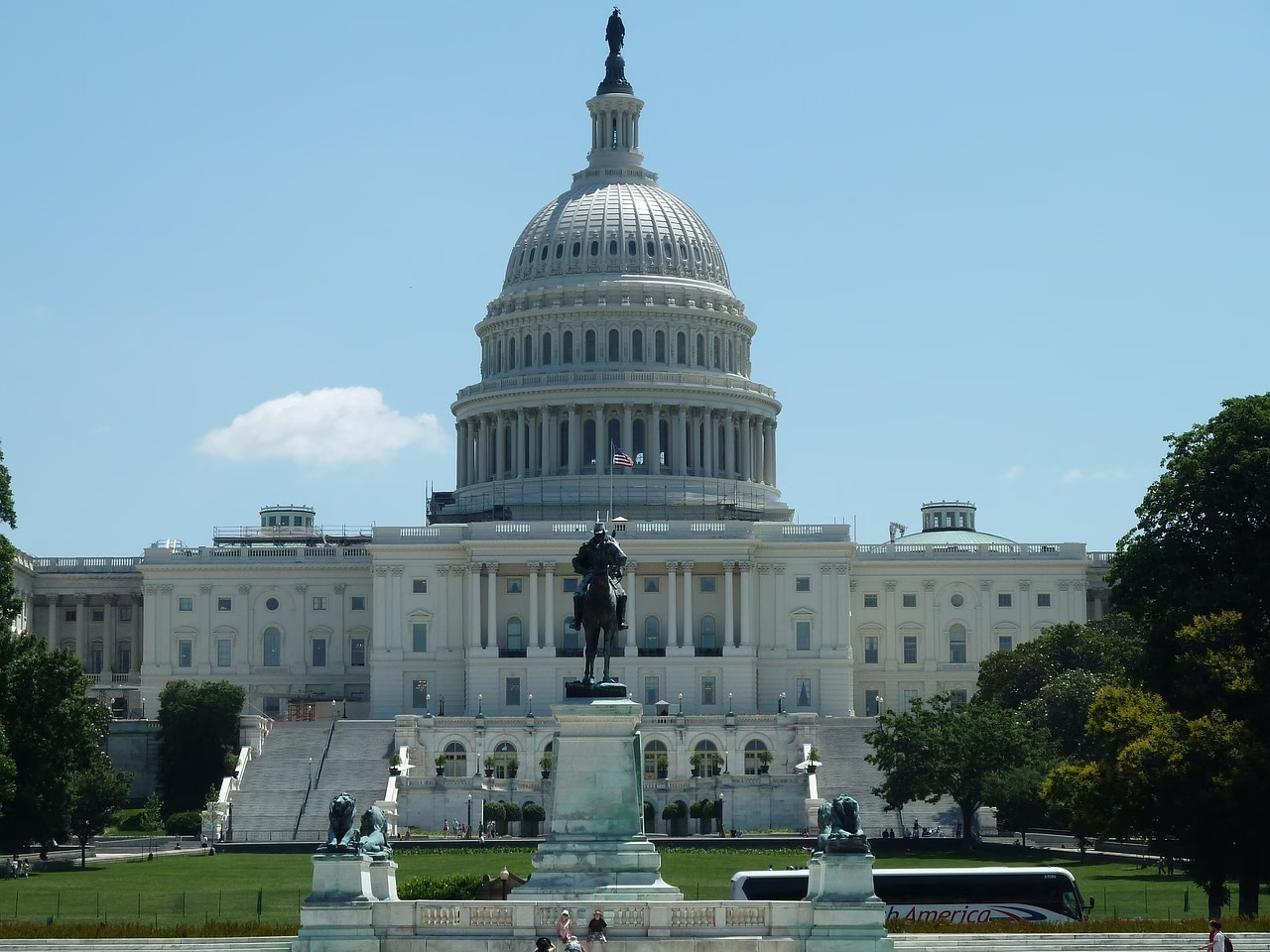
Senator Tammy Baldwin (D-WI) and Representative Ro Khanna (D-CA) introduced legislation this week in Washington, D.C., proposing the creation of a specialized federal review board tasked with investigating direct foreign investments linked to the President of the United States. The move follows escalating concerns from Democratic lawmakers regarding potential conflicts of interest and the influence of foreign capital on the executive branch.
The Growing Scrutiny of Presidential Financial Interests
The proposal seeks to fill a regulatory gap regarding how foreign entities interact with the personal financial interests of a sitting president. While the Committee on Foreign Investment in the United States (CFIUS) currently reviews foreign acquisitions of U.S. businesses that may threaten national security, it lacks the specific mandate to audit personal deals involving the President.
Critics of the current arrangement argue that the lack of oversight invites foreign actors to use financial transactions as a tool for political leverage. Proponents of the bill suggest that a dedicated, bipartisan board would provide the transparency necessary to uphold the integrity of the office.
Legislative Mechanics and Oversight
The proposed legislation would empower a new administrative body to compel disclosure of financial records and business dealings involving foreign nationals or state-owned enterprises. If passed, the board would be granted subpoena power to investigate whether such investments could compromise executive decision-making.
Legal scholars point out that the legislation faces significant constitutional hurdles. The separation of powers doctrine often protects the President from legislative oversight of private business activities, making the enforcement of such a board a subject of intense legal debate.
Expert Perspectives and Data Points
Ethics experts have long called for stricter disclosure requirements to prevent foreign influence. According to a report by the Citizens for Responsibility and Ethics in Washington (CREW), foreign governments have historically sought to influence U.S. policy through targeted investments in properties and businesses owned by high-ranking officials.
Economists note that the global nature of modern finance makes it increasingly difficult to trace the ultimate source of capital. Without robust vetting, the risk of quid-pro-quo arrangements remains a persistent concern for government transparency advocates.
Industry and Political Implications
For the business community, this proposal signals a potential shift toward more aggressive regulation of international financial transparency. If enacted, the legislation could force a radical restructuring of how presidential family members and business associates engage with international markets.
The bill is expected to face stiff opposition in a divided Congress, where Republicans have characterized the move as a politically motivated effort to target the former administration. However, the proposal highlights a broader trend of increasing legislative appetite for tightening ethics rules across all branches of government.
Observers are closely watching for the next steps in the legislative process, specifically whether the bill gains traction in the Senate committee review phase. The eventual outcome will likely influence future debates on campaign finance reform and executive accountability, setting a precedent for how future administrations manage their global financial portfolios.





















Leave a Reply