


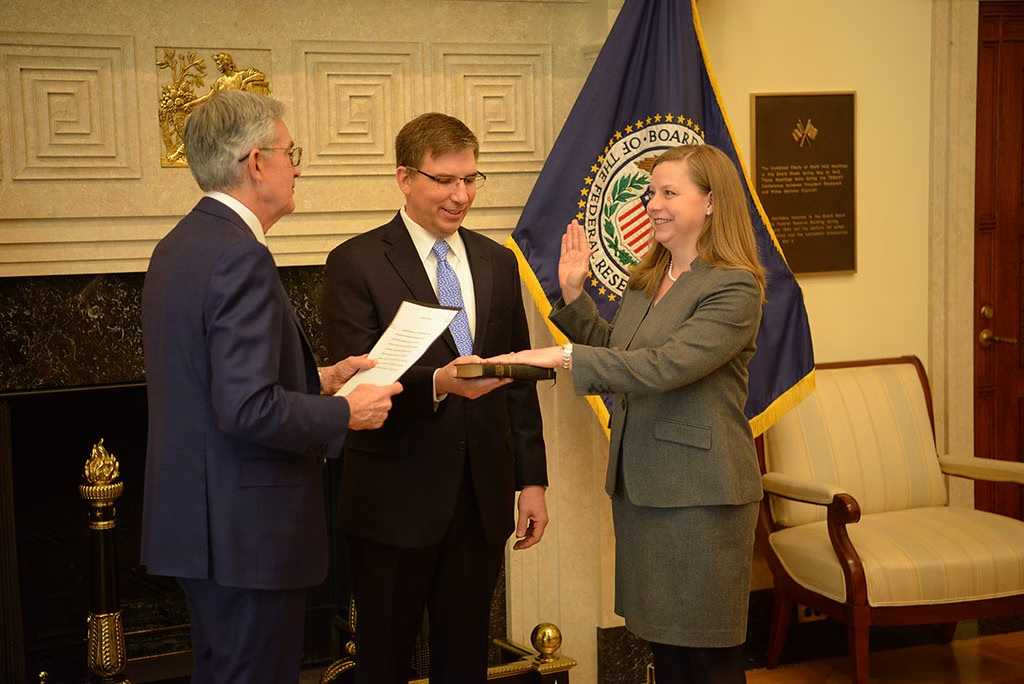
Kevin Warsh was officially sworn in as the new Chair of the Federal Reserve on Monday, stepping into the role at a critical juncture where President Donald Trump is actively advocating for interest rate reductions. The transition of leadership at the U.S. central bank occurs as financial markets largely anticipate the Fed maintaining its current interest rate policy through the remainder of 2026, despite the President’s persistent calls for easing monetary policy.
Context: A Shifting Economic Landscape
Warsh, a former Federal Reserve governor, assumes the chairmanship following a period of economic expansion marked by fluctuating inflation rates and global economic uncertainties. His appointment comes at a time when the Federal Reserve’s dual mandate of maximum employment and stable prices is being tested by evolving domestic and international economic conditions.
The Federal Reserve, often referred to as the ‘Fed,’ is the central banking system of the United States. It plays a crucial role in setting monetary policy, supervising and regulating financial institutions, and maintaining the stability of the financial system. Interest rates, specifically the federal funds rate, are a primary tool the Fed uses to influence economic activity.
The President’s Position on Interest Rates
President Trump has consistently voiced his preference for lower interest rates, arguing that they stimulate economic growth, encourage business investment, and make borrowing cheaper. He has publicly criticized the Fed on numerous occasions when its policies did not align with his desired direction, particularly concerning rate hikes or a prolonged period of holding rates steady.
This public pressure from the executive branch is unusual and often viewed by economists as an attempt to influence the Fed’s independent decision-making process. The Fed is designed to be independent to insulate monetary policy decisions from short-term political considerations.
Market Expectations vs. Presidential Demands
Despite the President’s vocal demands for rate cuts, the prevailing sentiment among market participants is one of caution. Futures markets and economic indicators suggest a strong probability that the Federal Open Market Committee (FOMC), the Fed’s policy-setting body, will keep the benchmark federal funds rate unchanged throughout 2026.
This divergence between presidential expectations and market forecasts highlights the complex factors influencing monetary policy. The Fed’s decisions are typically guided by a comprehensive analysis of economic data, including inflation trends, employment figures, wage growth, and global economic developments, rather than direct political directives.
Warsh’s Potential Approach
As the new Chair, Kevin Warsh faces the immediate challenge of navigating these competing pressures. His past tenure as a Fed governor suggests a generally hawkish stance on inflation, meaning he has historically prioritized price stability. However, the economic environment has evolved since his previous role.
Analysts will be closely watching Warsh’s initial policy statements and actions for clues about his economic philosophy and how he intends to balance the Fed’s mandates in the current climate. His ability to communicate the Fed’s rationale clearly to both the public and policymakers will be paramount.
Implications for the Economy and Consumers
The Federal Reserve’s monetary policy decisions have far-reaching consequences. If the Fed holds rates steady, borrowing costs for consumers and businesses are likely to remain at their current levels. This could mean continued stability in mortgage rates and business loan rates.
Conversely, if the Fed were to cut rates, it could lead to lower borrowing costs, potentially stimulating consumer spending and business investment. However, such a move might also carry the risk of higher inflation if the economy is already running hot.
The market’s expectation of rates remaining on hold suggests a belief that the current economic conditions do not necessitate a rate cut, or that potential risks associated with cutting rates outweigh the benefits. This perspective implies a steady economic outlook for the near to medium term, with the Fed prioritizing inflation control.
What to Watch Next
Investors, businesses, and consumers will be closely monitoring upcoming FOMC meetings and economic data releases. Key indicators to watch include the Consumer Price Index (CPI) for inflation trends, the unemployment rate, and GDP growth figures. Warsh’s public appearances and speeches will also be scrutinized for insights into the Fed’s future policy direction under his leadership. The interplay between the administration’s policy desires and the Fed’s data-driven approach will continue to be a central theme in economic discussions throughout Warsh’s term.





















Leave a Reply