


Introduction
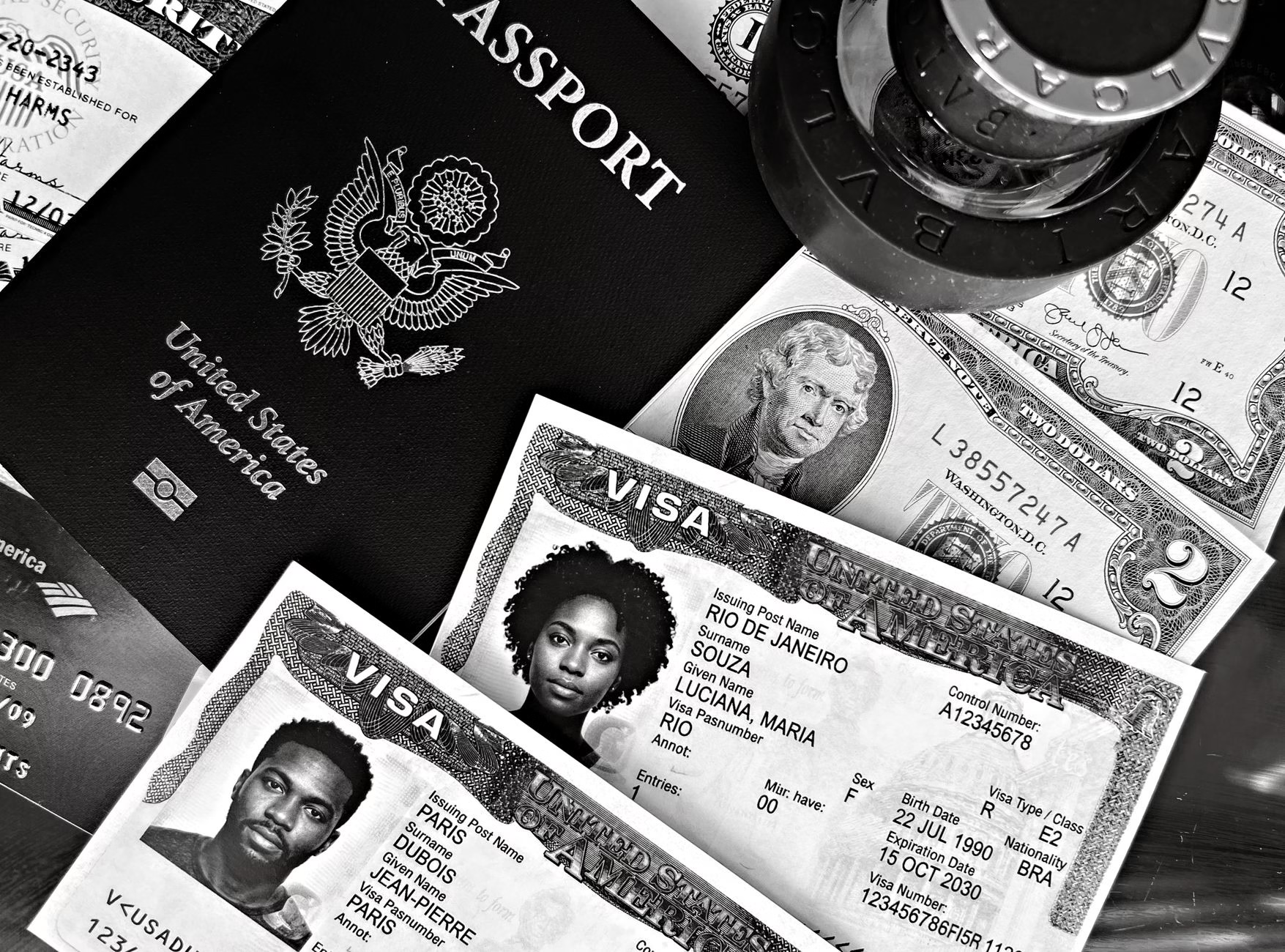
Government authorities in Kenya have issued a strict warning to international visitors regarding the misuse of entry documents for unauthorized commercial activities. Officials emphasized that the country welcomes international travelers, investors, and tourists, but insisted that all foreign nationals must strictly adhere to the specific conditions outlined in their travel documentation.
The regulatory framework governing international entry into Kenya clearly separates tourism, transit, and employment or business operations. Authorities have observed instances where individuals enter the nation under standard visitor categories but subsequently engage in informal trade, commercial ventures, or local business operations without the proper legal authorization or permits.
Understanding Visa Regulations in Kenya
Navigating immigration requirements is a fundamental responsibility for anyone planning to travel to East Africa for professional or leisure purposes. A standard entry pass is typically issued for specific, limited activities such as holiday travel, family visits, or attending brief professional conferences. Engaging in commercial trade, setting up retail operations, or offering services locally requires specialized permits and business licenses.
Immigration officials have reiterated that bypassing these legal channels undermines the local economy and creates unfair competition for domestic enterprises. The government maintains structured pathways for legitimate foreign investors who wish to establish businesses, provided they follow the established legal procedures, register their entities, and acquire the necessary work and trading documentation.
Protecting Local Markets and Fair Trade
The primary concern behind this recent policy enforcement is the protection of domestic merchants and small business owners. When international visitors bypass standard regulatory hurdles and engage in retail or wholesale trade without proper oversight, it disrupts the local market ecosystem.
Government representatives stressed that fair competition is essential for sustainable economic growth. Domestic traders operate under specific tax laws, business registration mandates, and regulatory compliances. Allowing unauthorized individuals to conduct commercial activities creates an uneven playing field that harms local entrepreneurs who contribute consistently to the national tax base.
Consequences of Violating Immigration Terms
Foreign nationals found in violation of their entry conditions face severe penalties under national law. Consequences range from heavy fines and immediate deportation to being barred from entering the country in the future. Law enforcement agencies have ramped up inspections across major commercial hubs to identify non-compliant individuals.
Business owners and landlords who knowingly harbor or facilitate unauthorized foreign traders are also subject to legal scrutiny. The government is coordinating closely with various security and immigration departments to ensure that compliance checks are conducted regularly and thoroughly across all commercial sectors.
How Legitimate Investors Can Operate
For those international stakeholders genuinely interested in participating in the regional economy, Kenya offers transparent and structured avenues for legal establishment. Foreign investors are encouraged to engage with relevant trade and investment promotion agencies to understand the precise requirements for starting a business.
Obtaining the correct documentation ensures long-term security, builds trust with local partners, and fosters a stable business environment. Compliance with national laws ultimately benefits all parties involved by promoting transparency, accountability, and sustainable economic development across the region.





















Leave a Reply