


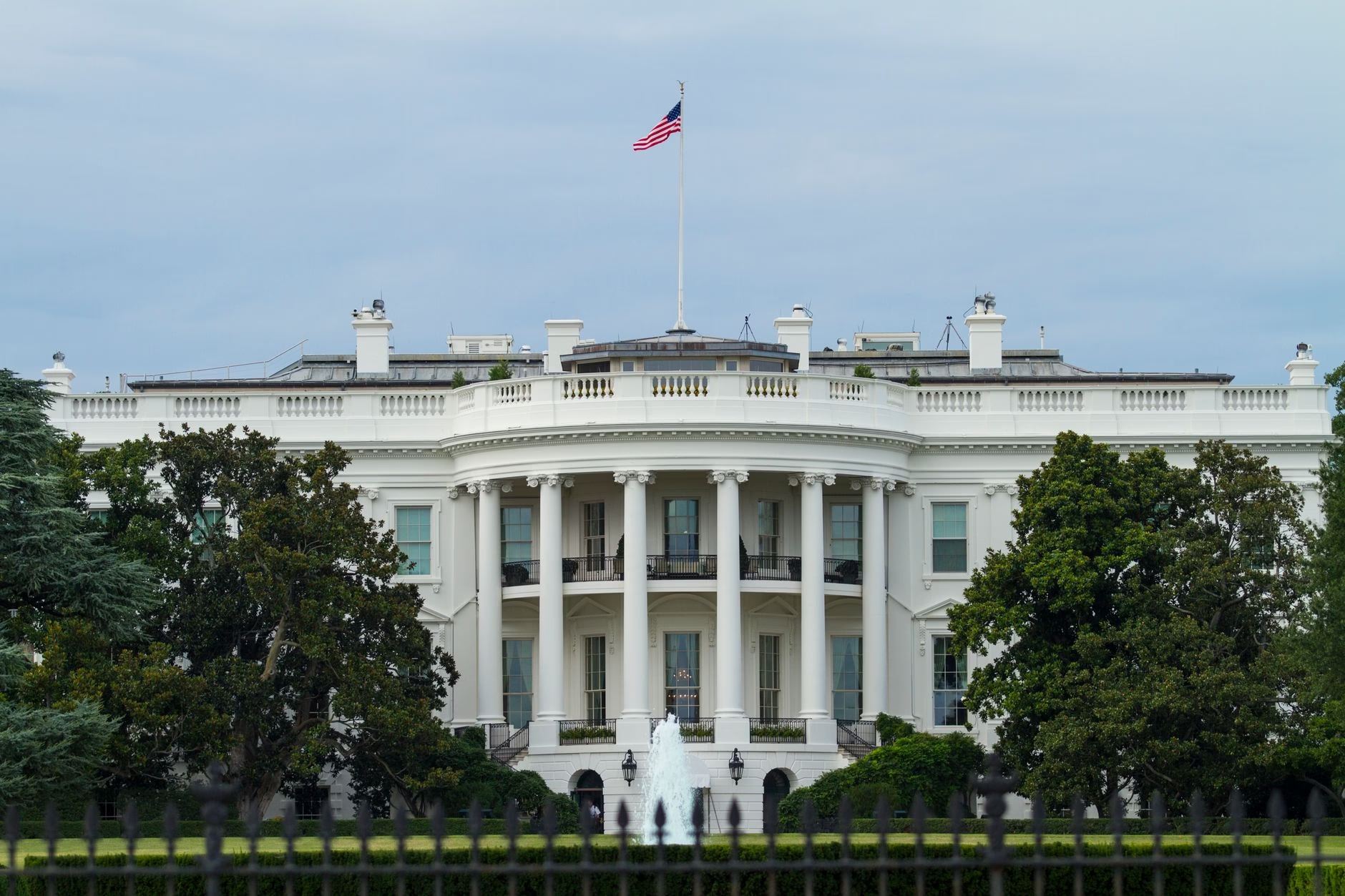
Background of the Investigation
The federal government has taken a significant step regarding the administration of media access at the executive mansion. Officials from the federal law enforcement agency confirmed that an official review is currently underway. This administrative inquiry focuses directly on the operations and management of the television press pool that covers the executive branch.
Legal authorities are examining whether existing operational structures comply with federal competition statutes. Specifically, the inquiry seeks to determine if current arrangements breach provisions outlined in the Sherman Act. This statute prohibits monopolistic practices, unfair market restraints, and agreements that unreasonably restrict commercial access or operational participation.
Escalation of Press Access Tensions
This legal development follows a prolonged period of escalating friction concerning media credentials and physical entry to executive events. Access to the executive mansion has frequently been a point of contention between administrative officials and media representatives. The arrangement of the television pool determines which broadcast entities can capture footage and disseminate crucial visual reporting to the broader public.
Critics and industry observers have often debated the fairness of how these limited slots are distributed among various networks and independent agencies. By initiating an antitrust review, federal regulators are signaling a shift toward judicial scrutiny of media logistics. Questions regarding exclusivity, fairness, and equitable participation are now at the forefront of this administrative action.
Implications for Media Operations
The television press pool serves as a vital conduit between executive leadership and citizens nationwide. When access is restricted or controlled by a select group, questions regarding public interest and fair competition inevitably arise. The federal inquiry will likely scrutinize internal governance models, membership criteria, and the overall decision-making processes governing pool rotation.
Legal experts note that applying competition law to journalistic syndication and pooled resources is an unusual approach. The Sherman Act is traditionally deployed against commercial corporations rather than media collectives. However, federal investigators maintain that any entity controlling essential economic access or operational privileges may fall under regulatory jurisdiction.
Next Steps in the Federal Review
As the inquiry proceeds, investigators will likely request documentation, communication records, and operational guidelines from relevant stakeholders. Representatives from the media collectives and administrative offices will be expected to cooperate with the information-gathering process.
The outcome of this federal examination could reshape how broadcast organizations share resources and coordinate coverage of the executive branch. While it remains unclear whether formal legal charges will emerge, the mere existence of the probe underscores heightened regulatory interest in the management of public information infrastructure.





















Leave a Reply