


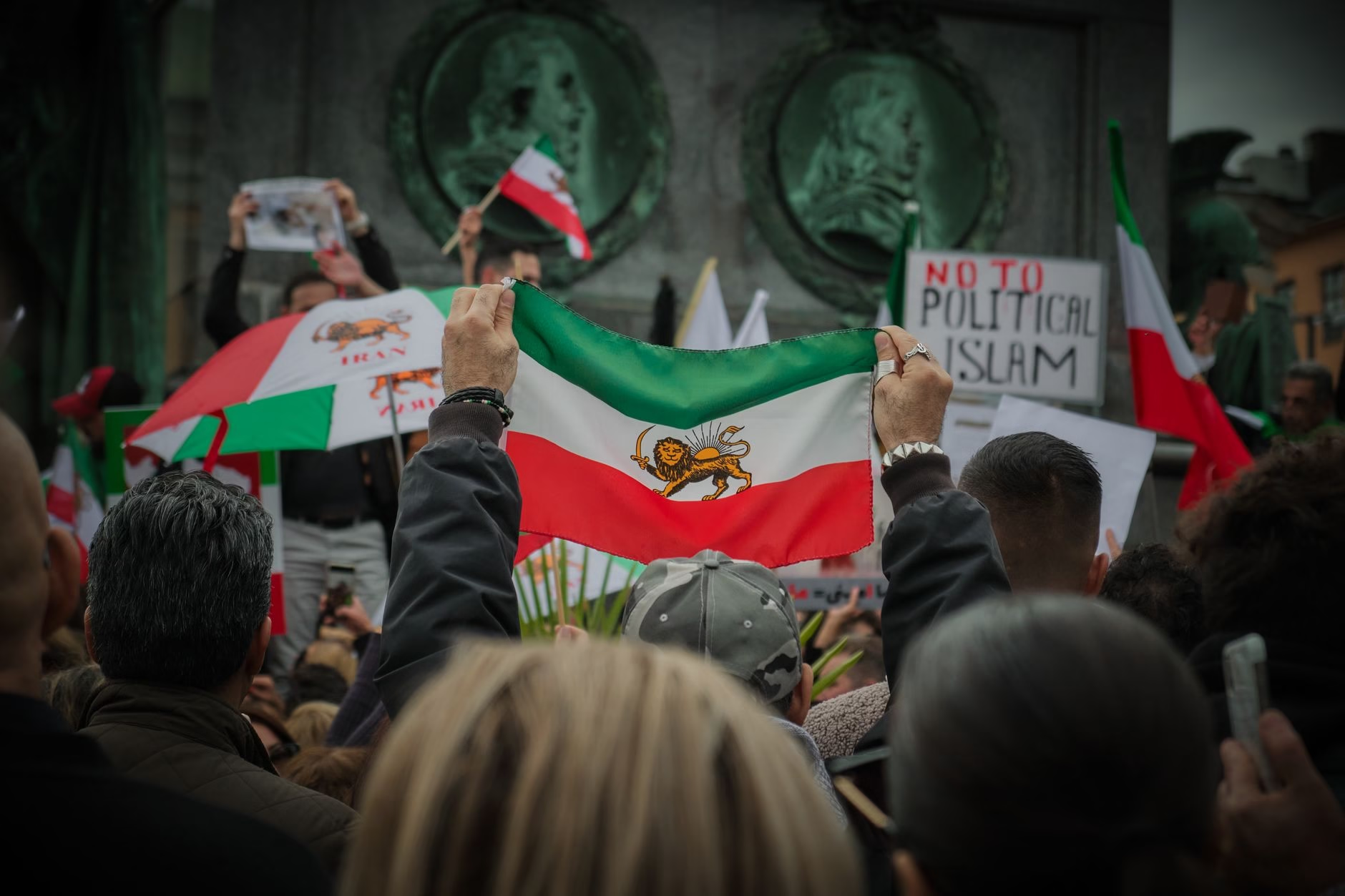
The financial toll of geopolitical instability in the Middle East has become increasingly apparent for European economies. Recent economic assessments indicate that hostilities involving Iran have resulted in a staggering €90 billion surge in extra fuel expenses for the European Union. This sudden spike in energy expenditures highlights the deep vulnerability of European energy markets to external supply shocks and regional conflicts.
Background of the Energy Crisis
For decades, European nations have worked toward diversifying their energy portfolios to reduce reliance on volatile regions. Despite these efforts, major disruptions in key global shipping lanes and oil-producing territories inevitably ripple outward. When tensions escalated regarding Iran, the immediate consequence was a severe tightening of global petroleum supplies. This scarcity drove international crude prices upward, creating an immediate financial burden for importing nations.
Impact on European Industries and Consumers
As wholesale energy costs climbed, the effects quickly trickled down to everyday consumers and industrial enterprises across the continent. Manufacturing facilities, transport networks, and utility providers faced mounting operational costs, which they ultimately passed on to the end buyer. Households experienced significantly higher heating and electricity bills, squeezing disposable incomes and slowing down broader economic momentum across the region.
Broader Economic Implications
The estimated €90 billion burden serves as a stark reminder of the interconnected nature of modern global trade and resource distribution. Analysts point out that sudden macroeconomic pressures of this scale can alter monetary policy trajectories and inflation rates. Central banks must carefully navigate these external shocks when determining interest rate adjustments and economic growth forecasts.
Accelerating the Green Transition
In response to these recurring financial pressures, policymakers across the bloc are renewing their commitment to renewable energy sources and domestic efficiency measures. Proponents argue that the fastest route to insulate the economy from Middle Eastern geopolitical volatility is to aggressively phase out fossil fuel dependence entirely. Investments in wind, solar, and hydrogen infrastructure are increasingly viewed not merely as environmental necessities, but as vital components of continental security.
Conclusion
The substantial financial fallout from the Iran conflict underscores a persistent vulnerability within European energy systems. While short-term stabilization measures help cushion the immediate blow, long-term resilience will depend on accelerating sustainable power generation and securing diverse supply chains across the globe.



















Leave a Reply