


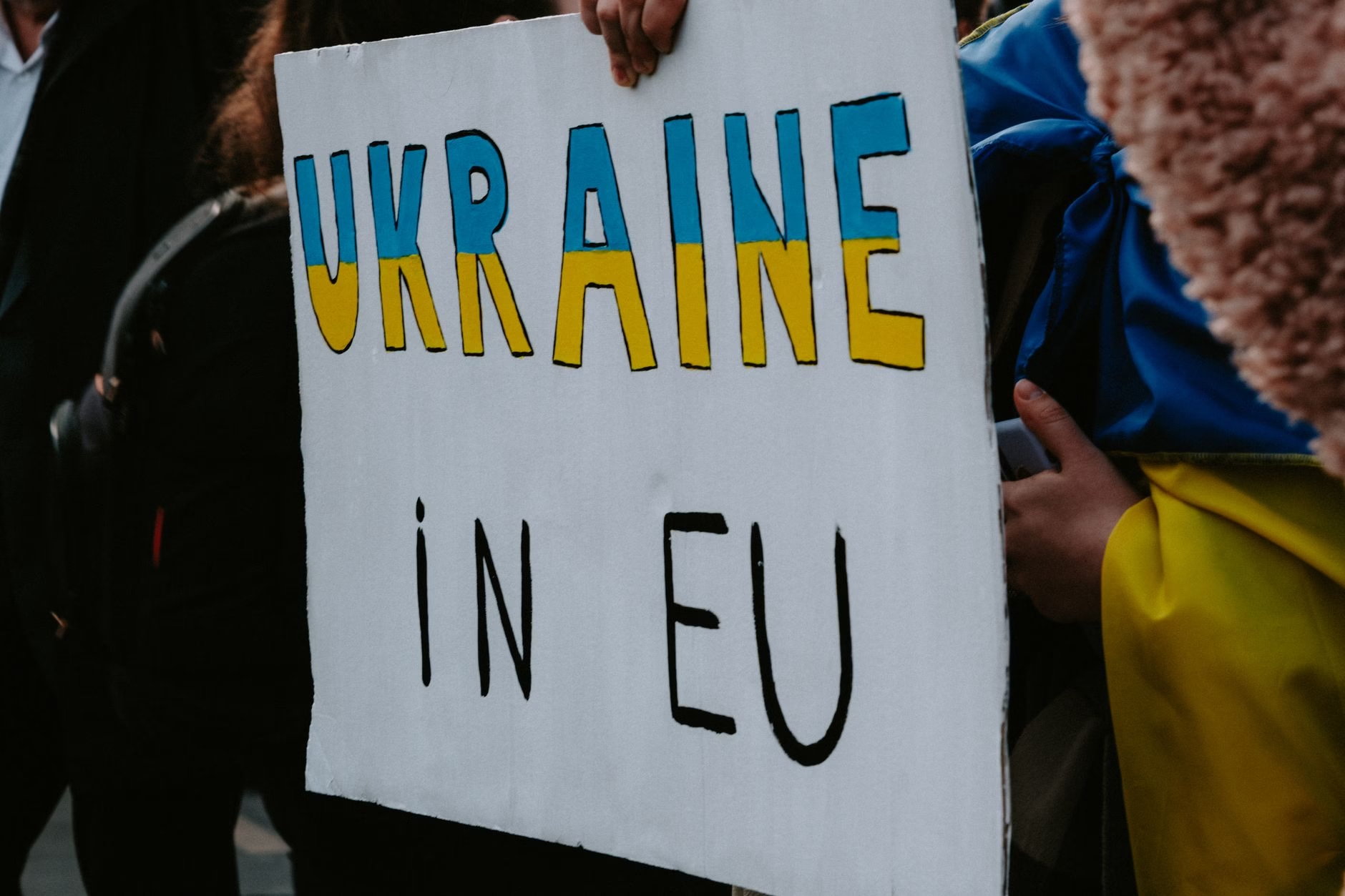
Iceland’s Referendum Outcome
Recent projections indicate that Iceland has decisively rejected initiating full membership negotiations with the European Union following a nationwide referendum. This outcome reinforces the nation’s long-standing cautious approach to deeper integration with the bloc, signaling a preference for its current relationship with European partners. The decision reflects a careful consideration of national interests and the existing frameworks that govern its engagement with the continent.
Understanding Iceland’s European Ties: EEA and Schengen
Despite declining full EU membership, Iceland is already deeply integrated into the European economic and social fabric through two significant agreements: the European Economic Area (EEA) and the Schengen Area. These arrangements provide substantial benefits, facilitating close cooperation and interaction without requiring full political alignment with the European Union’s legislative and governance structures. The EEA agreement, which includes EU member states alongside Norway, Liechtenstein, and Iceland, extends the EU’s single market principles to these non-EU countries. This means that Iceland adheres to EU rules concerning the free movement of goods, services, capital, and persons, ensuring frictionless trade and economic activity across the participating nations. For Icelandic businesses and citizens, this translates into access to a vast market and opportunities for employment and residence within the EEA.
Concurrently, Iceland’s participation in the Schengen Area is equally pivotal. This agreement abolishes internal border controls for travel between signatory states, allowing individuals to move freely across most of Europe without passport checks. For Iceland, an island nation heavily reliant on tourism and international trade, the Schengen arrangement simplifies travel for its citizens and visitors alike, enhancing connectivity and promoting cultural exchange. These two agreements collectively provide Iceland with many of the economic and social advantages of EU membership, such as market access and travel freedom, without the full political obligations.
The Benefits Without Full Membership
By participating in the EEA and Schengen Area, Iceland effectively enjoys the core economic and social benefits of the European single market. This includes access to over 450 million consumers, which is crucial for its export-oriented economy, particularly for its significant seafood industry. The free movement of capital supports investment flows, while the free movement of services allows Icelandic companies to operate across the EEA and vice versa. Furthermore, the free movement of people enables Icelandic citizens to work and study in other EEA countries and facilitates the inflow of labor to Iceland, addressing potential skill shortages. These arrangements allow Iceland to maintain a high degree of economic integration with Europe while preserving its political independence and control over key national policies.
Key Considerations for Rejecting Full EU Accession
Iceland’s decision to forgo full EU membership is rooted in several fundamental considerations that are common among non-EU European nations. A primary concern often revolves around national sovereignty, particularly regarding the ability to make independent decisions on domestic policy without external influence. Full EU membership would entail adopting a vast body of EU law, known as the acquis communautaire, and submitting to the jurisdiction of the European Court of Justice. For many, this represents a significant transfer of legislative and judicial power, which some nations prefer to retain at a national level. The desire to maintain distinct national identity and cultural heritage also plays a role, as some perceive full integration into a larger political union as a potential dilution of these unique attributes.
Sovereignty and Resource Management
One of the most significant factors influencing Iceland’s stance is the issue of resource management, particularly its rich fishing grounds. The fishing industry is a cornerstone of the Icelandic economy, contributing substantially to its GDP and export earnings. The European Union operates a Common Fisheries Policy (CFP), which sets quotas and regulations for fishing across member states. For Iceland, joining the EU would mean ceding control over its highly productive fishing waters to the CFP, a prospect that has historically met with strong opposition. The nation’s ability to independently manage its marine resources is seen as vital for its economic prosperity and ecological sustainability. Maintaining full control over these resources allows Iceland to implement policies tailored to its specific environmental conditions and economic needs, ensuring the long-term viability of its fishing industry.
Economic Implications and Contributions
Another aspect of the decision involves the economic implications of full membership. Joining the EU would require Iceland to contribute to the EU budget, a financial commitment that would need to be weighed against the perceived benefits. While access to EU structural funds and other financial mechanisms could be advantageous, the net financial impact is a significant consideration. Furthermore, full membership would likely necessitate adopting the Euro, relinquishing control over its monetary policy, and potentially impacting its ability to respond to economic shocks independently. The current arrangement through the EEA allows Iceland to maintain its own currency and central bank, providing flexibility in managing its economy. The nation also avoids participation in other EU policies, such as the Common Agricultural Policy, which might not align with its specific economic structure.
The Path Forward for Iceland
By rejecting full EU membership, Iceland has reaffirmed its commitment to its current model of engagement with Europe. This path allows the nation to benefit from close economic ties and free movement while safeguarding its sovereignty over critical sectors like fisheries and maintaining independent control over its legislative and monetary policies. The decision underscores a strategic choice to selectively integrate with European frameworks rather than pursuing full political union. Iceland will continue to navigate its international relations through its existing agreements, focusing on bilateral and multilateral cooperation that aligns with its national interests and values.
Conclusion: A Deliberate Choice
The referendum outcome represents a deliberate and well-considered decision by the Icelandic populace. It highlights a preference for a relationship with Europe that maximizes economic and social benefits while preserving national autonomy. Iceland’s continued participation in the European Economic Area and the Schengen Area ensures its deep integration into the continent’s economic and social life, demonstrating that significant cooperation can exist without full political accession. This choice reflects a pragmatic approach to international relations, prioritizing specific national advantages and self-determination.





















Leave a Reply