


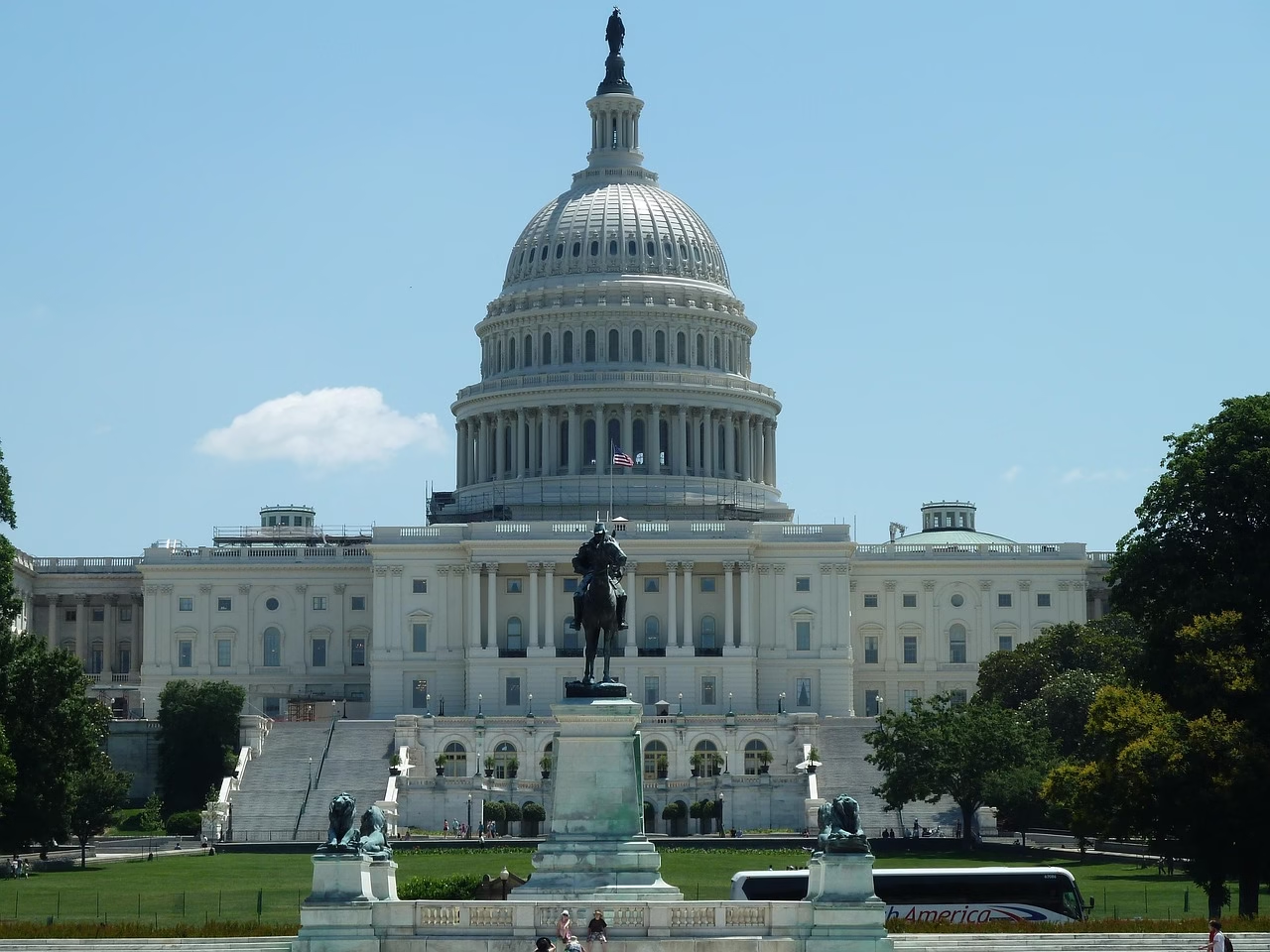
Proposed Restrictions on Congressional Financial Speculation
Representative Bryan Steil (R-Wis.) introduced legislation this week in Washington, D.C., aimed at prohibiting members of Congress from placing bets on prediction markets. The proposal emerges amid intensifying scrutiny regarding the influence of platforms like Kalshi and Polymarket on the political landscape, as lawmakers seek to prevent potential conflicts of interest in the digital betting era.
The Rise of Political Prediction Markets
Prediction markets allow users to purchase shares in the outcome of future events, ranging from electoral results to legislative actions. While these platforms have existed for years, they have recently surged in popularity, attracting significant capital and mainstream attention during the 2024 election cycle.
Regulators and ethics watchdogs have expressed concerns that these markets could be manipulated by individuals with non-public information. Because members of Congress often possess sensitive, market-moving data, the intersection of legislative duty and speculative betting has become a focal point for ethics reform advocates.
Legislative Intent and Market Integrity
The proposed bill seeks to codify a clear prohibition against members of Congress using their positions to profit from political outcomes through these specific financial vehicles. Representative Steil’s office emphasized that the legislation is designed to maintain public confidence in the integrity of the democratic process.
Critics of current practices argue that the ability to bet on one’s own legislative success creates a perverse incentive structure. Proponents of regulation point to the STOCK Act of 2012, which already restricts members from trading individual stocks based on non-public information, as a legal precedent that should logically extend to modern prediction markets.
Expert Perspectives on Financial Oversight
Legal analysts note that the rapid growth of prediction markets has outpaced existing federal regulatory frameworks. According to data from the Commodity Futures Trading Commission (CFTC), the volume of betting on political events has reached record highs, complicating the agency’s oversight capabilities.
“The core issue is information asymmetry,” said a policy expert familiar with financial oversight. “When individuals who help shape the outcomes are also allowed to profit from betting on those outcomes, the perception of fairness in our political system is severely compromised.”
Broader Industry Implications
For the burgeoning prediction market industry, this legislative push represents a significant regulatory hurdle. Companies like Kalshi have argued that their platforms provide valuable data for hedging risks and predicting societal trends, rather than serving as tools for insider trading.
However, the industry faces an uphill battle as Congress considers whether these platforms should be treated similarly to traditional financial exchanges. If the bill gains traction, it could set a standard that forces other financial institutions to implement stricter compliance protocols regarding political betting activities.
Future Outlook and Regulatory Watch
The coming months will likely see heated debate over the scope of these restrictions and whether they should extend to congressional staff or immediate family members. Observers should monitor upcoming committee hearings to see if bipartisan support emerges for the bill, as well as how the CFTC adjusts its guidance on election-related contracts. As digital betting platforms continue to expand, the pressure on legislators to define the boundaries of ethical conduct in financial markets will only intensify.






















Leave a Reply