


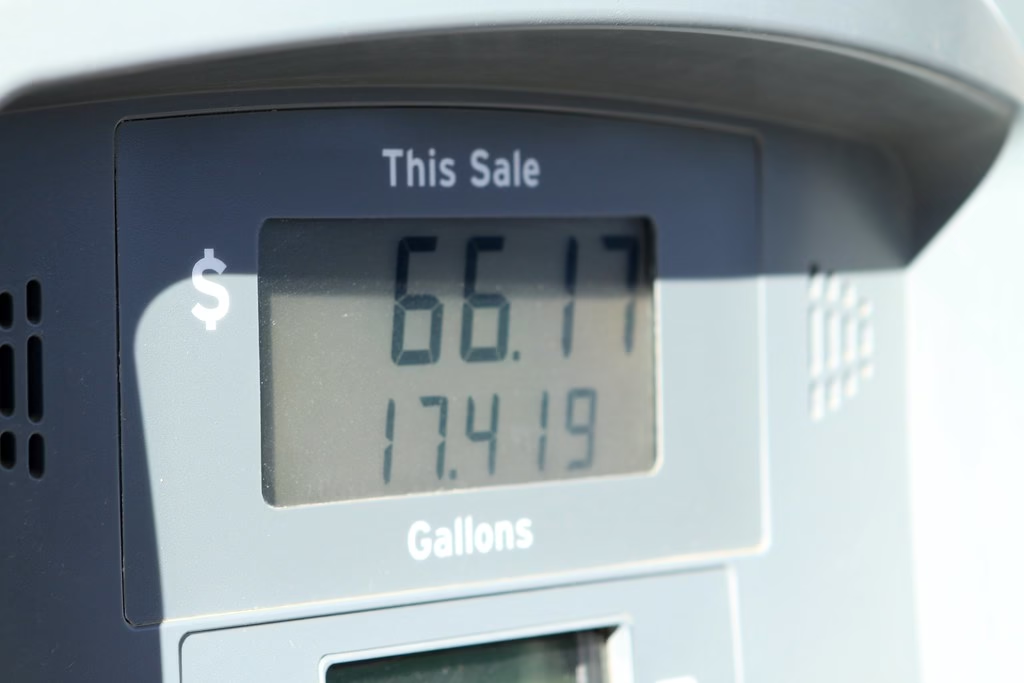
For the first time since March, average national gasoline prices in the United States have fallen below the $4-per-gallon threshold this week, providing relief to millions of motorists after more than three months of volatility fueled by geopolitical instability linked to the conflict in Iran.
The Road to Price Correction
The decline follows a sustained period where fuel costs reached historic highs, straining household budgets and contributing to broader inflationary pressures across the economy. Energy analysts point to a cooling in crude oil futures as the primary catalyst for the recent downward trend at the pump.
While the initial spike was driven by fears of supply chain disruptions in the Middle East, global markets have begun to price in a more stable outlook. Increased production levels from non-OPEC nations and a seasonal dip in consumer demand have further encouraged the price retreat.
Market Dynamics and Supply Chains
Refineries across the Gulf Coast have ramped up output in recent weeks, addressing the supply bottlenecks that characterized the early summer months. Increased fuel inventories have allowed gas stations to pass savings along to consumers more rapidly than in previous cycles.
Data from the Energy Information Administration (EIA) suggests that domestic oil production remains near record levels, providing a buffer against international shocks. This domestic resilience has been a critical factor in decoupling U.S. pump prices from the more volatile global crude benchmarks.
Expert Perspectives on Energy Costs
Industry experts caution that while the sub-$4 average is a positive indicator, the market remains susceptible to rapid shifts. “We are seeing a normalization of supply, but geopolitical risk premiums can reappear instantly,” noted energy economist Sarah Jenkins.
According to recent market analysis, retail gasoline prices are highly sensitive to refinery maintenance schedules and hurricane-related disruptions. While current trends favor the consumer, the transition into the autumn driving season remains a variable that could influence supply distribution.
Implications for the Economy
For the average American household, the decrease in fuel costs represents an immediate increase in discretionary income. Economists suggest that sustained lower gas prices could help dampen the broader Consumer Price Index (CPI) figures in the coming months, potentially shifting the focus of inflationary concerns toward services and housing.
For the logistics and transportation industries, the price drop offers a much-needed reduction in operational overhead. Smaller shipping firms and independent contractors are expected to see the most immediate benefit, as fuel surcharges begin to stabilize or decrease.
What to Watch Next
Looking ahead, market participants are monitoring the upcoming OPEC+ production meetings, which could dictate the trajectory of global supply through the end of the year. Additionally, any sudden escalation in regional conflicts or unexpected refinery outages could threaten to push prices back above the $4 mark, making the current stability a tentative victory for consumers.


























Leave a Reply