


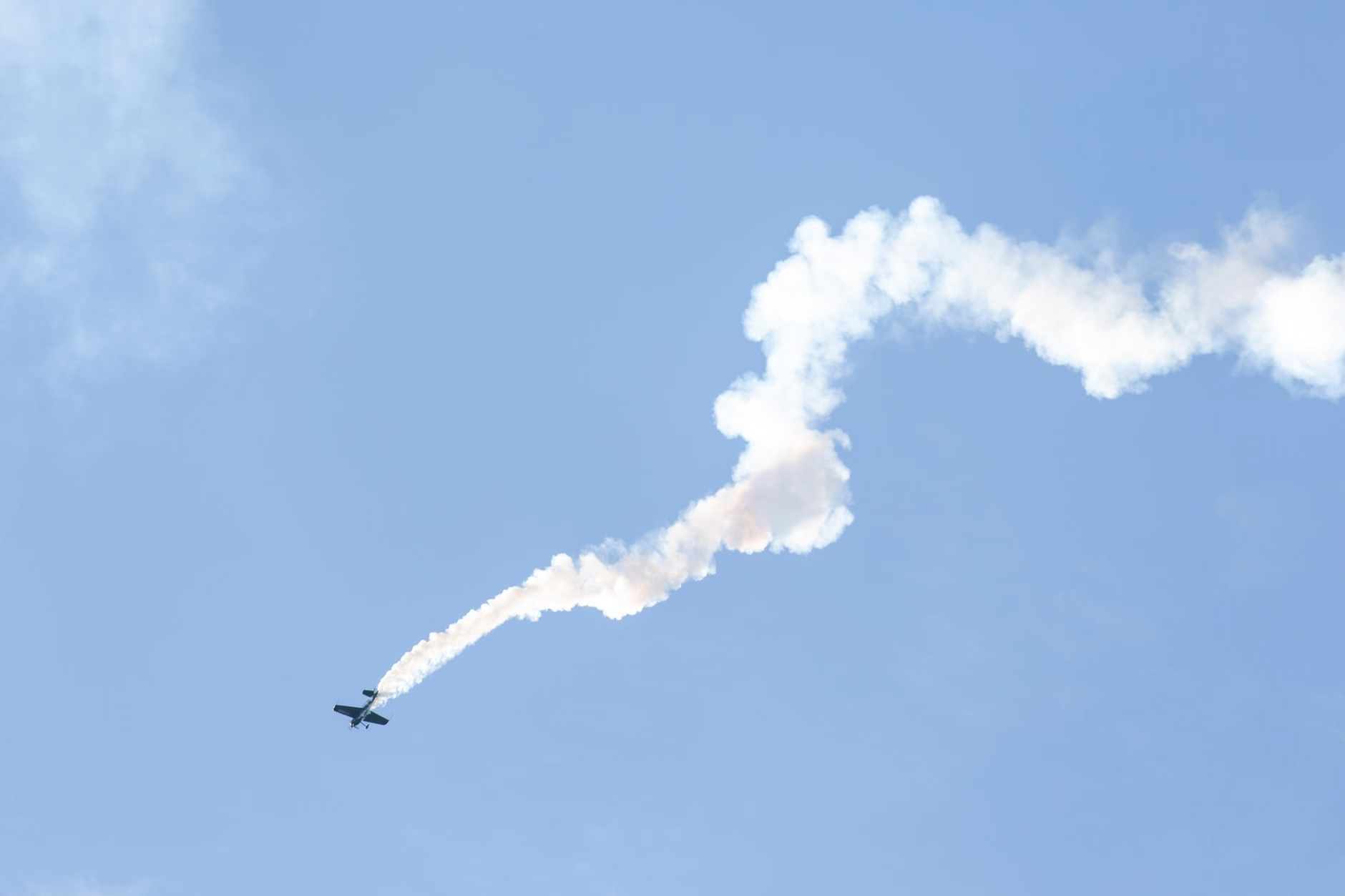
A recent incident involving a Eurowings flight destined for Mallorca brought aviation safety protocols into sharp focus. The aircraft, which departed from an undisclosed location, was compelled to divert its course to Paris following an alert triggered by what was ultimately identified as steam emanating from the onboard galley. This event, while disruptive for passengers, underscores the stringent safety measures in place within the airline industry and the cautious approach taken by flight crews in response to any potential threat, particularly concerning a potential galley steam flight diversion.
Understanding Galley Steam Incidents
The presence of steam within an aircraft cabin, particularly originating from the galley area, can often be misinterpreted as smoke. Aircraft galleys are equipped with various appliances, including ovens, coffee makers, and water boilers, all of which produce steam during their operation. Under certain atmospheric conditions, or when ventilation systems are operating in a specific manner, this steam can become more visible, sometimes appearing dense enough to resemble smoke. The visual similarity between steam and smoke poses a significant challenge for flight crews, who are trained to treat all potential smoke indications with the utmost seriousness, thereby potentially leading to a galley steam flight diversion.
Aviation Safety Protocols and Crew Training
Airline safety protocols mandate that any indication of smoke or fire, regardless of its perceived origin, must be investigated immediately and thoroughly. Flight crews undergo extensive and recurrent training to handle such scenarios. This training includes identifying the source of potential smoke, assessing its severity, and implementing predetermined emergency procedures. The primary objective is always the safety of everyone on board. In situations where the source cannot be definitively identified as harmless steam, or if there is any ambiguity, the crew’s default action is to prioritize safety, which often involves a diversion to the nearest suitable airport, such as in this galley steam flight diversion.
The Decision to Divert
The decision to divert an aircraft is a complex one, made by the flight captain in consultation with air traffic control and the airline’s operations center. It involves weighing numerous factors, including the nature of the perceived threat, the aircraft’s current position, available fuel, weather conditions at potential diversion airports, and the availability of ground support services. In the case of the Eurowings flight, the captain’s decision to land in Paris was a proactive measure, ensuring that the situation could be fully assessed on the ground in a controlled environment. This approach minimizes risk and allows for expert evaluation by maintenance personnel, preventing a minor issue from escalating.
Passenger Experience During a Diversion
For passengers, a flight diversion can be an unsettling and inconvenient experience. The sudden change in flight path, the announcement of an unscheduled landing, and the uncertainty surrounding the cause can naturally lead to anxiety. Airlines strive to keep passengers informed throughout the process, providing updates as soon as reliable information becomes available. Upon landing at a diversion airport, passengers typically disembark while the aircraft undergoes inspection. Depending on the duration of the delay and the outcome of the investigation, passengers may be accommodated on alternative flights or provided with necessary services such as meals and overnight stays.
Airport Operations for Unexpected Arrivals
Airports are well-prepared to handle unscheduled landings and diversions. When an aircraft declares an emergency or requests a diversion, air traffic control coordinates with airport emergency services, including fire and rescue teams, to ensure a swift and safe response upon landing. Runways are cleared, and ground personnel are positioned to assist the aircraft as it arrives. This coordinated effort ensures that any potential risks are mitigated and that the aircraft and its occupants receive immediate attention. Paris, being a major international hub, possesses robust infrastructure and experienced personnel to manage such situations effectively.
Post-Diversion Procedures and Investigations
Following a diversion, a thorough investigation is conducted by airline maintenance teams and, if necessary, aviation authorities. In incidents involving suspected smoke or fire, this investigation aims to confirm the source of the issue, whether it was indeed harmless steam or a more serious technical malfunction. For the Eurowings flight, the confirmation that the incident was caused by galley steam would lead to a review of the galley equipment and its ventilation systems. Such investigations are crucial for continuous improvement in aviation safety, helping airlines refine their procedures and maintain their fleets, and understanding the nuances of a galley steam flight diversion.
The Broader Context of Aviation Safety
This incident serves as a reminder of the extraordinary emphasis placed on safety within the aviation industry. Every flight operation is governed by strict regulations, comprehensive maintenance schedules, and rigorous crew training programs. While diversions can be disruptive, they are a testament to the proactive safety culture that prioritizes the well-being of passengers and crew above all else. Pilots are empowered to make critical decisions that safeguard lives, even if it means altering travel plans. The rarity of actual in-flight emergencies, despite the high volume of air traffic globally, speaks volumes about the effectiveness of these safety measures.
Conclusion
The Eurowings flight diversion to Paris, prompted by visible steam from the galley, exemplifies the aviation industry’s unwavering commitment to safety. Although the event ultimately proved to be a false alarm regarding a more serious issue, the crew’s adherence to established protocols and the captain’s decisive action ensured the safety of all on board. Such incidents, while inconvenient, reinforce public confidence in the robust safety frameworks that underpin modern air travel, demonstrating that every precaution is taken to ensure a secure journey for passengers worldwide, even in the case of a galley steam flight diversion.




















Leave a Reply