


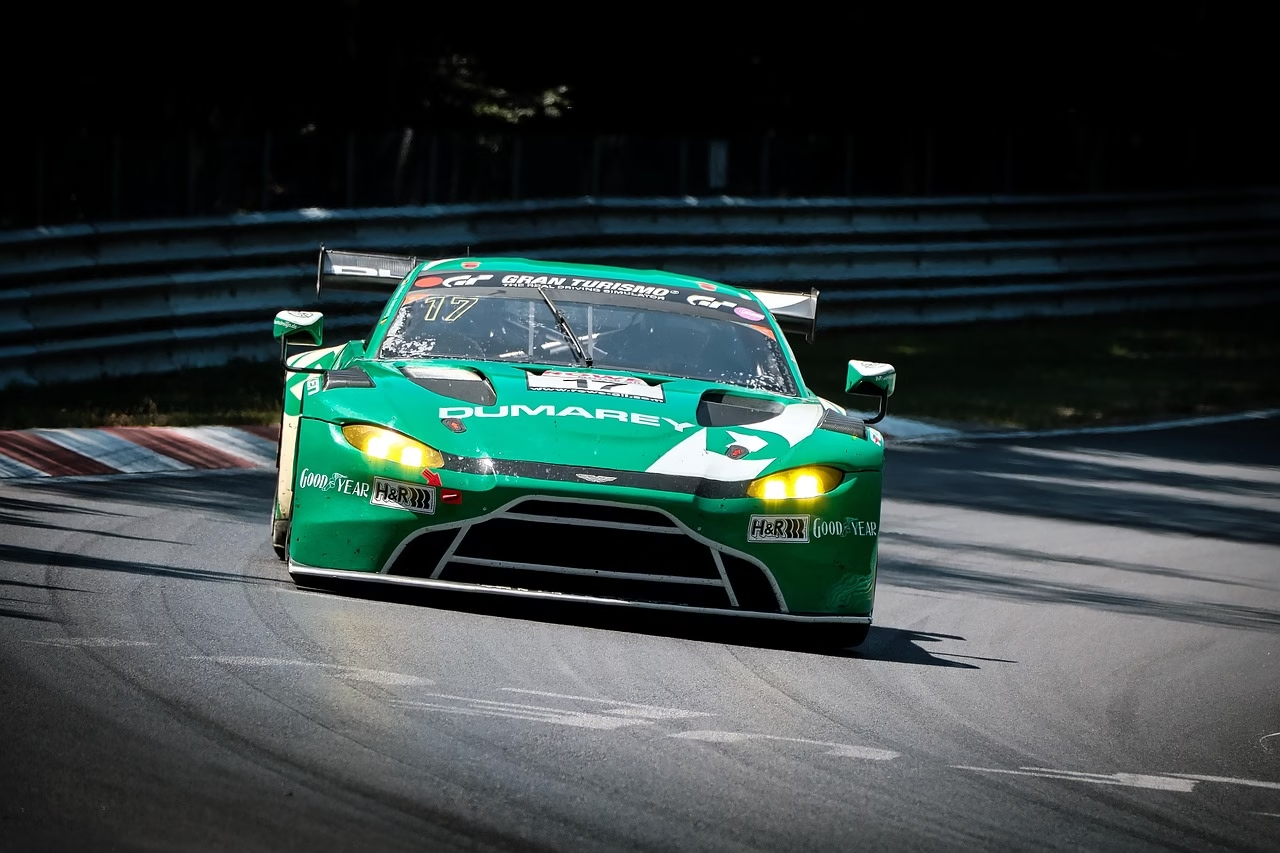
The New Benchmark for Electric Performance
An undisclosed high-performance electric sedan has officially set a new lap record at Germany’s legendary Nürburgring Nordschleife circuit this week, clocking a time that challenges the traditional dominance of internal combustion engines. This feat, achieved during private testing sessions, marks a significant milestone in the evolution of battery-electric vehicle (BEV) dynamics, signaling that high-output electric powertrains are now capable of sustained, high-speed performance under grueling track conditions.
Understanding the Nürburgring Legacy
Known as the ‘Green Hell,’ the 12.9-mile Nürburgring Nordschleife is widely regarded as the ultimate proving ground for automotive manufacturers. Its combination of elevation changes, varied cornering speeds, and extreme length makes it the industry standard for testing suspension tuning, thermal management, and power delivery.
For decades, manufacturers have used the track to validate engineering breakthroughs. Historically, the leaderboard has been dominated by lightweight, track-focused sports cars equipped with high-revving engines. The recent shift toward electric records highlights how advancements in torque vectoring and regenerative braking are compensating for the inherent weight penalties associated with large battery packs.
Technical Advancements Driving the Lap Time
The record-breaking run was made possible by significant leaps in thermal management technology. Managing the intense heat generated by high-discharge lithium-ion batteries during a full-throttle lap is a primary engineering challenge for electric vehicle manufacturers. By implementing advanced cooling loops and liquid-cooled battery architectures, engineers have successfully mitigated the risk of power throttling during high-demand scenarios.
Data points from the session indicate that the vehicle utilized sophisticated software-driven torque vectoring. This system allows the car to distribute power to individual wheels in milliseconds, providing an agility that was previously unattainable for vehicles of this mass. Industry analysts note that this level of control allows electric sedans to navigate the Nordschleife’s notorious carousel and technical sections with unprecedented precision.
Industry Implications and Future Outlook
This achievement serves as a marketing catalyst for the broader adoption of electric vehicles. By demonstrating that EVs can compete with, and often outperform, traditional supercars on the world’s most difficult circuit, manufacturers are effectively dismantling the perception that electric mobility is limited to urban commuting.
For consumers, this evolution suggests that the next generation of performance sedans will offer a blend of daily usability and track-capable hardware. As battery density continues to improve, the weight gap between internal combustion and electric vehicles is expected to shrink, potentially leading to even faster times in the coming years.
Observers should monitor upcoming manufacturer announcements, as the battle for the ‘fastest electric production car’ title is expected to intensify throughout the year. With several major brands currently developing dedicated performance platforms, the current record may be short-lived as competition forces faster hardware development and more aggressive software optimization.





















Leave a Reply