


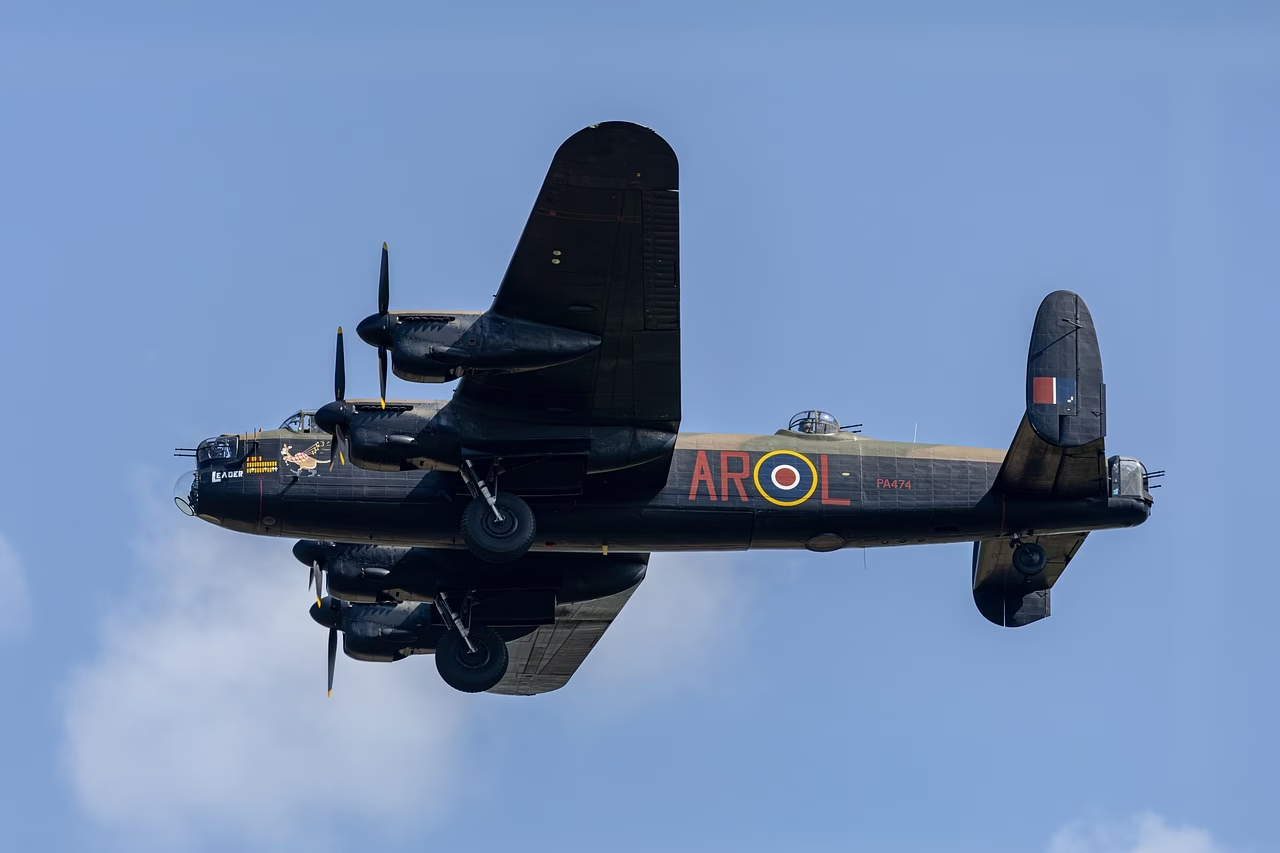
As intense wildfires continue to scorch millions of hectares across Canada this season, a viral wave of online misinformation is misleading the public about how the country’s aerial firefighting fleets are financed, owned, and deployed, stoking public distrust in emergency management during critical response operations.
The Complex Reality of Canadian Aerial Firefighting
Understanding Canada’s aerial firefighting apparatus requires navigating the division of constitutional responsibilities and specialized procurement models. In Canada, wildland fire management falls under provincial and territorial jurisdiction, meaning there is no single, centrally operated federal fleet of water bombers.
Provinces utilize a combination of direct ownership and long-term private contracting to manage their aerial firefighting capacity. While jurisdictions like Quebec and Ontario own and operate dedicated fleets of amphibious scooper aircraft, other provinces rely on specialized aviation contractors such as Conair Aviation and Coulson Aviation to supply seasonal air tankers and support planes.
This hybrid model allows regional authorities to scale up operations during peak fire activity without absorbing the massive year-round capital costs of maintaining full fleets during low-risk months. However, online critics often mischaracterize these routine private-sector contracts as evidence of government neglect or covert privatization schemes.
Dissecting the Misleading Claims
Fact-checkers and defense analysts have identified several false narratives gaining viral traction during major fire outbreaks. A primary claim asserts that provincial governments intentionally defunded or sold off functional water bombers to balance budgets, leaving communities unprotected.
In reality, legacy airframes such as the Martin Mars or early-generation Canadair CL-215s have simply reached the end of their certified operational lifespans or become unsustainable to maintain due to scarce replacement parts. Retiring these historic planes is driven by aviation safety regulations and structural fatigue rather than arbitrary budget cuts.
Another common false narrative suggests that foreign nations are receiving Canadian firefighting aircraft while domestic blazes burn unchecked. Official records from the Canadian Interagency Forest Fire Centre (CIFFC) confirm that inter-provincial and international asset sharing relies on strict reciprocal agreements, where equipment is deployed abroad or to neighboring provinces only when local threat levels permit.
Supply Bottlenecks and Aircraft Manufacturing Realities
Data from global aviation supply chains illustrates that expanding heavy water-bomber capacity is a multi-year industrial challenge. The gold standard for amphibious fire suppression, the Canadair series, faced a prolonged production hiatus following corporate ownership transfers and assembly line relocations.
De Havilland Aircraft of Canada recently relaunched the specialized manufacturing line with its new DHC-515 Firefighter model, but assembly and testing cycles mean initial deliveries are not scheduled until later in the decade. Furthermore, European nations facing escalating Mediterranean wildfire seasons have already secured pre-orders for a substantial portion of the planned output, creating a global queue for new airframes.
Industry experts emphasize that specialized water scoopers cannot be purchased off the shelf during an active emergency. Building an airframe capable of withstanding the extreme structural stresses of low-altitude water drops requires specialized engineering, certified labor, and years of advance capital allocation.
Impact on Public Safety and Crisis Management
Emergency response experts warn that misleading rhetoric surrounding fleet financing undermines public trust at moments when compliance with evacuation warnings and safety advisories is essential. False claims frequently direct public frustration toward frontline emergency agencies, forcing officials to divert resources to counter rumors during active operations.
Crisis communication researchers note that severe wildfire events create high-anxiety environments where complex procurement policies are easily reframed into sensationalized narratives. The emotional strain on displaced residents makes online audiences particularly receptive to simplified explanations that assign intent to standard operational constraints.
Future Outlook and What to Watch
As climate projections forecast longer and more severe wildfire seasons across North America, pressure is mounting on federal and provincial governments to overhaul aerial fleet strategies. Policy experts are watching whether the Canadian federal government will establish a co-funded national strategic air-tanker reserve to assist provinces during simultaneous regional emergencies.
Key developments to monitor include the manufacturing milestones of De Havilland’s DHC-515 production line in Alberta and potential expansion of winter-lease agreements with Southern Hemisphere partners like Australia. Additionally, legislative inquiries into algorithmic promotion of crisis-related disinformation may prompt stricter standards for social media platforms during national natural disasters.




















Leave a Reply