


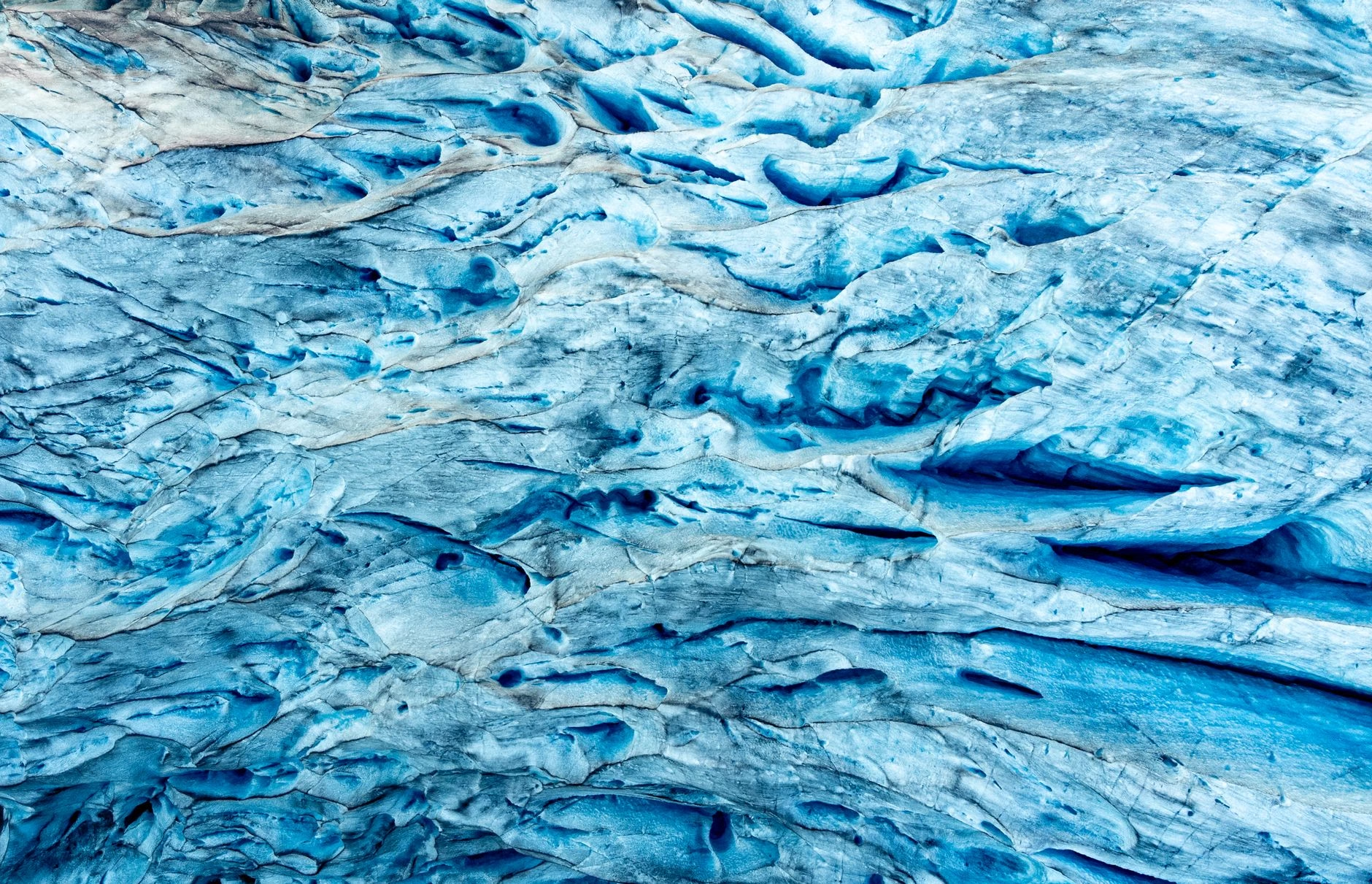
In the rapidly evolving digital landscape, visual content often travels at an unprecedented speed, sometimes outpacing the truth. A recent instance highlights this challenge, involving a dramatic video depicting a significant glacial collapse. This footage, while undeniably impactful, has been erroneously circulated online, falsely presented as recent events related to floods in the Nepal-Tibet region. Such misattributions underscore the critical need for vigilance and accurate information dissemination, particularly concerning environmental phenomena.
The core of this widespread misinformation lies in the misidentification of the video’s origin. The compelling visuals actually capture a glacial event that occurred in Patagonia, a region renowned for its vast ice fields and dynamic natural processes. This footage, which has been available for some time, depicts the powerful spectacle of a glacier calving, where large chunks of ice break off and plunge into the water below. While such events are a natural part of glacial cycles, their dramatic nature makes them potent visual content, easily repurposed for various narratives, accurate or otherwise.
The internet’s capacity for rapid sharing means that once a piece of content gains traction, its original context can quickly become detached. Users, often driven by a desire to inform or warn others about critical events, may share content without fully verifying its authenticity or source. In this particular case, the striking imagery of the Patagonian glacial collapse was mistakenly or intentionally linked to contemporary flood concerns in the Himalayan regions of Nepal and Tibet. This linkage creates a misleading impression, suggesting a direct connection between a specific event in South America and entirely separate environmental challenges in Asia.
Understanding Glacial Dynamics and Regional Differences
Glacial collapses, or calving events, are a common occurrence in many of the world’s glaciated regions, including Patagonia. These events can be influenced by a combination of natural factors, such as ice thickness, water depth, and temperature fluctuations, as well as broader climatic changes. While the specific details of the Patagonian event in the video are distinct, the phenomenon itself is a powerful reminder of the dynamic nature of Earth’s cryosphere.
It is crucial to differentiate between such events and the complex hydrological challenges faced by regions like Nepal and Tibet. The Himalayan region, often referred to as the ‘Water Tower of Asia,’ is highly susceptible to the impacts of climate change, including altered monsoon patterns, glacial lake outburst floods, and increased frequency of extreme weather events. These are serious, localized issues that require accurate reporting and focused attention. Conflating them with unrelated footage from a different continent can dilute the urgency and understanding of the actual crises unfolding in these vulnerable areas.
The Impact of Misinformation on Public Perception
The proliferation of false information, especially concerning environmental disasters, carries significant consequences. Firstly, it can erode public trust in legitimate news sources and scientific reporting. When individuals encounter conflicting or incorrect information, it becomes challenging to discern truth from falsehood, leading to skepticism and confusion. Secondly, it can misdirect public concern and resources. If a dramatic video is believed to represent a current crisis in a particular region, it might inadvertently draw attention away from the actual, verified needs of that area or other affected locations.
Furthermore, such misattributions can distort the public’s understanding of climate change and its diverse manifestations. While both glacial dynamics and flood events are often linked to climate change, presenting unrelated footage as evidence of a specific regional crisis can oversimplify complex environmental processes. It can also lead to a generalized sense of alarm without providing accurate context, hindering effective communication about specific risks and mitigation strategies.
The Imperative of Verification in the Digital Age
Combating the spread of misinformation requires a collective effort, with individuals playing a vital role in verifying content before sharing it. Several practical steps can be taken to ensure the accuracy of information encountered online. One fundamental approach is to always consider the source of the content. Reputable news organizations and scientific bodies typically provide context, dates, and locations for their visuals.
Utilizing reverse image and video search tools can also be highly effective. These tools allow users to upload an image or video frame and discover where else that content has appeared online, often revealing its original context, date, and location. Cross-referencing information with multiple trusted sources is another critical step. If a dramatic claim or visual is not corroborated by several established news outlets or scientific organizations, it warrants skepticism.
Moreover, paying attention to details within the video itself can sometimes offer clues. Geographical features, vegetation, and even the appearance of people or infrastructure can provide hints about the true location or time period of the footage. Developing a critical mindset towards viral content, especially that which evokes strong emotional responses, is essential in navigating the complexities of the digital information landscape.
Conclusion
The case of the Patagonian glacial collapse video being falsely linked to Nepal-Tibet floods serves as a potent reminder of the challenges posed by misinformation in the digital age. While the visual impact of such environmental events is undeniable, their power must be harnessed responsibly. Accurate reporting and diligent verification are paramount to ensuring that public discourse around critical issues like climate change and regional disasters is based on facts, not on misleading narratives. By fostering a culture of critical engagement with online content, we can collectively work towards a more informed and discerning global community.















Leave a Reply