


Congressional Skepticism Mounts as Trump Signals Iran Deal Review
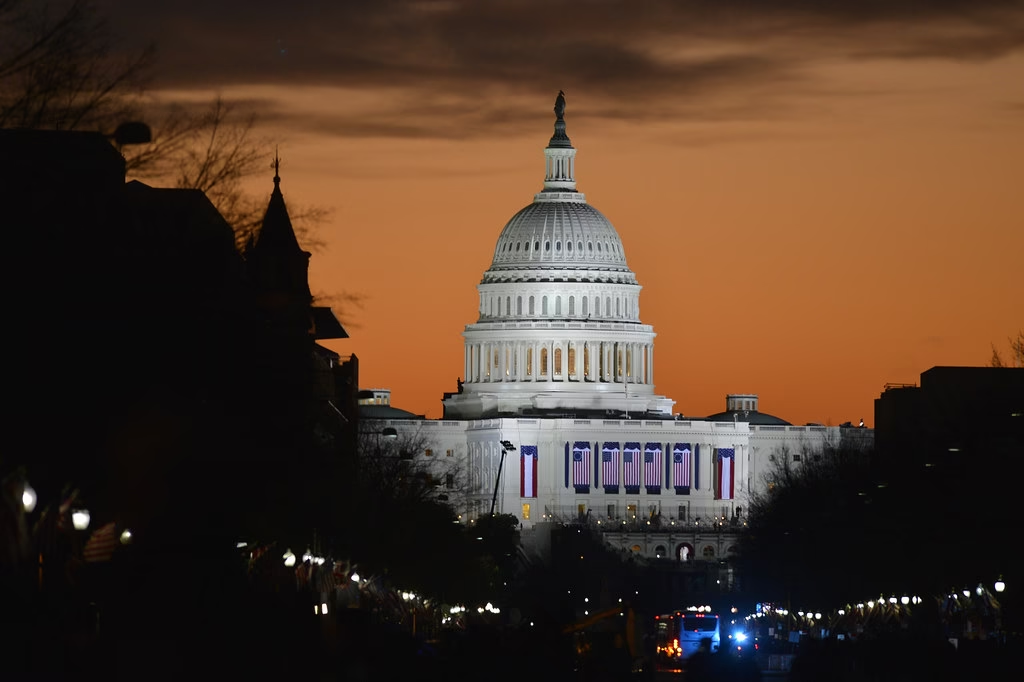
President Donald Trump announced on Sunday that he intends to submit the comprehensive details of a newly brokered Iran peace deal to Congress for review, a move intended to foster transparency but one that has immediately triggered a wave of cautious reactions from lawmakers on both sides of the aisle. The administration’s pivot toward legislative oversight occurs as the President attempts to solidify a landmark diplomatic agreement, despite mounting pushback from even his closest political allies on Capitol Hill.
The Context of Diplomatic Friction
The proposed deal follows years of heightened tensions between Washington and Tehran, characterized by economic sanctions and regional proxy conflicts. Historically, the executive branch has held significant latitude in managing international treaties, yet this specific agreement arrives at a moment of intense partisan divide regarding the future of Middle Eastern foreign policy. Previous attempts to codify Iran-related policy through legislative channels have frequently stalled, leaving the current administration to navigate a fragile balance between executive authority and the constitutional prerogative of Congress.
Legislative Hurdles and Internal Dissent
The reception in the halls of Congress has been markedly lukewarm, with several prominent Republican lawmakers expressing reservations about the specific terms of the deal. Critics argue that the agreement may not provide sufficient safeguards against nuclear proliferation or regional aggression, despite the administration’s assurances. This internal fracturing within the President’s own party creates a complex environment for the deal’s potential ratification or support.
Democratic leaders, meanwhile, have signaled they will subject the document to rigorous scrutiny, demanding a full disclosure of all classified annexes associated with the agreement. Minority voices in the Senate have already called for public hearings to analyze the long-term impact on regional stability and national security interests. The administration’s willingness to turn to Congress suggests a gamble that the deal is robust enough to withstand public and legislative debate.
Expert Perspectives and Strategic Implications
Foreign policy analysts point out that the decision to involve Congress reflects a strategic shift in executive communication. Dr. Elena Vance, a senior fellow at the Institute for Global Security, notes that “submitting such a sensitive document to legislative review is a high-stakes move that prioritizes long-term legitimacy over immediate executive control.” Data from recent polling suggests that voters are increasingly divided on the efficacy of diplomatic engagement with Iran, further complicating the political calculus for members of Congress facing upcoming election cycles.
Economists have also weighed in, noting that the international market reaction to the deal remains volatile. Uncertainty surrounding potential sanctions relief and the sustainability of the agreement has led to fluctuating energy prices, as global investors wait to see if the deal will survive the congressional gauntlet.
The Path Forward
The coming weeks will determine whether the administration can build a consensus or if the deal will become a casualty of partisan gridlock. Observers are watching closely for the specific language of the documents submitted to the Senate Foreign Relations Committee, as these details will dictate the level of support the President can realistically expect to garner. If the agreement faces a legislative blockade, the administration may be forced to choose between executive unilateralism or a complete renegotiation of the terms, either of which carries significant geopolitical risks.





















Leave a Reply