


Introduction to the Penguin Decline
Recent scientific investigations have uncovered a dramatic reduction in wildlife numbers within a globally renowned habitat. Advanced aerial technology and high-resolution satellite imagery reveal that a remote volcanic island has experienced a severe drop in its local seabird population.
Over a fourteen-year period spanning from 2011 to 2025, researchers documented the loss of more than 680,000 chinstrap penguins in this specific region. Experts have characterized the trend as a striking population collapse, raising urgent questions about environmental stability in the area.
Methodology of the Recent Study
To arrive at these concerning conclusions, scientists relied heavily on cutting-edge monitoring tools rather than traditional ground counts alone. Drones equipped with specialized cameras and orbiting satellites provided unprecedented views of remote nesting grounds.
These technological advances allowed researchers to safely survey steep terrain and inaccessible coastlines that humans could rarely monitor effectively. By comparing visual data captured across multiple years, specialists were able to track population shifts with remarkable precision.
Understanding the Chinstrap Penguin
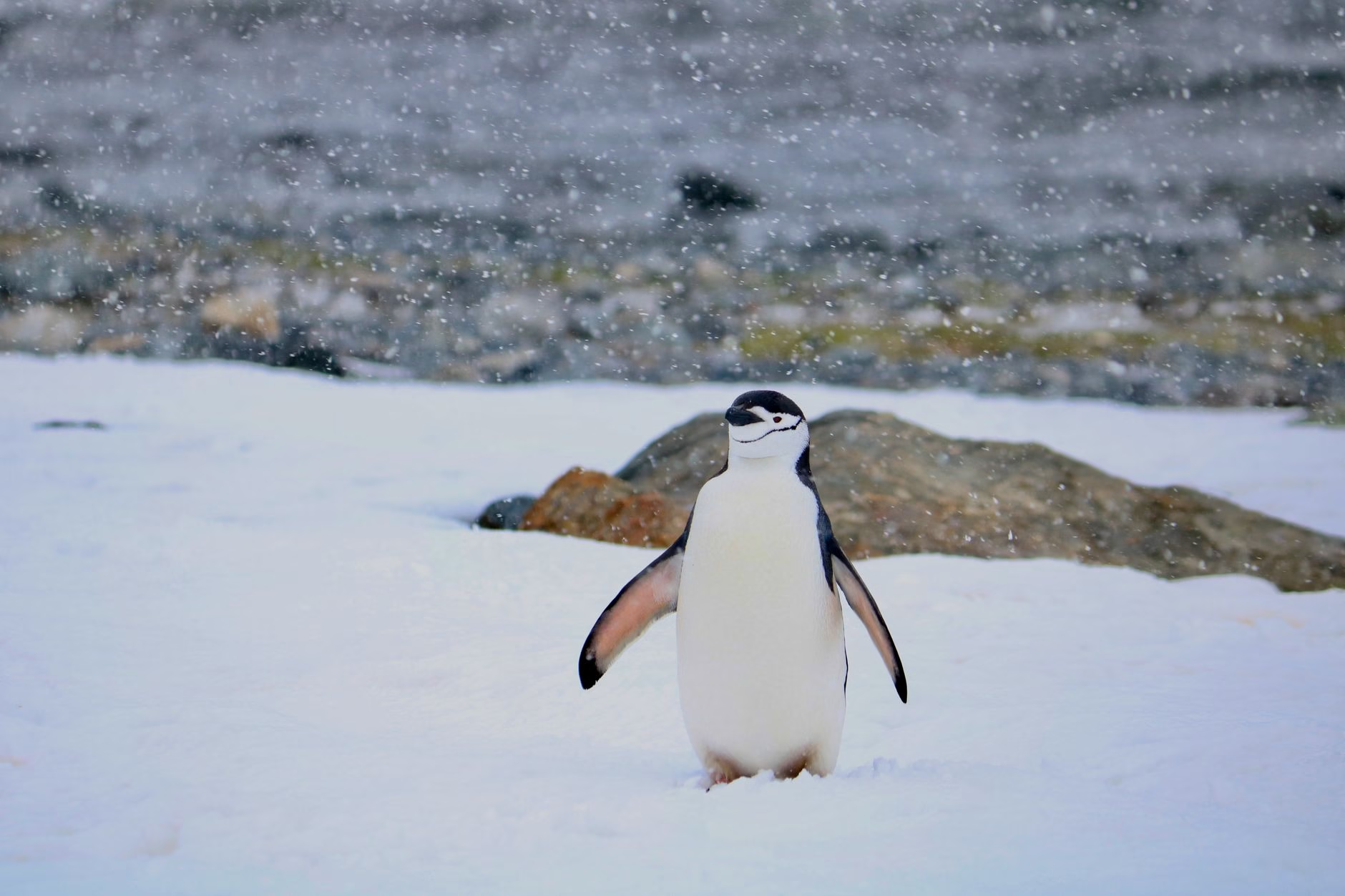
Chinstrap penguins are widely recognized for the distinctive narrow black band under their heads, which resembles a helmet strap. They inhabit harsh sub-Antarctic environments and rely heavily on stable marine ecosystems for survival.
Their primary food source consists of krill, small shrimp-like crustaceans that thrive in cold, ice-edge waters. Any disruptions in the availability of krill can trigger cascading effects throughout the local food web, impacting breeding success and adult survival rates.
Broader Environmental Context
While the study pinpoints the sheer scale of the losses on the volcanic island, it also highlights the growing vulnerability of polar species to rapid ecological changes. Researchers continue to analyze the complex web of factors contributing to the decline.
Changes in ocean temperatures, shifting sea ice patterns, and increased competition for food resources are frequently cited as major pressures on seabird colonies. Scientists emphasize the need for continued monitoring to understand whether these trends will persist in the coming decades.






















Leave a Reply