


Introduction
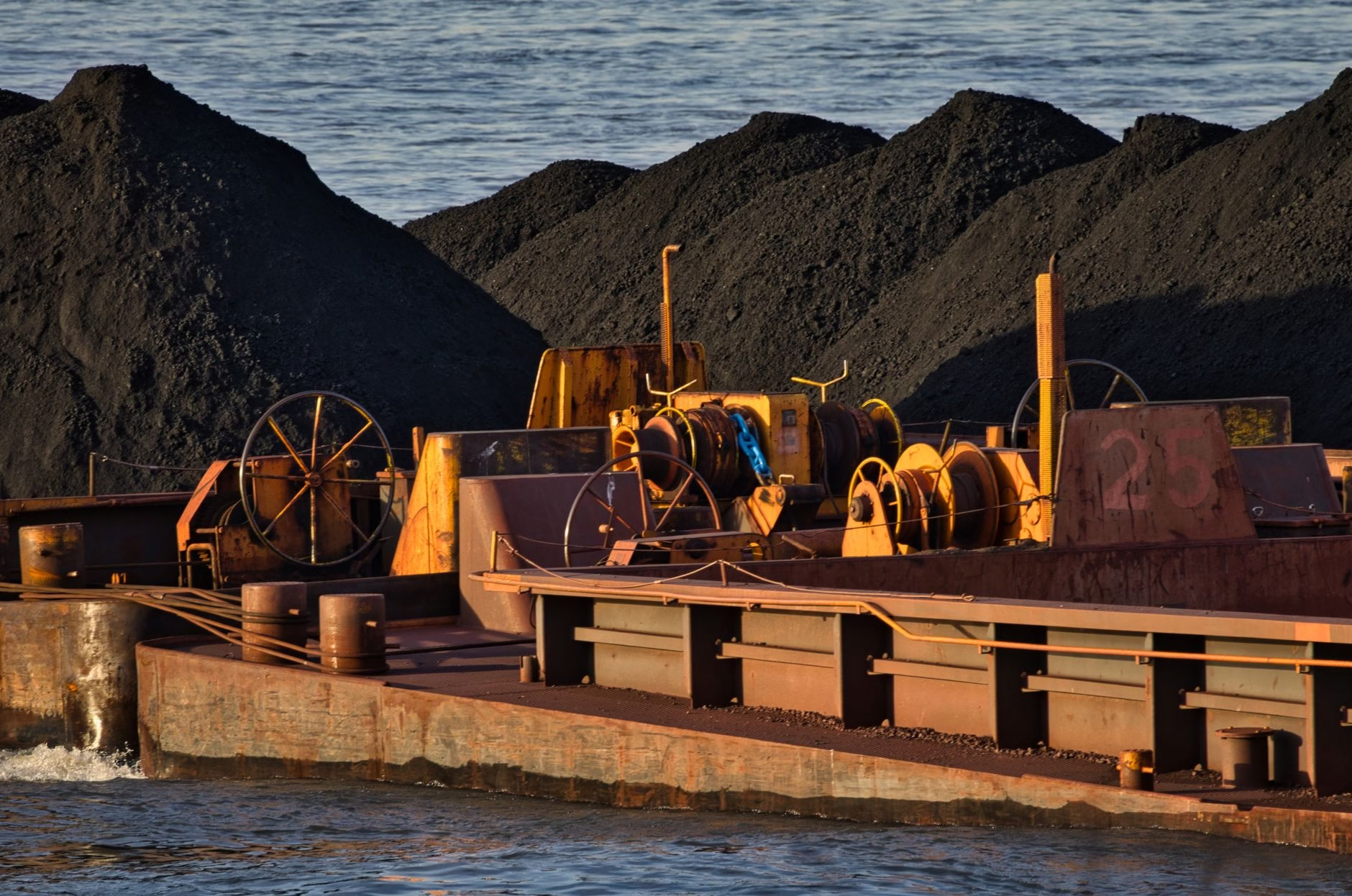
It has been five years since the government of China made a formal commitment at the United Nations to halt public financial support for new coal-fired power plants abroad. This pledge was widely celebrated as a major turning point in the global fight against climate change, signaling a significant shift away from fossil fuels in developing nations. Yet, despite the official ban on direct state funding, various financial workarounds and policy loopholes are still allowing international coal developments to move forward.
The Shift In Public Financing
When the announcement was first made at the United Nations, international observers recognized it as a landmark moment for global environmental policy. For decades, state-backed financial institutions had served as the primary engine for coal plant construction across numerous emerging economies. By cutting off this vital stream of direct assistance, the policy effectively dried up the traditional funding models that many overseas energy projects relied upon to secure capital.
Emerging Financial Loopholes
Despite the suspension of direct state backing, energy developers and international partners have found alternative pathways to finance new coal infrastructure. These workarounds often involve private investments, commercial loans, and hybrid financial vehicles that fall outside the strict definitions of the initial pledge. Because these mechanisms do not strictly violate the letter of the original commitment, they have created a grey area that permits continued construction and expansion.
The Impact On Global Emissions
The persistence of these alternative funding streams presents a major challenge for international climate goals. Even though public sector backing has largely ceased, the cumulative output from these ongoing and newly initiated projects continues to contribute substantial carbon emissions into the atmosphere. Environmental analysts point out that closing these secondary financial pathways is essential if the global community hopes to meet its long-term temperature stabilization targets.
Looking Ahead
As the international community reviews the five-year progress following the historic United Nations pledge, attention is increasingly turning toward the enforcement and refinement of these climate commitments. Policymakers and environmental advocates are urging governments to address the existing loopholes to ensure that private capital does not simply replace public funds in supporting fossil fuel infrastructure. Achieving a true transition away from coal will require comprehensive oversight that extends far beyond direct state-backed loans.





















Leave a Reply