


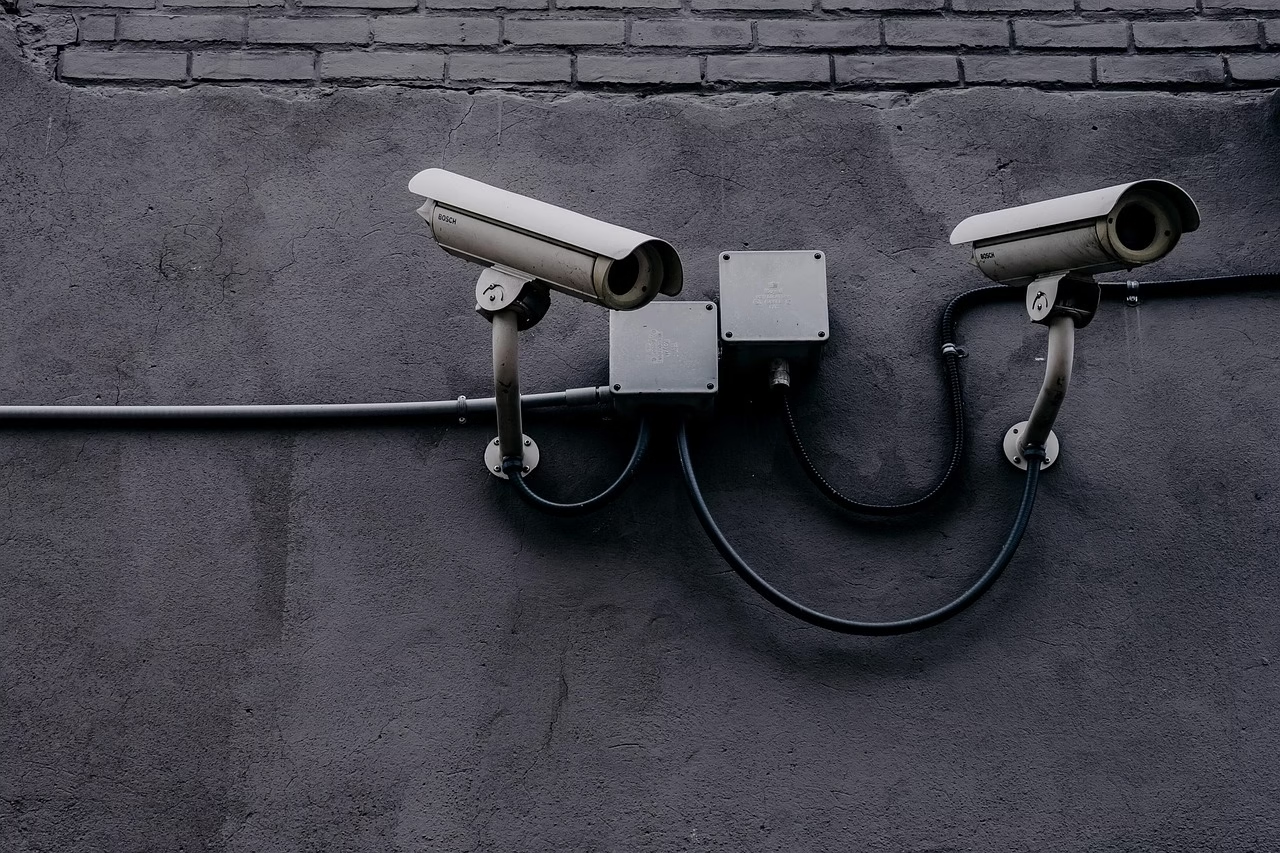
Canadian researchers are demanding a unified G7 strategy to combat what they describe as ‘systemic’ Chinese foreign interference, following a recent report highlighting the pervasive nature of these operations. This call comes as a Canadian minister returns to the country, underscoring the ongoing relevance and urgency of the issue.
Understanding the Threat Landscape
The report, authored by a coalition of Canadian academics and security experts, details a sophisticated and multifaceted approach employed by the Chinese government to influence democratic processes and public discourse in Canada and allied nations. This interference is not isolated but rather a coordinated, long-term effort aimed at shaping perceptions and undermining trust in democratic institutions.
Foreign interference, in this context, encompasses a range of activities including disinformation campaigns, cyberattacks, attempts to influence elections, and the intimidation of diaspora communities. The report specifically points to the systematic nature of these actions, suggesting they are centrally directed and deeply embedded within China’s foreign policy objectives.
Scope and Scale of Interference
Researchers emphasize that the interference extends beyond election cycles, targeting academic institutions, think tanks, and media outlets. The goal appears to be the quiet suppression of criticism and the amplification of narratives favorable to Beijing. This includes efforts to monitor and silence critics, both within China and abroad, and to promote a specific worldview through various channels.
Data cited in the report, though often difficult to quantify precisely due to the covert nature of such operations, indicates a significant increase in suspicious activities in recent years. These activities leverage both traditional and digital means, exploiting open societies’ freedoms to their advantage.
Expert Perspectives and Data
Dr. Charles Burton, a former diplomat and senior fellow at the Macdonald-Laurier Institute, has been a vocal critic of Beijing’s influence operations. He has previously stated that China’s United Front Work Department is a key agency orchestrating these efforts, aiming to co-opt and neutralize opposition and secure advantages for the People’s Republic of China.
The report draws on analyses from various security agencies and academic institutions, which collectively paint a picture of a deliberate and persistent campaign. While specific incidents are often classified, the patterns of activity suggest a strategic intent to weaken democratic alliances and foster divisions within target countries.
G7 Cooperation as a Necessary Response
The researchers argue that individual countries acting alone are insufficient to counter such a pervasive and coordinated threat. A unified G7 response, involving intelligence sharing, coordinated sanctions, and joint strategies to combat disinformation, is deemed essential.
This coordinated approach would allow democratic nations to present a stronger, more unified front against foreign interference. It could also involve developing common standards for transparency in political financing and lobbying, and creating mechanisms to hold perpetrators accountable.
Implications for Canada and Beyond
For Canada, the implications are profound, touching upon national security, democratic integrity, and the safety of its citizens, particularly those in ethnic minority communities who may be targets of intimidation. The report’s findings suggest that Canada’s response to date may not be sufficiently robust to counter the scale of the threat.
The call for G7 cooperation highlights the transnational nature of foreign interference. What affects one member nation can easily spill over to others, making collective action not just beneficial, but necessary for the preservation of democratic values and institutions across the Western world.
What to Watch Next
Moving forward, attention will be on whether G7 nations can translate these calls for action into concrete policy initiatives. Observers will be watching for increased information sharing, the development of joint countermeasures against disinformation, and potential diplomatic or economic actions taken collectively against states engaging in such interference. The effectiveness of these future measures will be crucial in determining the resilience of democratic societies against evolving foreign influence operations.

















Leave a Reply