


Introduction to Japanese Micro Cars
Japan has long maintained a unique automotive sector centered around compact dimensions and strict regulatory limits. These miniature vehicles, known locally as light automobiles, dominate crowded urban centers and narrow rural lanes alike. Their popularity stems from tax incentives, remarkable space efficiency, and supreme maneuverability in tight spaces. For decades, domestic brands held a near-monopoly on this specialized vehicle category, tailoring every millimeter of design to satisfy local drivers.
Emergence of Foreign Competition
The landscape of the lightweight vehicle market is undergoing a significant transformation. Global manufacturers increasingly recognize the potential of zero-emission mobility within this densely populated island nation. Introducing battery-powered alternatives to traditional combustion engines aligns with aggressive national climate targets. Among international contenders, major global electric vehicle producers are making aggressive moves to capture market share in this traditionally protected segment, leveraging advanced battery technology and manufacturing scale.
First Impressions on Japanese Roads
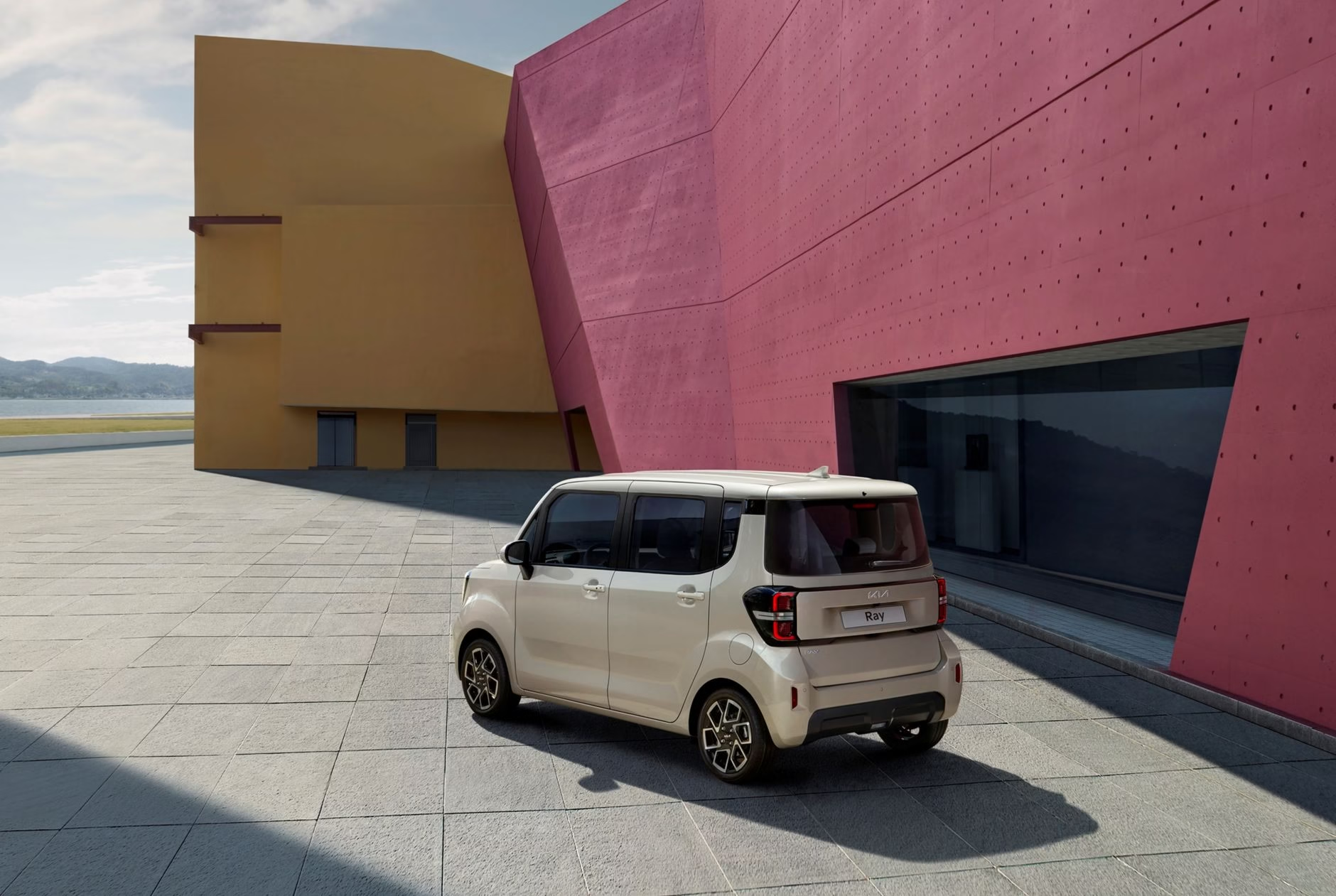
Recent test drives of the latest foreign-built micro vehicle provide clear insight into its real-world capabilities. Observers noted that the exterior footprint blends seamlessly into the urban environment, occupying the exact dimensional envelope mandated by local authorities. Despite the strict size boundaries, engineers managed to maximize interior volume. Passengers experience surprising headroom and legroom, debunking the myth that compact dimensions must compromise comfort.
Performance and Handling Dynamics
Navigating bustling metropolitan streets requires responsive steering and brisk acceleration from a standstill. The electric powertrain delivers instant torque, making city driving effortless and surprisingly engaging. Suspension tuning absorbs uneven road surfaces efficiently, maintaining composure over potholes and railway crossings. Drivers accustomed to conventional lightweight cars will notice a quieter cabin experience, largely devoid of engine vibrations and intrusive mechanical noise.
Practicality and Range Considerations
Daily usability remains the ultimate test for any urban commuter vehicle. Battery capacity is carefully calibrated to match typical daily driving distances within metropolitan areas, minimizing the need for constant recharging. Charging infrastructure compatibility ensures that replenishment is straightforward, whether utilizing home wall boxes or public rapid chargers. Cargo versatility also impresses, with clever seating configurations allowing for bulky packages despite the modest exterior size.
Market Impact and Future Outlook
The arrival of competitively priced, battery-driven micro vehicles signals a new chapter for the domestic automotive industry. Consumers now enjoy broader choices that combine zero-emission credentials with familiar dimensions and tax advantages. As charging networks continue to expand and battery costs decrease, adoption rates are expected to accelerate. This shift proves that global manufacturers can successfully adapt to hyper-localized market demands without sacrificing performance, comfort, or style.






















Leave a Reply