


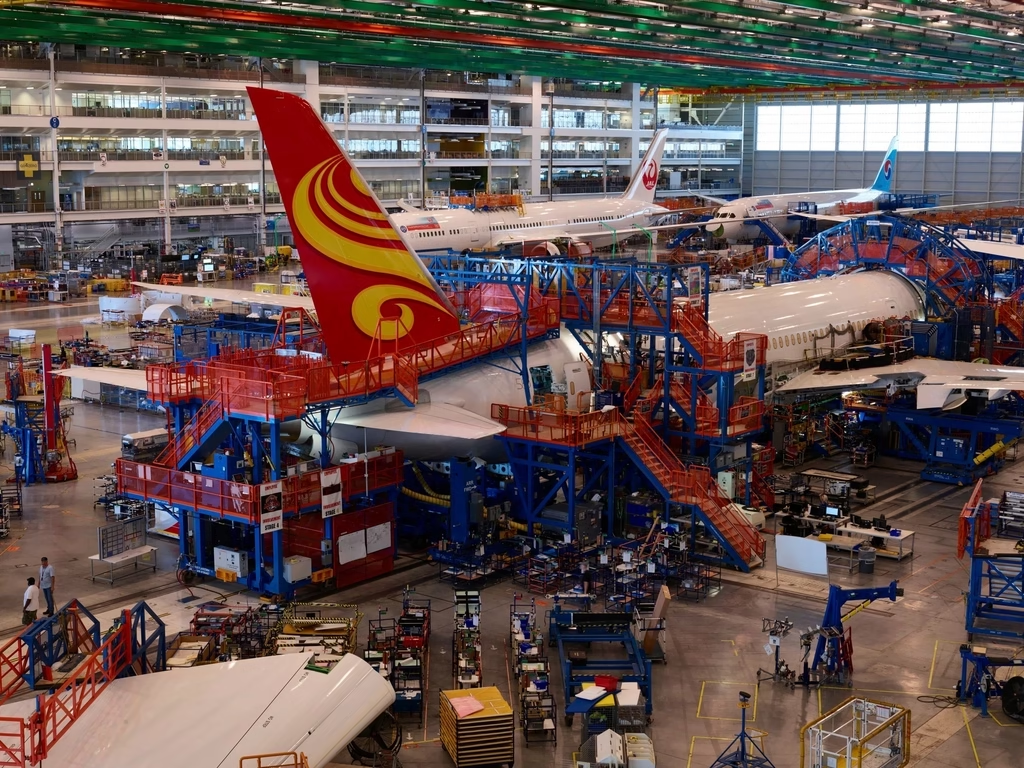
Boeing Chief Executive Officer Kelly Ortberg announced that the aerospace giant will defer launching a new commercial jetliner for at least a couple more years, choosing instead to focus resources on repairing its balance sheet and operational health. Speaking to industry stakeholders and investors during recent strategic briefings, Ortberg emphasized that the company must stabilize its core manufacturing operations before embarking on a costly clean-sheet aircraft project to succeed the bestselling 737 MAX.
Rebuilding Foundations After Years of Turbulence
Boeing faces a complex array of operational and financial hurdles that have severely constrained its ability to fund new aircraft development. Over the past five years, the Arlington, Virginia-based planemaker has grappled with the aftermath of two fatal 737 MAX crashes, a high-profile mid-flight door-plug failure in early 2024, and persistent manufacturing defects across multiple aircraft lines.
These quality control failures led to intense regulatory scrutiny from the Federal Aviation Administration (FAA), which capped 737 MAX production rates until safety and quality metrics are met. Additionally, a prolonged seven-week strike by 33,000 West Coast factory workers in late 2024 halted assembly lines, further draining cash reserves and delaying aircraft deliveries to global airline customers.
Prioritizing Balance Sheet Repair Over Clean-Sheet Design
Developing a brand-new commercial jet typically requires between $10 billion and $15 billion and takes up to a decade from initial design to certified commercial service. Ortberg made clear that initiating such an ambitious capital project is unfeasible while Boeing remains focused on restoring operational stability and cash flow.
The company’s immediate strategy centers on ramping up production of existing models, particularly the 737 MAX and 787 Dreamliner, to execute on a firm backlog exceeding 5,400 commercial aircraft. Re-establishing predictable, high-quality production schedules remains Boeing’s fastest pathway to generating positive free cash flow and restoring profitability.
Financial Realities and Competitive Pressures
Financial data highlights the urgency of Boeing’s balance sheet recovery. The company carries a net debt load exceeding $50 billion, elevated by years of reduced deliveries, compensation payments to airlines, and supply chain disruptions. Credit rating agencies have repeatedly warned that Boeing’s investment-grade credit rating remains vulnerable without sustained debt reduction.
Industry analysts note that Boeing’s cautious timeline widens the gap with European rival Airbus. Airbus continues to consolidate its market lead in the single-aisle market with its A320neo family, taking advantage of Boeing’s production bottlenecks and strategic pause.
Aviation analysts from major financial institutions suggest that waiting until the late 2020s or early 2030s to launch a new plane may ultimately benefit Boeing technically. Delaying development allows next-generation engine technologies, advanced composite materials, and open-fan propulsion concepts to mature, ensuring the eventual 737 successor delivers a true generational leap in fuel efficiency.
Industry Implications and What to Watch Next
Boeing’s delayed launch timeline forces commercial airlines to adjust long-term fleet management plans. Major carriers reliant on Boeing aircraft must extend the operational lives of existing airframes or secure additional leases to meet expanding global travel demand.
For the aerospace supply chain, Boeing’s operational pivot means component suppliers can focus on stabilizing production rates for current models rather than retooling for a new platform. Engine manufacturers like GE Aerospace and CFM International gain extra lead time to perfect sustainable propulsion tech ahead of the next market cycle.
Market observers will closely track Boeing’s performance over the coming quarters, watching for FAA approval to increase monthly 737 MAX output above current limits. The key metric for Boeing’s recovery will be its ability to generate positive cash flow and lower total debt while avoiding further manufacturing disruptions in 2025 and 2026.






















Leave a Reply