


Introduction to the Desert Greening Initiative
Environmental restoration projects often require massive corporate funding and extensive governmental backing to succeed. However, remarkable transformations can occasionally begin with a single, modest financial contribution from an individual. A striking example of this phenomenon occurred when a modest financial gift from an American educator catalyzed a massive environmental turnaround in a notoriously arid region of East Asia.
The Arid Reality of Inner Mongolia
For decades, the vast desert landscapes in northern China presented an immense challenge for local populations. Expanding arid zones threatened agricultural lands, displaced communities, and contributed to severe dust storms that impacted major metropolitan areas. Combating desertification typically demands extensive resources, specialized labor, and long-term strategic planning. Local ecological groups worked tirelessly to implement tree-planting initiatives, yet scaling these operations remained a constant financial hurdle.
A Modest Financial Contribution Sparks Change
Ronald Sakolsky, a retired educator living in the United States, decided to allocate a portion of his savings to support global environmental efforts. His contribution of five thousand dollars was channeled through grassroots networks dedicated to ecological restoration in the region. Although this amount represented a fraction of the total capital required for large-scale forestry projects, it arrived at a critical juncture when field workers desperately needed flexible funding to purchase resilient saplings and essential irrigation equipment.
The Power of Grassroots Reforestation
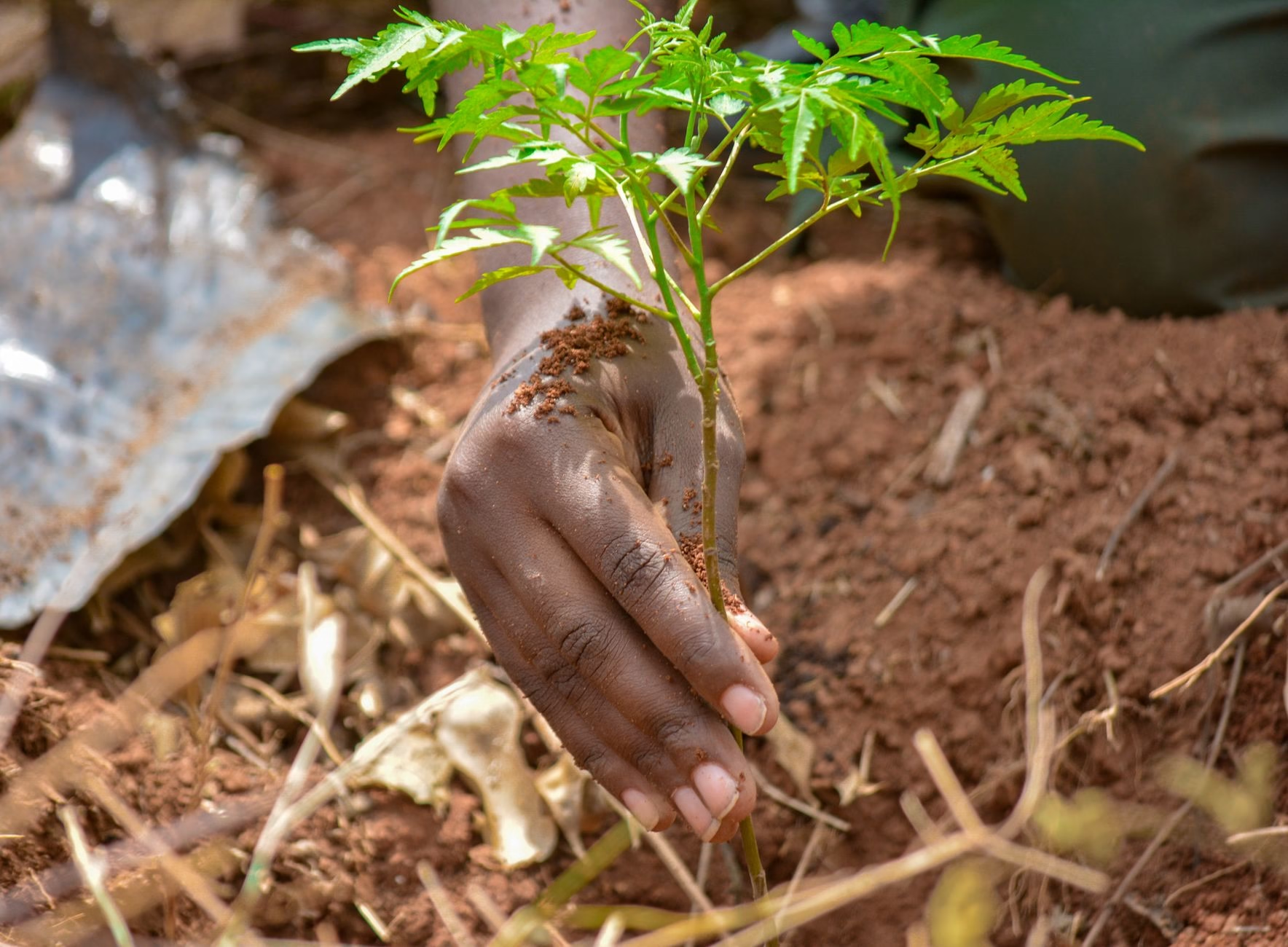
Grassroots environmental campaigns thrive on community involvement and targeted resource allocation. With the financial support provided by the American teacher, project coordinators acquired drought-resistant plant species capable of surviving harsh local conditions. Volunteers and local farmers planted thousands of trees along the shifting dunes, establishing vital natural barriers against wind erosion and soil degradation.
Visible Ecological Transformation Over Time
Over the subsequent years, consistent nurturing and favorable adaptation allowed the newly planted vegetation to take root and flourish. What was once an uncompromising expanse of sand and dust gradually evolved into a vibrant, green ecosystem. Biodiversity began to return to the area as birds, insects, and small mammals found shelter within the expanding canopy of trees.
Lessons in Global Environmental Philanthropy
The remarkable journey from a barren wasteland to a thriving woodland highlights the profound impact that individual philanthropy can achieve. While major international policies set the framework for climate action, grassroots contributions demonstrate that personal commitment remains a powerful catalyst for positive change. The success in this northern region serves as an inspiring testament to the enduring potential of collaborative environmental stewardship.






















Leave a Reply